Mamdani Meets Trump: A New York Political Surprise
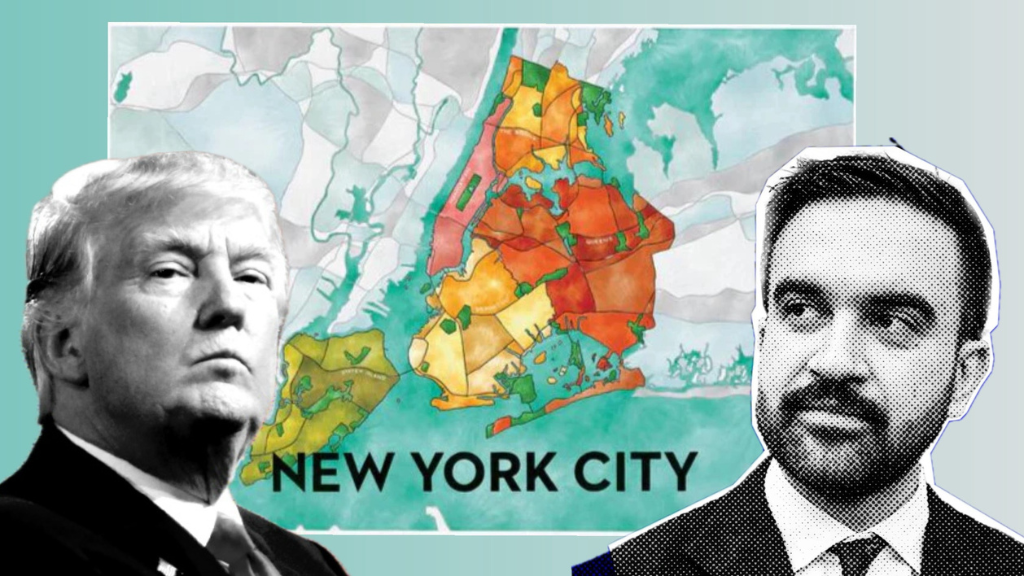
New York politics experienced an unexpected jolt when Assemblyman Zohran Mamdani met President Donald Trump. On the surface, they seem worlds apart. Mamdani represents Astoria as a Democratic Socialist, advocating progressive reforms.
Trump leads the conservative populist movement and often clashes with those ideals. Yet their conversation offers a rare glimpse into the shifting political currents of New York, a state grappling with rising living costs, migration pressures, and changing voter loyalties.
Observers now wonder: does this signal a realignment or just a symbolic moment amplified by media attention?
Political Calculations Behind the Meeting
The encounter appears motivated by strategy rather than ideology. Mamdani has been working to elevate his profile beyond Queens. He wants to push reforms in housing, public transit, and immigrant rights. With progressive energy waning in the city, high-visibility moves give him leverage and attention.
For Trump, the meeting fits his dealmaker image. Republicans hope to gain traction in areas that usually vote Democratic, targeting working-class and immigrant communities frustrated with the status quo. Meeting a progressive Muslim lawmaker demonstrates his willingness to engage beyond his base.
Reactions: Polarization Intensifies
The meeting has stirred controversy on both sides. Many progressives argue that Mamdani lent legitimacy to Trump, softening the image of a leader whose policies have historically harmed communities he represents.
Trump’s supporters also reacted unevenly. Some applaud his outreach, seeing it as a broadening of appeal. Others criticize him for interacting with a socialist, viewing it as a departure from his core populist message.
The episode underscores New York’s fractured political landscape, where success requires appealing to diverse and sometimes conflicting voter blocs.
Policy Differences Remain Wide
When it comes to issues, Mamdani and Trump disagree sharply. Mamdani supports social housing, fare-free transit, and stronger tenant protections. Trump emphasizes policing, deregulation, and aggressive economic development. These priorities rarely align.
This gap makes substantive policy collaboration unlikely. Instead, the political impact comes from symbolism. The meeting challenges expectations, showing that politicians can cross ideological lines for strategic visibility and media attention.
Symbolism in a Changing Political Climate
New Yorkers are experiencing economic stress and political frustration. In this climate, symbolic gestures can resonate strongly. Voters exhausted by partisan battles may see value in dialogue between unlikely figures.
Even if it does not translate into policy, the meeting reflects a subtle shift: political identity may increasingly intersect with pragmatic problem-solving. Observers will watch whether this approach gains traction in elections or legislative negotiations.
What the Meeting Reveals About New York Politics
The Mamdani–Trump encounter illustrates more than a one-time event. It exposes how media, voter dissatisfaction, and strategic gestures shape public perception today. Policy may take a backseat to optics, but understanding these dynamics is crucial.
Ultimately, the moment shows New York’s political landscape in flux. Leaders now navigate identity, symbolism, and strategic visibility to connect with an electorate searching for relevance and responsiveness. This meeting is less about a lasting partnership and more about revealing a city and a state grappling with uncertainty and change.