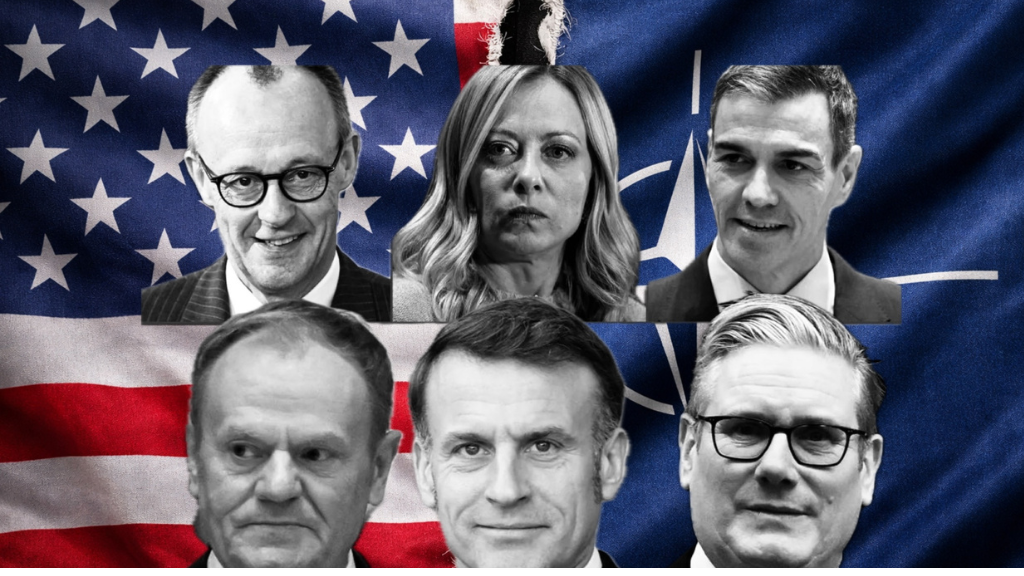
A Counter-Intuitive Political Pattern
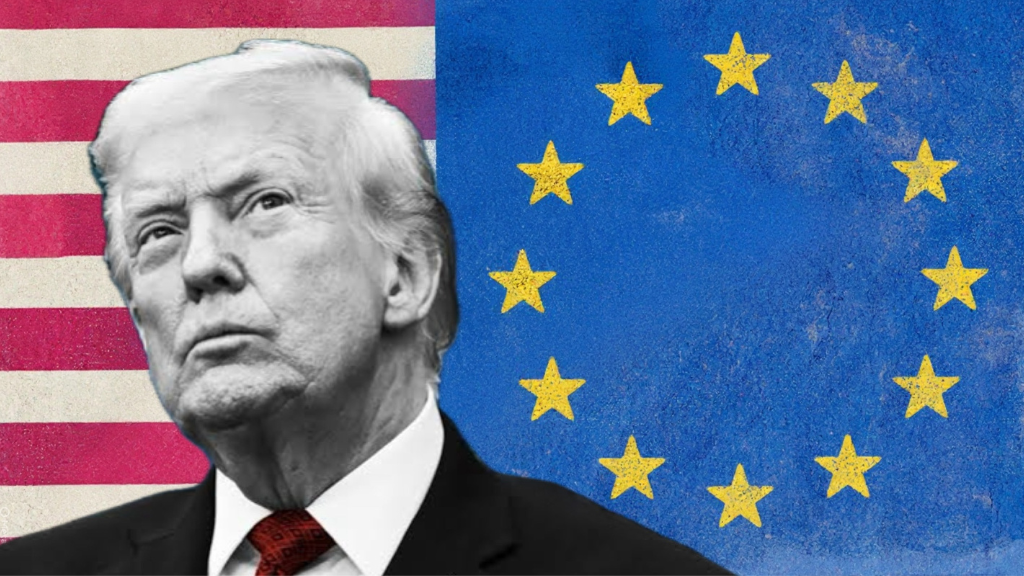
European politics is confronting a strange contradiction. With Washington’s reliability increasingly in doubt under Donald Trump’s second presidency, logic would suggest that the Europeans most alarmed by American hostility would be the first to push for an independent defence policy. Instead, the opposite is happening.
Across the continent, support for serious military investment is strongest among those who still believe NATO can be rescued. By contrast, those who have come to see the United States as unreliable or even hostile are often the least willing to accept the financial and political burden of replacing American protection with European power.
What the Opinion Polls Reveal
Public opinion data illustrates this tension clearly. A survey conducted by the European Council on Foreign Relations (ECFR) in November 2025 found that only 16 per cent of Europeans now regard the United States as an ally, down from 22 per cent just eight months earlier. Meanwhile, one in five respondents described the US as a “rival” or an “adversary”. In major states such as Germany, France and Spain, that figure approaches 30 per cent.
Yet this growing distrust has not translated into enthusiasm for strategic independence. If anything, scepticism about America has weakened the case for rearmament rather than strengthened it.
Fear of Exposure, Not Confidence in Autonomy
The reason lies partly in political psychology. For many voters, the idea of Europe defending itself without Washington feels less like liberation and more like exposure. The disappearance of the American security guarantee does not inspire confidence in European strength; it highlights European vulnerability.
Instead of prompting calls for self-reliance, it feeds a sense of insecurity and resignation. Without the protective umbrella of the US, defence begins to look less like a strategic project and more like an expensive gamble.
The Budgetary Barrier
There is also a hard financial reality. Building a credible European defence posture would require sustained increases in military spending, closer industrial coordination, and long-term political commitment. These costs are easiest to justify when framed as a contribution to NATO rather than as a substitute for it.
Politicians can present higher defence budgets as a way to strengthen the transatlantic alliance. Selling them as preparation for a future without the United States is far more difficult, especially in countries with strong welfare states and tight public finances.
Europe’s Internal Political Divide
This paradox also reflects long-standing divisions within Europe itself. Countries in eastern Europe, particularly those closest to Russia, remain instinctively attached to American power, however unpredictable it may be. For them, NATO without the US is almost a contradiction in terms.
In western Europe, where faith in Washington has declined most sharply, political movements critical of American policy are often equally hostile to military spending and to the idea of Europe as a geopolitical actor. In this sense, anger at Washington does not automatically translate into confidence in Brussels.
Strategic Rhetoric Without Strategic Commitment
European leaders increasingly speak of “strategic autonomy”, but public opinion remains unconvinced that Europe can or should shoulder the full weight of its own defence. The collapse of trust in the United States has not yet been matched by a rise in trust in Europe’s own capacity to protect itself.
This creates a widening gap between diagnosis and action. Leaders acknowledge that the old security order is eroding, but voters remain reluctant to fund its replacement.
A Transition Europe Has Not Accepted
The result is a stalled transition. Europe senses that its dependence on American power is becoming riskier, yet it has not fully accepted the political and economic costs of genuine independence.
It is caught between a fading alliance and an untested alternative between nostalgia for NATO’s past and uncertainty about Europe’s future.
Until that contradiction is resolved, European rearmament will remain hesitant, fragmented, and politically fragile not because the threat is unclear, but because the answer to it is still psychologically and economically unresolved.