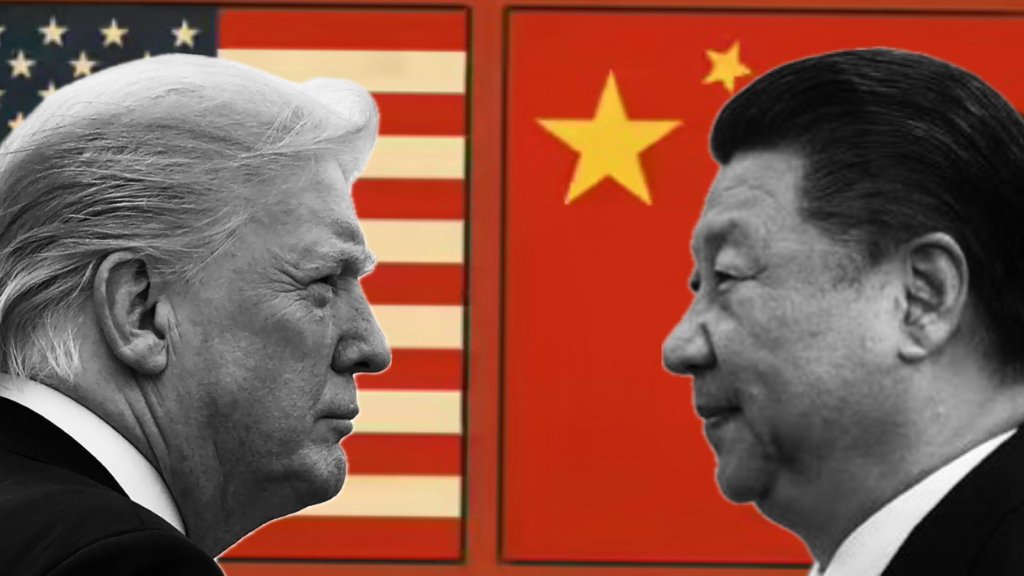
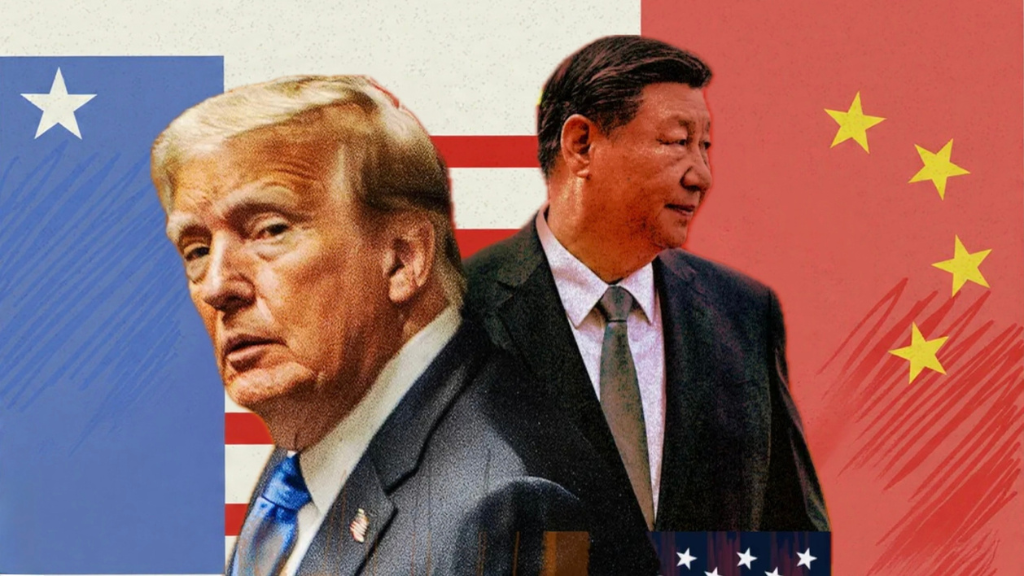
Donald Trump built his political brand on a simple, confrontational promise: ‘America First’. The slogan suggested withdrawal from costly global entanglements, a rejection of elite-driven globalization, and a sharper focus on domestic economic revival. Yet when it comes to China, Trump’s approach has repeatedly contradicted that promise. Far from retrenching, the United States under Trump has expanded its global footprint economically, militarily, and technologically in ways that look less like isolationism and more like strategic overreach.
A Rival Too Big to Ignore
China occupies a unique place in American strategy. Unlike previous competitors, it is not merely a military rival or an economic challenger, but both at once. Its manufacturing dominance, technological ambitions, and expanding diplomatic reach mean that disengagement is not a viable option for Washington. Trump understood this early. Despite campaign rhetoric criticizing endless foreign commitments, his administration treated China as an existential competitor requiring sustained global pressure.
This reality quickly diluted the “America First” promise. Containing China demanded alliances, overseas deployments, trade leverage, and constant diplomatic engagement precisely the tools Trump had criticized when used elsewhere.
Trade Wars Without Economic Decoupling
Trump’s trade war with China was framed as a patriotic economic correction. Tariffs were meant to punish Beijing for unfair trade practices and bring manufacturing back to American soil. In practice, the results were mixed. While tariffs disrupted Chinese exports, they also raised costs for U.S. consumers and businesses. Supply chains shifted, but rarely returned home; instead, they moved to third countries like Vietnam, Mexico, and India.
More importantly, the United States did not disengage from China economically. Bilateral trade remained substantial throughout Trump’s presidency. American firms continued to depend on Chinese manufacturing, while Wall Street deepened financial exposure to Chinese markets. The outcome was not economic sovereignty, but managed dependence hardly a clean ‘America First’ break.
Security Commitments Expanded, Not Reduced
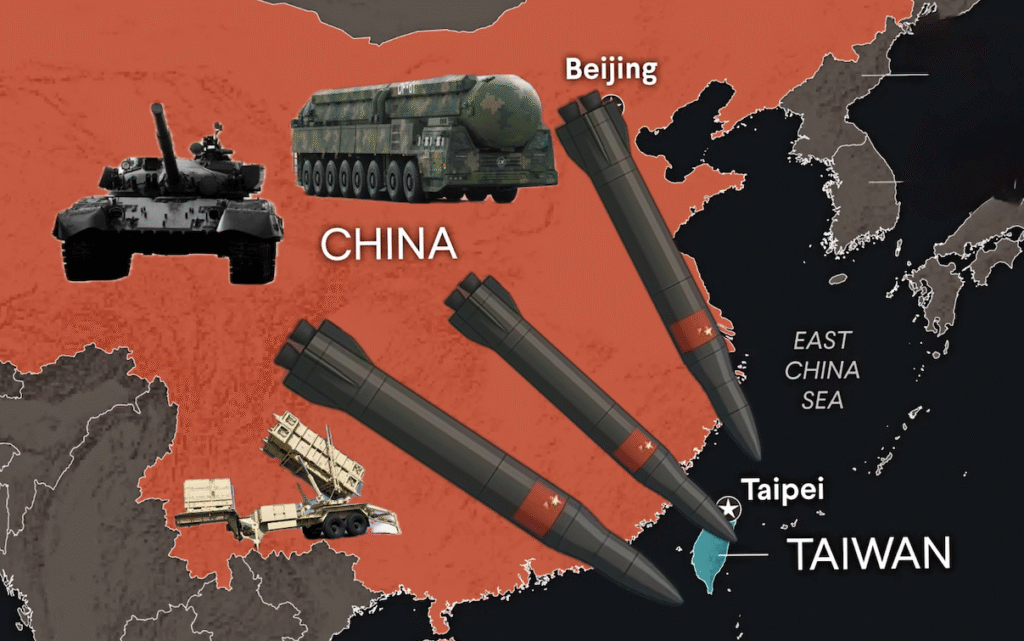
If Trump’s China policy were truly inward-looking, it would have reduced America’s military obligations abroad. The opposite happened. U.S. naval operations in the South China Sea intensified. Arms sales to Taiwan expanded significantly. Washington strengthened security ties with Japan, Australia, and India through the Quad framework, explicitly aimed at balancing China in the Indo-Pacific.
These moves tied American security even more tightly to distant theaters. Deterring China required forward deployments, alliance coordination, and crisis management thousands of miles from U.S. shores. In strategic terms, the U.S. accepted higher global exposure to prevent Beijing from reshaping the regional order.
Technology Nationalism With Global Consequences
Trump’s toughest stance on China emerged in technology. Restrictions on Huawei, export controls on advanced semiconductors, and pressure on allies to exclude Chinese firms from 5G networks signaled a new kind of competition, one centered on technological dominance.
Yet even here, ‘America First’ had limits. These measures depended heavily on cooperation from Europe, East Asia, and key partners like the Netherlands, Japan, and South Korea. Without allied compliance, U.S. controls would have been ineffective. The strategy, by necessity, became multilateral rather than nationalist, binding America’s economic future to the policy choices of other states.
The Strategic Paradox
Trump’s China policy exposes a deeper contradiction. The more Washington treats China as a systemic threat, the less feasible unilateralism becomes. Managing rivalry with a peer competitor requires alliances, shared burdens, and long-term commitments exactly what ‘America First’ claimed to reject.
Rather than shrinking America’s role in the world, Trump’s approach hardened it. The United States became more entangled in Asia, more dependent on allies, and more invested in global technological governance. The rhetoric of withdrawal masked a reality of intensified competition.
Slogan Versus Strategy
‘America First’ worked as a political slogan, but China rendered it strategically incomplete. Trump’s policies acknowledged, perhaps unintentionally, that the United States cannot confront a rising China from behind its borders. Power, in this context, demands presence.
The result is a foreign policy that talks like nationalism but acts like great-power management. When dealing with China, America First gives way to something far more familiar: global leadership, with all its costs, contradictions, and consequences.