At exactly 8:30 PM Tehran time on January 8, 2026, something happened that most people still don’t understand.
Iran’s government flipped a switch. And within minutes, eighty-five million people went dark. Internet traffic collapsed by 98.5%. No Instagram. No WhatsApp. No way to tell the world what was happening in the streets.
But here’s the thing. While Iran’s regime was busy cutting cables and shutting down cell towers, there were twenty-two thousand satellites quietly orbiting overhead, completely outside their control.
And that’s where this story gets interesting.
The Kill Switch That Wasn’t Supposed to Fail
Let me give you some context. Iran has done this before. Twice.
In November 2019, during protests over fuel price hikes, they shut down the internet for an entire week. Security forces killed at least fifteen hundred people during that blackout. There was no real-time footage. No international pressure. By the time information leaked out weeks later, the crackdown was complete.
In 2022, after Mahsa Amini died in police custody for wearing her hijab incorrectly, they did it again. Rolling blackouts. Digital curfews. Five hundred more dead.
The pattern is obvious. Internet blackouts aren’t about controlling information. They’re about enabling violence without witnesses.
So in January 2026, when protests erupted over economic collapse, Tehran reached for the same playbook. Cut the cables. Jam the towers. Isolate the country.
Except this time, something was different.
The Technology They Couldn’t Block
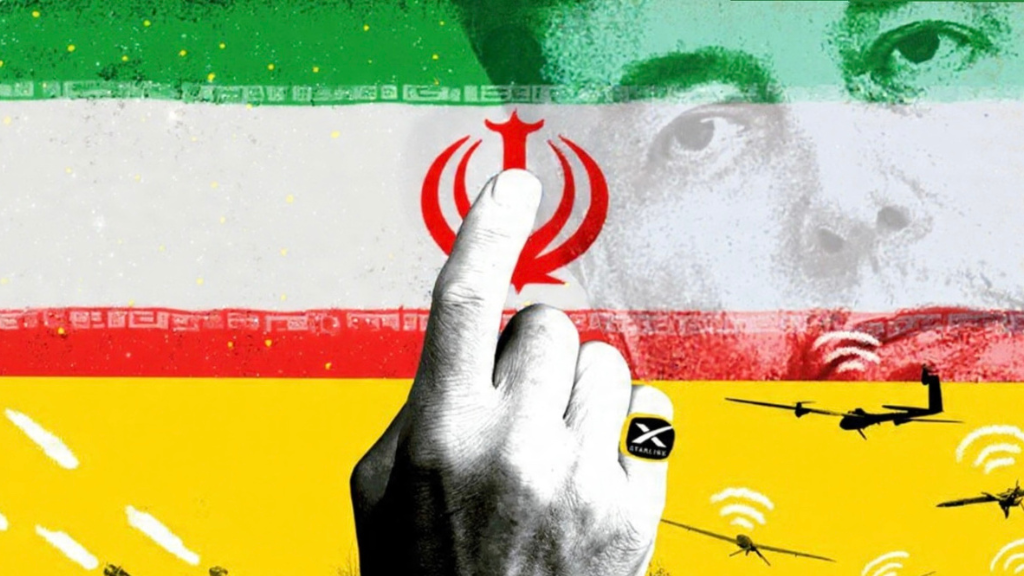
Starlink.
Now, if you’re not familiar, Starlink is Elon Musk’s satellite internet system. Instead of running cables through government-controlled infrastructure, it beams internet directly from low-orbit satellites to small dishes on the ground.
And here’s what makes it geopolitically dangerous: it completely bypasses territorial control.
Tens of thousands of Starlink terminals are now operating across Iran. All illegal. Possession can get you jailed or executed. And people are still using them.
Why? Because when Tehran shut down traditional internet, Starlink kept working. Protest videos kept getting out. International media kept getting footage. The blackout failed.
Mehdi Yahyanejad, an internet freedom activist in Los Angeles, put it simply: “Starlink is the key for getting these videos out”.
For the first time in modern history, an authoritarian government couldn’t fully control information flow inside its borders. Not because they didn’t try. Because the infrastructure literally didn’t exist on their territory.
Think about what that means.
The Counter-Move: Jamming Space
Now, Iran isn’t stupid. They adapted.
After Musk activated Starlink during the twelve-day Iran-Israel war in June 2025, Tehran started preparing countermeasures.
They deployed GPS jammers. Mobile jamming systems. In some Iranian cities, Starlink users are experiencing thirty to eighty percent packet loss.
Amir Rashidi, who directs digital rights at the Miaan Group, documented the interference patterns. His assessment? Iran is using “something beyond GPS jamming, like in Ukraine where Russia tried to jam Starlink”.
They’ve even lobbied the International Telecommunication Union to ban Starlink from Iranian airspace.
Let that sink in. A sovereign nation is asking the UN to stop a private American company from providing internet to its citizens.
And here’s where the geopolitics gets messy.
The Infrastructure Built in Beijing
Because Iran didn’t develop this internet control capability alone. China sold it to them.
Iran’s National Information Network, their domestic internet system, is modeled directly on China’s Great Firewall. In 2012, Reuters exposed how ZTE sold Iran’s largest telecom a “turnkey solution for lawful interception,” sophisticated deep packet inspection technology that tracks users and controls content, all invisible to targets.
Under a four-hundred-billion-dollar strategic cooperation agreement signed in 2022, Huawei is now building Iran’s nationwide 5G network.
This is digital sovereignty. The idea that governments control information infrastructure within their borders. And for fifteen years, it worked.
Until satellites made borders irrelevant.
The Question Nobody’s Asking
So here’s what you need to understand about this situation.
Most coverage frames this as “technology defeats authoritarianism” or “internet freedom wins.” But that’s intellectually lazy.
The real question is this: what happens when critical infrastructure moves from government control to billionaire control?
Because make no mistake, when Elon Musk can unilaterally decide which countries get uncensored internet access, that’s not democracy. That’s oligarchy with better branding.
The Iranian regime’s argument, stripped of propaganda, actually has a point: they’re a sovereign nation, and a foreign private company is operating infrastructure inside their territory without permission.
Now, I’m not defending their censorship or their violence. I’m saying the geopolitical principle at stake here is more complicated than most people realize.
The Conflict That Defines the Next Fifty Years
Here’s why this matters beyond Iran.
For centuries, controlling territory meant controlling the infrastructure on that territory. Roads, ports, telephone lines, internet cables. Governments had geographic monopolies.
Satellite internet permanently breaks that monopoly.
And every government that relies on information control knows it. China is building its own satellite constellation. Russia is investing in anti-satellite weapons. India, Europe, even authoritarian regimes in Africa are watching this closely.
Because the fundamental architecture of power is changing. When information infrastructure lives in space, traditional concepts like borders and sovereignty start to break down.
The Iranian regime understands this better than most Western commentators. That’s why they’re jamming signals. That’s why they’re lobbying international bodies. That’s why they’re terrified.
They’re not just fighting protesters. They’re fighting the obsolescence of their entire model of control.
What Happens Next
So where does this go?
We’re watching the early stages of a technological arms race with no clear endpoint. Satellites versus jammers. Encryption versus surveillance. Private infrastructure versus state sovereignty.
And here’s what makes it genuinely unprecedented: this isn’t a conflict between nations. It’s a three-way tension between authoritarian governments, democratic governments, and private technology companies that are more powerful than most countries.
The Iranian protests will end, one way or another. But this larger conflict? It’s just beginning.
Because the question at the center of all of this, the question that nobody has answered yet, is fundamental: in the twenty-first century, who actually controls information infrastructure when that infrastructure lives in space?
And right now, the answer is unclear.
What is clear is that we’re living through a geopolitical transformation that most people don’t even know is happening. While everyone’s focused on the protests, the real story is above them, in orbit, where the rules of power are being rewritten.
And unlike traditional geopolitics, this conflict doesn’t end at borders. It ends at the edge of Earth’s atmosphere.
Or maybe it doesn’t end at all.