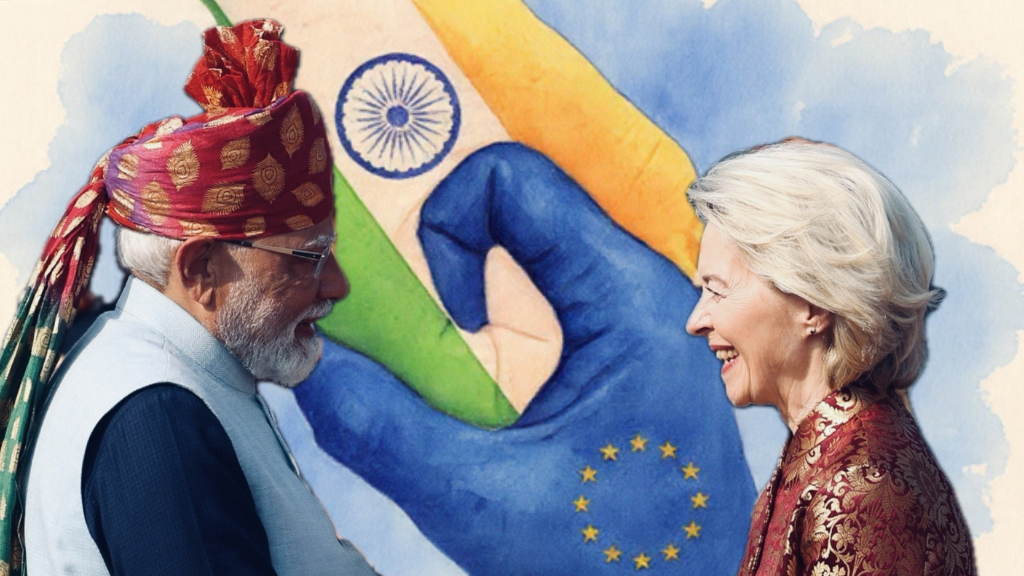
When India and the European Union announce what they’ve called the “mother of all trade agreements,” they won’t just be signing another Free Trade Agreement. They’ll be making a point.
After nearly twenty years of stalled talks, the timing of this deal says as much as its content. It arrives as tariffs are back in fashion, trade has become a weapon in global politics, and trust between major economies is wearing thin. In that climate, New Delhi and Brussels are choosing cooperation over confrontation.
A Long Road to Agreement
Negotiations began in the mid-2000s and collapsed more than once. Farmers’ groups worried about competition. Carmakers fought over duties. Lawyers argued over patents and services. Each side walked away at different points.
What changed was the world around them. Supply chains broke during the pandemic. Energy became a security issue after war returned to Europe. And tariffs turned into diplomatic tools rather than economic ones. Slowly, the logic shifted: a deal that once seemed too hard started to look necessary.
If completed, the agreement will connect two of the world’s biggest democratic markets — close to two billion people and around a quarter of global economic output.
Why Politics Matters Here
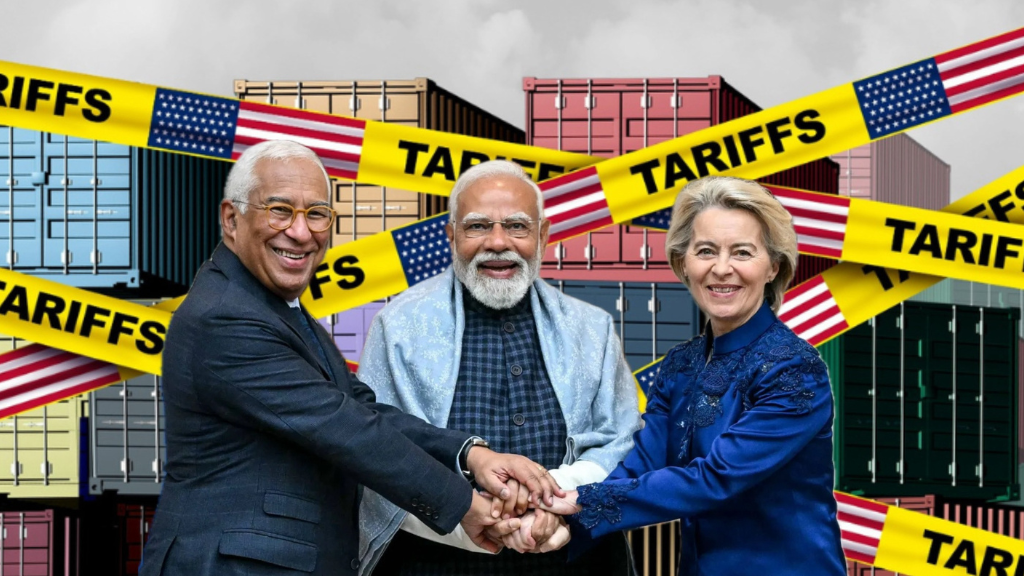
This deal is being struck at an awkward moment for Washington. Donald Trump’s renewed enthusiasm for tariffs has unsettled allies as much as rivals. India has been nudged over trade imbalances and energy purchases. Europe has faced pressure over industrial subsidies, defence spending and technology rules.
Trade talks with the US have dragged, and tempers have flared. So instead of waiting for a breakthrough with Washington, India and the EU have moved ahead with each other.
The message is subtle but clear: neither side wants its economic future tied to one unpredictable partner. They are building options.
What India Hopes to Get
For India, the gains are practical.
European duties will fall on many Indian exports — from textiles and jewellery to chemicals and seafood. That should make Indian goods more competitive in European shops and factories, supporting jobs at home.
At the same time, India has been careful not to open everything. Farming and dairy remain largely protected, reflecting the political weight of rural voters. New Delhi is liberalising, but on its own terms.
Indian consumers will also notice changes. Imported machinery, medical equipment and some luxury goods from Europe should become cheaper. For manufacturers, better access to European technology could help move production up the value chain.
Why Europe Wants In
Europe, for its part, is looking at India’s future rather than its present.
With growth slowing in parts of the EU, India’s expanding middle class is an obvious attraction. Lower tariffs mean European cars, medicines and industrial products stand a better chance in a competitive market.
The deal also smooths the path for European banks, shipping firms and service companies. Clearer rules and fewer barriers make long-term investment easier to justify.
There is also a strategic angle. By tying itself more closely to India, Europe strengthens its footprint in the Indo-Pacific — a region where economic and political influence increasingly overlap.
The Trump Effect
It is impossible to ignore the Trump factor. Both India and the EU have been on the receiving end of tariff threats and public criticism from Washington. Instead of pushing back loudly, they have responded quietly by building a partnership that does not depend on American goodwill.
This reflects a wider shift in global trade. Countries are no longer comfortable relying on a single dominant market. They want alternatives. Trade policy is becoming about insurance as much as growth.
Some analysts believe deals like this could eventually nudge the US back toward negotiation, as it risks watching friends deepen ties elsewhere.
More Than Numbers on a Page
The India–EU Free Trade Agreement is not just about percentages and quotas. It is about direction.
For India, it reinforces the idea that it can negotiate major agreements without sacrificing political priorities. For Europe, it offers access to one of the world’s most promising large economies. For the wider system, it shows that cooperation is still possible in an era of tariff battles and economic nationalism.
In the end, this agreement is less a technical document than a political signal: that two large democracies have decided to place their bets on partnership rather than pressure.