Every day, the U.S. and Europe are woven together by trade, finance, and daily life. Europeans rely on American technology, energy supplies, and financial markets. Americans, in turn, use German software, drink French wine, and depend on medicines produced in Europe.
Roughly $5.4 billion in goods and services crosses the Atlantic each day. That exchange is reinforced by deep investment links that sustain millions of jobs on both sides.
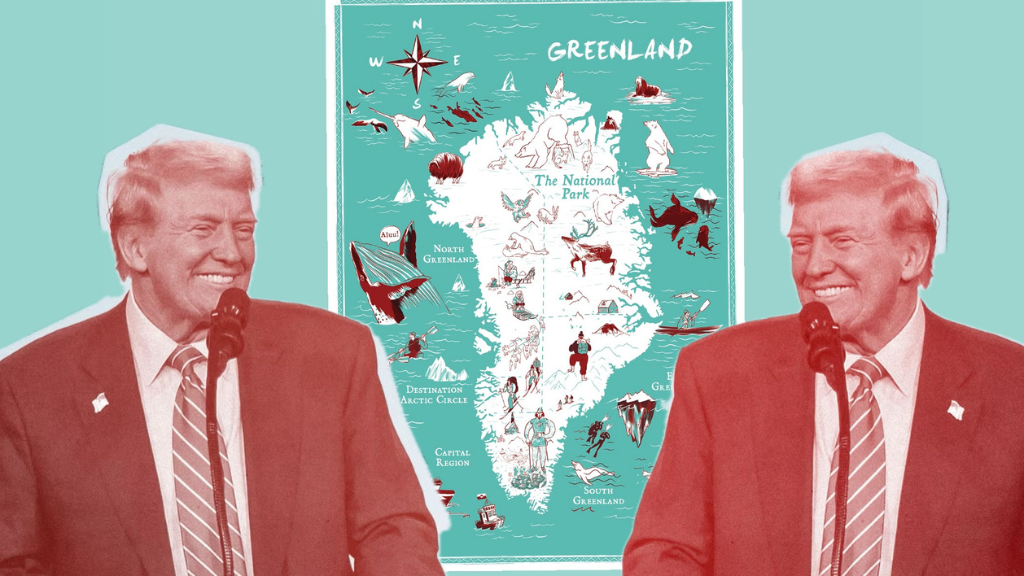
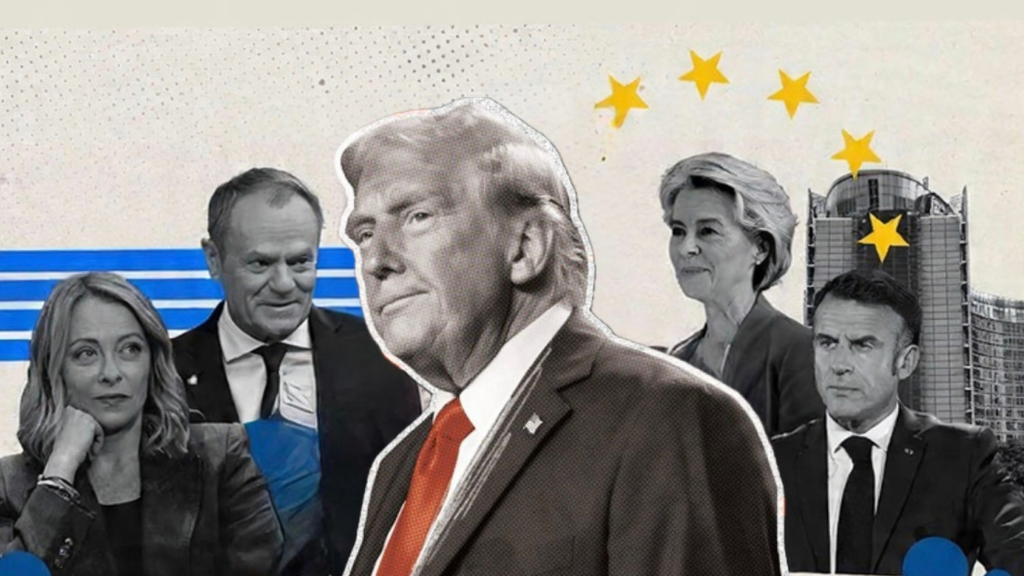
When President Donald Trump briefly threatened to impose new tariffs on several European countries over Greenland, European officials saw more than a political outburst. They saw a warning.
Now, policymakers in Brussels are examining whether this vast economic relationship could be used as leverage. European Union leaders are expected to meet to “coordinate the way forward,” according to officials familiar with the discussions.
“European leaders can’t just pretend the last few weeks didn’t happen,” said Ian Bond, deputy director of the Center for European Reform. “This was the sharpest shock to trans-Atlantic ties in years. And with Trump in office, it probably won’t be the last.”
The question is how Europe might respond to an administration that often treats allies as economic rivals. Tariffs alone may not be enough. Could Europe use its financial and commercial weight instead?
Peter Chase of the German Marshall Fund put it bluntly: “Europe could make loud, dramatic moves. But the issue is whether those moves actually help Europe or end up hurting it.”
Financial pressure through U.S. debt
Economists say one of Washington’s vulnerabilities lies in its finances.
“The United States is on an unsustainable debt path,” said Richard Portes of London Business School. “That is its main economic weakness right now.”
European investors hold enormous quantities of U.S. financial assets, including about $2 trillion in Treasury bonds. Because Washington runs persistent budget deficits, it depends heavily on foreign buyers to fund its borrowing.
If European institutions reduced their purchases of U.S. bonds, borrowing costs for the U.S. government could rise. “That’s the kind of signal markets would notice,” Mr. Chase said.
Mr. Trump has warned that any attempt to dump U.S. bonds would trigger retaliation. In a Fox Business interview, he said Europe would face “major consequences.”
Treasury Secretary Scott Bessent dismissed the idea as exaggerated, stressing that U.S. government bonds remain central to the global financial system.
Still, cracks are beginning to appear. This week, Denmark’s Akademiker Pension announced plans to sell about $100 million worth of Treasuries, citing concerns about political risk.
Yet a mass sell-off would not be painless for Europe. Central banks, pension funds, and investors across the world rely on U.S. debt as a safe asset. Any disruption would ripple back into European markets.
Targeting American services
Another pressure point lies in services rather than goods.
The European Union, with more than 450 million consumers, is a major customer for American companies. According to U.S. data, Europe bought about $300 billion in U.S. services last year while exporting roughly $200 billion in return.
That imbalance gives Brussels potential influence. “The EU could restrict access to its services market,” said Erik van der Marel of the European Center for International Political Economy.
But he cautioned that such a move would also weaken European businesses that depend on those services.
Technology would be the hardest sector to replace. Digital platforms, cloud services, and artificial intelligence tools supplied by U.S. firms are deeply embedded in European economies. Consulting and financial services might be easier to substitute.
Rather than bans, governments could raise taxes. Several countries, including France and Britain, already impose digital levies on major online firms. Washington argues these measures unfairly target U.S. companies and has repeatedly threatened countermeasures.
Can Europe act as one?
Whether Europe can use any of these tools depends on political unity.
At the World Economic Forum in Davos, Mr. Bessent mocked what he called Europe’s slow and fragmented decision-making, predicting that officials would form yet another “working group” instead of responding decisively.
Those divisions were visible this week when the European Parliament postponed approval of a long-negotiated trade agreement with South American nations, part of Europe’s effort to reduce dependence on U.S. trade.
Bernd Lange, who heads the Parliament’s trade committee, called the delay “an own goal” and warned that Europe was weakening its own position.
For now, Europe’s leverage over the United States exists more on paper than in practice. The challenge is turning economic weight into political will, without damaging itself in the process.