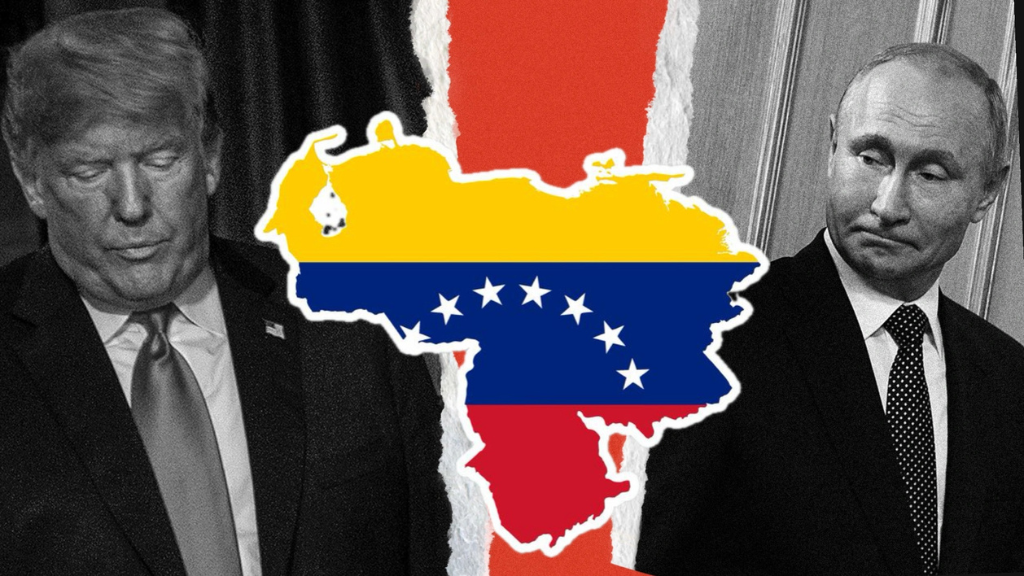
When Moscow warned Washington against making a “fatal mistake” over Venezuela, it was not issuing an abstract diplomatic threat. It was reminding the United States of a reality that has been years in the making: Venezuela is no longer an isolated Latin American outlier, but one of Russia’s most entrenched strategic partners outside Eurasia.
The Russian foreign ministry’s statement, reported by Tass, framed U.S. actions as deliberate attempts to escalate tensions with a Russian ally particularly through measures that could threaten international shipping. The message was pointed but calculated. Moscow appealed directly to the Trump administration’s reputation for pragmatism, urging restraint while quietly signalling that Russia has options if pressure on Caracas intensifies.
Those options are neither theoretical nor symbolic. They are built on long-standing military cooperation, layered air defences, Russian personnel on the ground, and energy ties designed to last well into the next decade.
A Carefully Built Air Defence Shield
At the centre of Russia’s military footprint in Venezuela is air denial. Over the years, Moscow has supplied Caracas with S-300VM missile defence systems high-end platforms designed to restrict an adversary’s freedom of action in the air. Capable of tracking multiple targets and engaging them at ranges of up to 250 kilometres, these systems are not merely defensive tools. They are strategic signals.
In practical terms, the S-300VM complicates any external military planning. It forces potential adversaries to operate from greater distances, deploy more assets, and accept higher risks. For Venezuela, it provides a form of insurance. For Russia, it establishes a deterrent footprint uncomfortably close to U.S. strategic space.
Deterrence Through Numbers, Not Just Technology
Beyond sophisticated systems, Russia has helped Venezuela build deterrence through scale. Caracas has reportedly deployed around 5,000 Igla-S man-portable air defence missiles. These shoulder-fired weapons are not technologically revolutionary, but they are effective, particularly against low-flying helicopters, drones, and maritime surveillance aircraft.
Their widespread presence raises the cost of even limited air operations. For U.S. planners, it means that surveillance, interdiction, or coercive signalling would carry a higher operational risk, especially in coastal or urban environments.
Layered Defence, Russian Doctrine
Russia’s support reflects a familiar pattern seen elsewhere, from Syria to Eastern Europe. The Buk-M2E medium-range missile system fills the gap between long-range defences and tactical weapons, capable of hitting targets up to 45 kilometres away and at altitudes of 25 kilometres.
This layered architecture is deliberate. It does not make Venezuela invulnerable, but it makes intervention complicated, time-consuming, and politically costly precisely the outcome Moscow seeks.
The Hypersonic Signal
Perhaps the most striking element of Russia’s posture is its stated readiness to supply Venezuela with the Oreshnik hypersonic missile system. Described by the Kremlin as virtually impossible to intercept and capable of carrying nuclear or conventional warheads, the Oreshnik is not a battlefield weapon. It is a strategic message.
Even the suggestion of deploying hypersonic capabilities in the Western Hemisphere would represent a significant escalation. It would force Washington to reassess regional security assumptions and likely trigger responses far beyond Venezuela itself.
People on the Ground, Influence in Practice
Weapons systems alone do not explain Russia’s confidence. Over 120 Russian military personnel are currently stationed in Venezuela, training special forces and UAV operators. These are not symbolic deployments. Many of the instructors are reportedly combat-hardened, bringing operational experience that directly improves Venezuelan capabilities.
Alongside official personnel, Russian private military companies including Wagner-linked groups have been observed operating Pantsir-S1 air defence systems. Their role extends beyond technical support, encompassing regime protection, advisory roles, and preparation for irregular warfare. For Moscow, this hybrid presence offers flexibility and deniability.
Oil as the Strategic Anchor
Military cooperation is reinforced by energy ties designed to endure political pressure. Venezuela and Russia have extended their joint oil ventures until 2041 in a deal worth $616 million. This 15-year agreement effectively locks Russian influence into Venezuela’s energy sector, reducing the impact of sanctions or shifts in U.S. policy.
For Moscow, oil is not just commerce, it is leverage. Long-term energy integration ensures that Russia has both economic and strategic incentives to defend the Venezuelan government.
Why Moscow’s Warning Matters
Seen in this context, Russia’s “fatal mistake” warning carries weight. It reflects a belief that Washington underestimates the depth of Moscow’s commitment to Caracas. By cautioning against escalation, Russia is not signalling weakness, but confidence rooted in years of investment, planning, and strategic positioning.
Venezuela offers Russia something rare: the ability to challenge U.S. influence close to home without direct confrontation elsewhere. If tensions rise, Moscow does not need dramatic gestures. The infrastructure is already in place.
The real danger lies not in what Russia might do next, but in how much it has already done—and how easily miscalculation could turn pressure into escalation.