From Commercial Corridor to Strategic Frontline
The Baltic Sea, once viewed primarily as a commercial artery linking Northern Europe to global markets, is increasingly taking on the character of a strategic frontline. What was long considered a relatively stable maritime space is now emerging as a zone of quiet militarisation, driven by fears of sabotage, hybrid warfare, and direct confrontation between NATO and Russia.
Recent moves by countries such as Poland and Sweden to invest in new submarine capabilities underscore how sharply security perceptions have shifted. Officially, these acquisitions are framed as defensive aimed at protecting undersea infrastructure, particularly energy pipelines and communication cables. Unofficially, they reflect a growing belief among Baltic states that the seabed itself has become a vulnerability.
Undersea Infrastructure as a Security Flashpoint
The concern is not abstract. The Baltic hosts a dense network of gas pipelines, electricity interconnectors, and fibre-optic cables that underpin Europe’s energy security and digital economy. Disruptions whether accidental or deliberate could have cascading economic and political consequences. The Nord Stream explosions in 2022 fundamentally altered how European governments assess undersea risk, even as responsibility for the incident remains contested.
Submarines have emerged as the tool of choice in this environment. Unlike surface vessels, they can patrol discreetly, monitor suspicious activity, and deter covert operations without escalating tensions in visible ways. Poland’s naval modernisation plans and Sweden’s renewed emphasis on undersea warfare reflect a shared assessment: infrastructure protection now demands capabilities once associated with high-intensity naval conflict.
Kaliningrad and Russia’s Baltic Power Projection
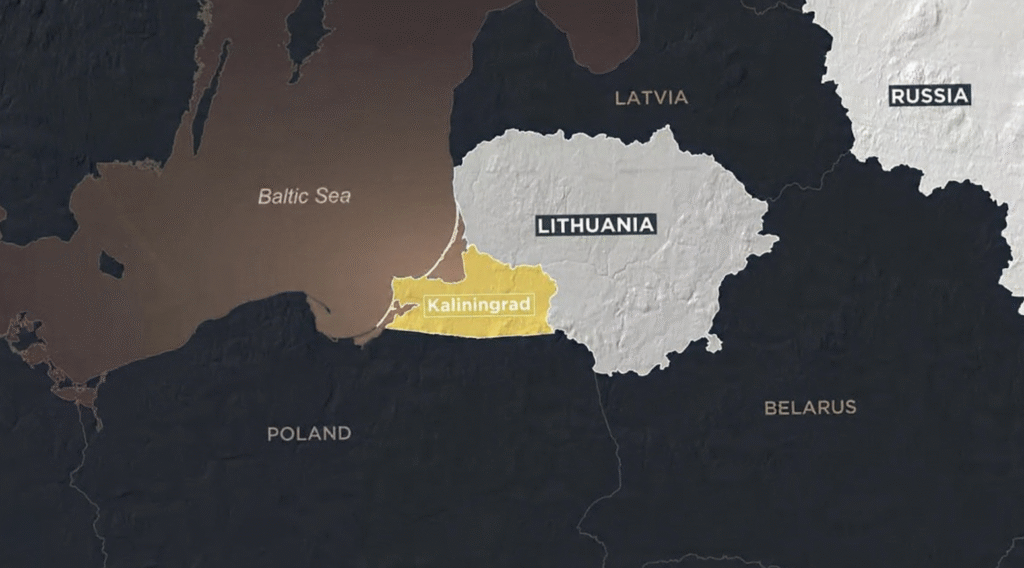
For Russia, the Baltic is not a peripheral theatre but a core strategic space anchored by Kaliningrad, its heavily fortified exclave wedged between Poland and Lithuania. Kaliningrad hosts elements of Russia’s Baltic Fleet, including surface combatants, submarines, and support vessels, alongside advanced air defence systems and coastal missile batteries.
The deployment of systems such as the S-400 air defence and Iskander missile platforms extends Russia’s anti-access and area-denial capabilities across much of the Baltic Sea and into NATO airspace. From Moscow’s perspective, these assets are defensive, designed to secure Russia’s western flank and guarantee access to maritime routes. From NATO’s standpoint, they significantly constrain freedom of movement and raise the stakes of any crisis in the region.
Kaliningrad also serves as a critical hub for surveillance and electronic warfare, reinforcing Russia’s ability to monitor naval traffic and undersea activity. This posture reinforces Moscow’s belief that the Baltic is already militarised by NATO expansion and that its own deployments are a necessary counterweight.
A Deepening Security Dilemma
The expansion of NATO’s footprint around the Baltic, particularly following Finland’s entry into the alliance and Sweden’s subsequent accession, has intensified Russian concerns about strategic encirclement. NATO members insist their measures are precautionary, aimed at deterrence and infrastructure protection. Russia interprets the same actions as preparation for containment or coercion.
This dynamic has produced a classic security dilemma. Defensive steps taken by one side are read as offensive intentions by the other, encouraging reciprocal military adjustments. The Baltic’s confined geography amplifies this effect, leaving little room for misinterpretation or error.
Grey-Zone Competition Below the Threshold of War
What makes the Baltic especially volatile is the dominance of grey-zone dynamics. Much of the competition unfolds below the threshold of open conflict: intelligence gathering, patrols near undersea assets, cyber activity linked to maritime systems, and ambiguous incidents that resist clear attribution.
Submarines, by design, are well suited to this environment. Their presence signals capability without visibility, deterrence without declaration. As a result, procurement and patrol patterns increasingly assume persistent confrontation rather than episodic crisis.
A Narrow Margin for Stability
The Baltic Sea’s transformation into a contested security space carries broader implications for European defence. It highlights a shift in modern warfare toward the protection and potential disruption of critical systems rather than territorial conquest alone. Energy flows, data cables, and logistics routes now sit at the heart of strategic planning.
Whether this emerging battleground stabilises or destabilises further will depend less on military hardware than on political restraint. As NATO and Russia continue to harden their positions, the challenge will be to prevent deterrence from sliding into provocation. In a sea as interconnected and constrained as the Baltic, the margin for error is rapidly narrowing.