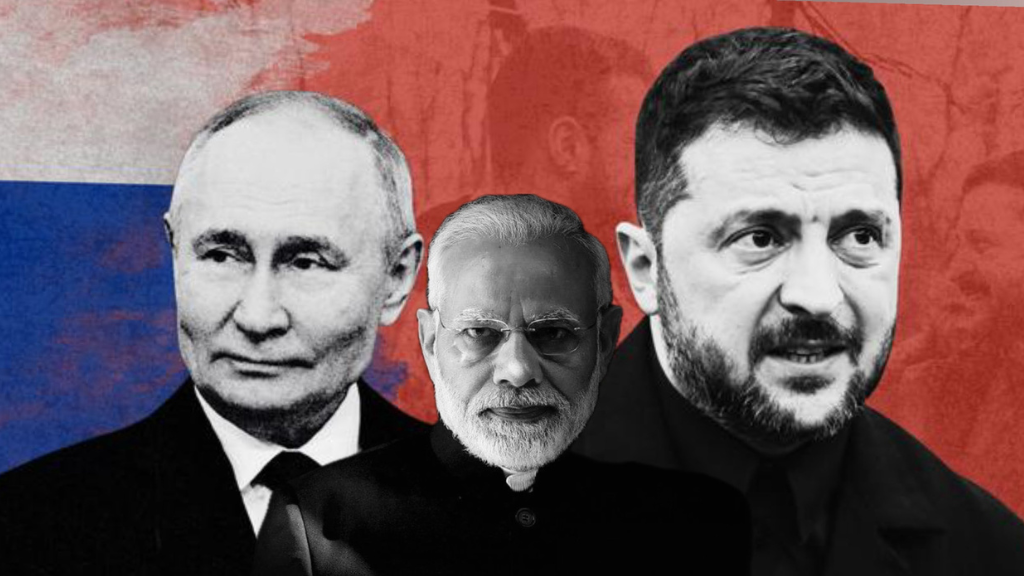
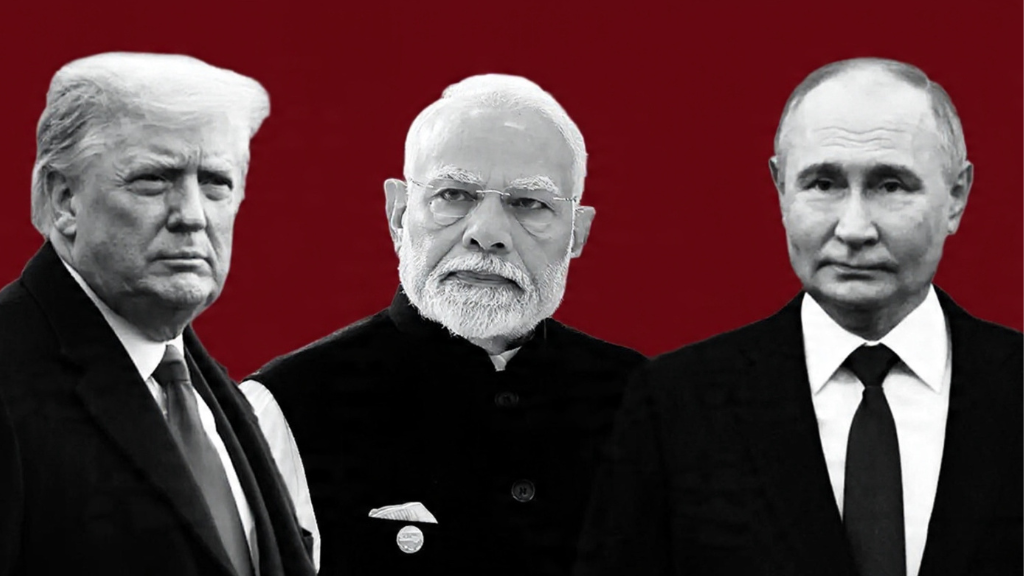
The proposed India–United States trade agreement, expected to move closer to formal adoption by mid-March, has been framed publicly as a turning point in bilateral economic relations. Officials on both sides have highlighted tariff adjustments, investment flows and expanded market access. Yet behind the positive language lies a more delicate question: whether closer economic ties with Washington will alter India’s approach to buying Russian crude.
From the American side, expectations have been set high. Remarks attributed to president Donald Trump have suggested the deal could bring Indian tariffs down to about 18 per cent and encourage a reduction in India’s reliance on Russian energy supplies. There has also been talk of substantial Indian investment in the US as part of a broader effort to rebalance trade.
India’s response has been far more measured. When Prime Minister Narendra Modi referred to progress in negotiations, he spoke of trade facilitation and long-term partnership but made no mention of oil imports from Russia. In diplomatic language, what is left unsaid often matters as much as what is stated openly. New Delhi has long avoided binding commitments that would limit its freedom of action on issues tied to core national interests.
Energy Comes First
India imports more than 80 per cent of the oil it consumes, making price and reliability central to economic stability. Since the war in Ukraine disrupted energy markets, Russian crude has been sold at significant discounts compared with many other suppliers. For Indian refiners, these lower prices have offered a commercial advantage at a time of global volatility.
Affordable crude has helped keep fuel prices in check in a country where transport costs, food prices and inflation are closely linked to energy expenses. A sudden shift away from discounted supplies would not only affect refineries but would ripple through the broader economy. From New Delhi’s perspective, oil procurement is primarily an economic calculation, not a political statement.
Indian officials have repeatedly argued that energy purchases are guided by market conditions and national interest. That logic has shaped policy for decades and has not changed with the emergence of new geopolitical pressures.
Strategic Autonomy and External Pressure
The United States has frequently used trade tools and sanctions to advance foreign policy goals. Reports hinting at possible pressure over India’s oil purchases have reinforced the view among some analysts that Washington may seek to use economic leverage to influence New Delhi’s choices.
India, however, continues to place strategic autonomy at the centre of its foreign policy. The concept is rooted in the belief that engagement with multiple powers provides greater security than dependence on any single bloc. India participates in the Quad alongside the US, Japan and Australia, while also sustaining defence and energy links with Russia and expanding its role in BRICS.
This approach reflects a preference for flexibility rather than alignment. New Delhi has avoided treating partnerships as exclusive commitments and has instead pursued parallel relationships based on practical benefit.
What the Market Shows
Trade patterns offer a clearer picture than political rhetoric. Indian refiners continue to assess Russian oil alongside supplies from the Middle East, Africa and the Americas. There has been no public instruction from the government to stop buying Russian crude.
Refinery decisions depend on price, shipping costs and technical compatibility. Russian Urals crude, a medium-sour blend, works well with several Indian refineries and has remained competitively priced. Substitutes are not always easy to find. Venezuelan crude tends to be heavier and harder to process, while American grades differ in both composition and cost.
These technical realities mean that oil trade follows economics more than diplomacy.
Russia, BRICS and the Broader Balance
For Moscow, India has become one of the most important destinations for its exports as Western markets have shrunk. Russian officials have repeatedly described India as a sovereign buyer free to choose its suppliers. The relationship is based less on ideology than on shared commercial interest.
This also fits within the wider BRICS context, where member states have explored ways to reduce dependence on Western financial and trade systems. India’s participation in this grouping has not replaced its growing engagement with the United States. Instead, it reflects an attempt to operate in both spheres without being absorbed by either.
A Test of India’s Global Role
The controversy surrounding Russian oil ultimately points to a larger shift in world politics. As India’s economic influence grows, major powers are seeking closer alignment with it. At the same time, India is trying to expand its partnerships without surrendering control over key policy choices.
Even if the trade agreement includes language on energy cooperation, it is unlikely to impose rigid limits on sourcing. India will continue to diversify suppliers, negotiate prices and adjust to changing markets. What it is less likely to do is accept obligations that restrict its ability to respond independently.
In the end, the question is not only about oil. It is about how a rising power manages competing pressures in a divided world — by engaging widely, committing selectively, and preserving the freedom to act in line with its own interests.