When Donald Trump returned to the White House in January 2025, one of his first and most consequential moves was to upend the basic assumptions that had guided U.S. trade policy since the end of the Cold War. For more than three decades, Washington had broadly accepted free trade as a strategic good which is imperfect, politically fraught, but ultimately essential to American economic leadership. Trump rejected that consensus outright.
Through a sweeping new tariff regime, his administration replaced market access with leverage, multilateralism with bilateral pressure, and economic integration with open economic coercion. The shift was not a correction at the margins. It was a structural break.
The End of the Free Trade Consensus
Since the 1990s, U.S. trade policy had been anchored in the belief that lowering barriers would expand global markets for American firms, reduce consumer prices, and bind rivals into a rules-based system. Even when trade deals proved unpopular domestically, successive administrations Republican and Democratic alike largely upheld this framework.
Trump’s 2025 approach discarded it. His tariffs were not limited to “unfair” actors or narrow sectors. They were designed as a universal instrument of pressure, imposed broadly and escalated quickly, with little regard for long-term institutional costs. The administration framed trade not as mutual exchange, but as a zero-sum contest in which deficits equated to national weakness.
The Tariff Shock of 2025
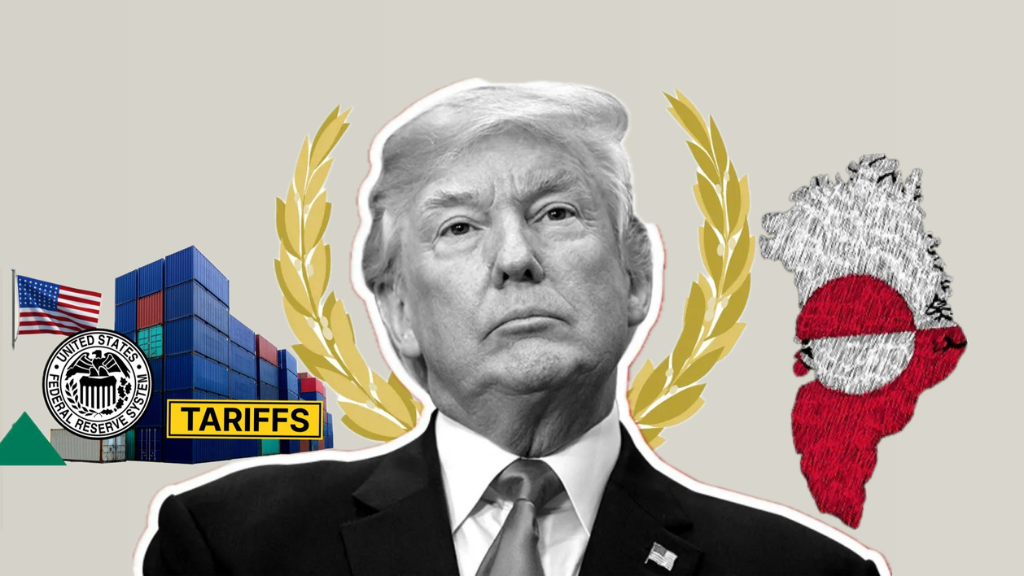
At the centre of Trump’s trade reset was a dramatic expansion of import tariffs. Building on measures first introduced during his earlier presidency, Trump imposed new blanket duties on a wide range of goods, including industrial components, consumer electronics, automobiles, and agricultural products.
These tariffs were justified on national security and economic sovereignty grounds. The administration argued that dependence on foreign supply chains had hollowed out American manufacturing and left the U.S. vulnerable to geopolitical shocks. Tariffs, in this view, were necessary to force companies to reshore production and to compel trading partners to renegotiate on Washington’s terms.
The scale and speed of the measures caught allies and markets off guard. Longstanding partners such as the European Union, Japan, and South Korea were hit alongside strategic rivals, blurring the line between competition and confrontation.
Immediate Economic Effects at Home
In the short term, the tariffs produced visible disruption. Import prices rose across multiple sectors, feeding inflationary pressures that were already politically sensitive. Manufacturers dependent on foreign inputs faced higher costs, squeezing margins and, in some cases, leading to layoffs rather than job creation.
Consumers felt the impact quickly. Everyday goods from household appliances to cars became more expensive, undermining the administration’s promise that tariffs would be paid by foreign exporters. While some domestic producers benefited from reduced competition, those gains were uneven and often offset by retaliatory measures abroad.
The result was a fragmented domestic response: pockets of protection for certain industries, alongside broader economic friction that weighed on growth and business confidence.
Retaliation and the Fragmentation of Global Trade
Internationally, Trump’s tariffs triggered swift retaliation. Trading partners imposed their own duties on U.S. exports, targeting politically sensitive sectors such as agriculture, energy, and manufacturing. The tit-for-tat escalation weakened export demand and deepened uncertainty in global markets.
More significantly, the tariff strategy accelerated the fragmentation of the global trading system. Countries began to hedge against U.S. unpredictability by diversifying supply chains away from American markets and institutions. Regional trade blocs gained renewed importance, while the World Trade Organization already weakened was further sidelined.
Rather than compelling broad concessions, Trump’s approach pushed many partners to seek insulation from U.S. economic pressure.
Strategic Implications Beyond Economics
The implications of the 2025 trade shift extended well beyond tariffs and balance sheets. By weaponising trade so openly, Washington blurred the boundary between economic policy and strategic coercion. Allies accustomed to U.S. leadership began to question whether access to the American market had become a liability rather than an asset.
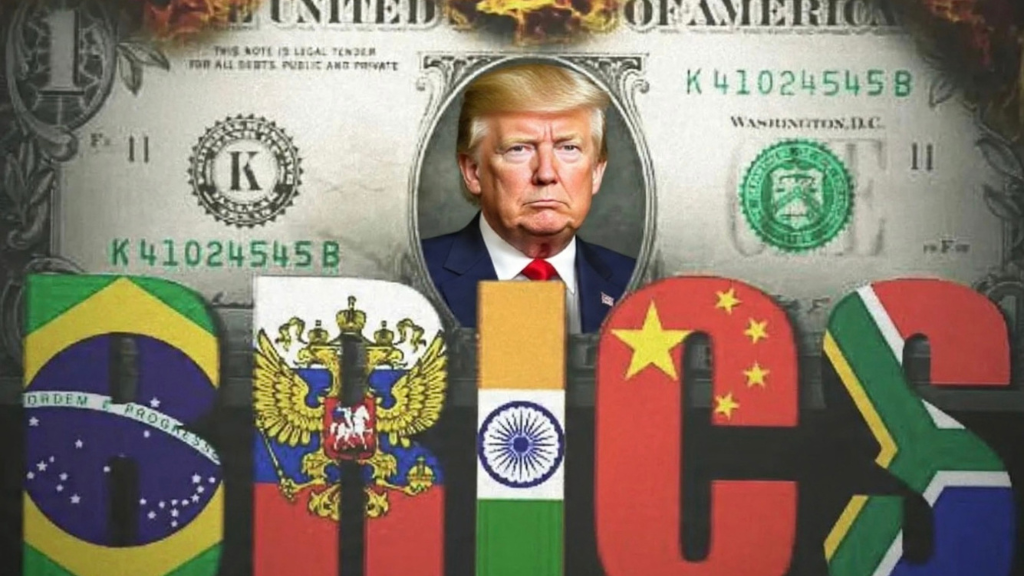
For rivals such as China, the tariffs reinforced the argument that economic decoupling was inevitable. Beijing accelerated efforts to strengthen domestic demand, secure alternative markets, and reduce reliance on U.S.-centric systems. In effect, Trump’s trade war hardened the very divisions it sought to exploit.
A Lasting Break with the Past
Trump’s 2025 trade agenda marked the most decisive rupture in U.S. economic policy since the postwar era. While previous administrations had flirted with protectionism, none had embraced it so comprehensively or so unapologetically.
Whether future presidents reverse course remains uncertain. What is clear is that the assumptions underpinning decades of American trade policy, openness, predictability, and institutional leadership have been fundamentally shaken. Trump did not merely raise tariffs. He redefined trade as an instrument of confrontation, leaving behind a more fractured global economy and a United States whose role as the steward of free trade is no longer taken for granted.