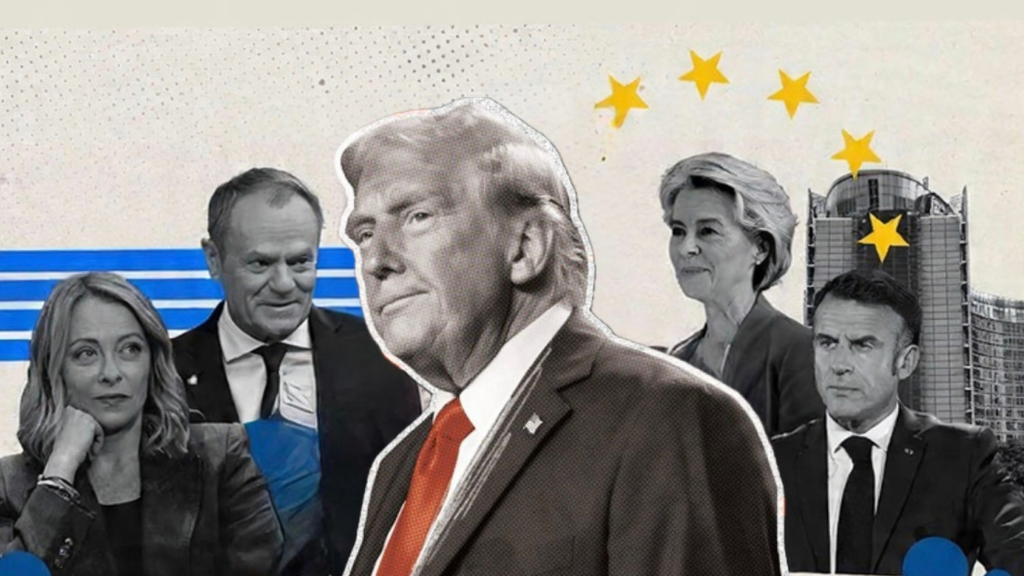
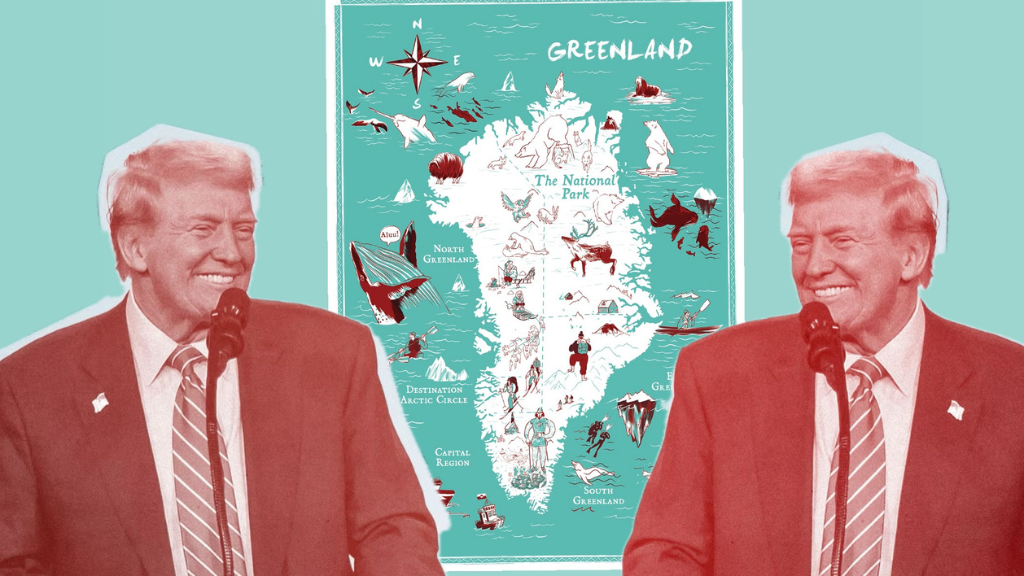
Donald Trump’s renewed fixation on Greenland has done something rare in contemporary European politics: it has produced an unusually unified response. From Paris to Warsaw, European leaders have closed ranks around Denmark and Greenland, rejecting any suggestion that the world’s largest island is a negotiable asset in great-power competition.
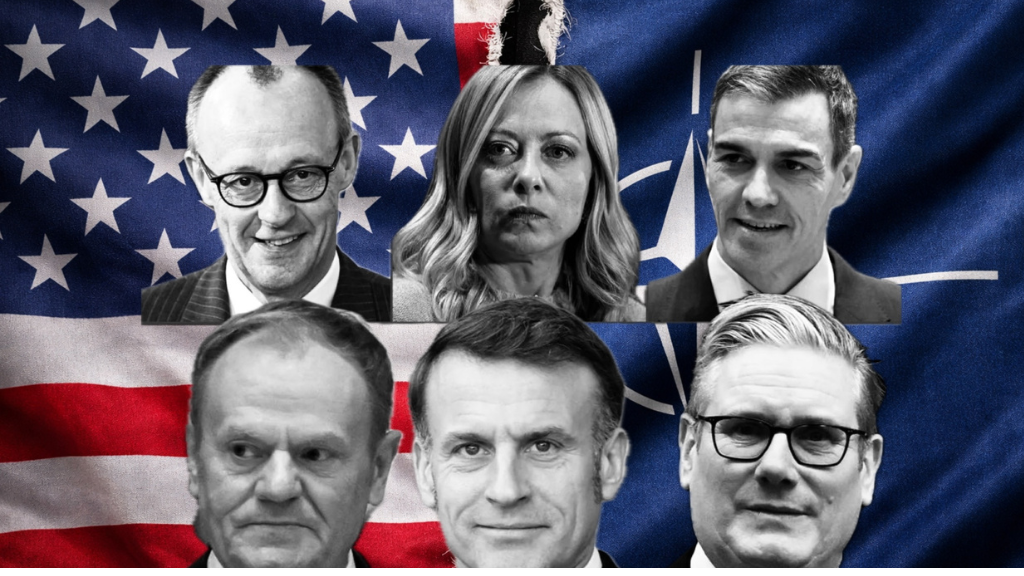
At the heart of their message is a simple assertion, delivered in blunt language. “Greenland belongs to its people,” read a joint statement issued by leaders from France, Germany, Italy, Poland, Spain, and the United Kingdom, standing alongside Danish Prime Minister Mette Frederiksen. Decisions about Greenland’s future, they emphasized, rest with Denmark and Greenland alone and no one else.
A Line Drawn on Sovereignty
Greenland occupies a peculiar position in international politics. It is a self-governing territory within the Kingdom of Denmark, giving it a degree of autonomy while anchoring it firmly within the Western alliance system. As part of Denmark, Greenland also falls under NATO’s collective security umbrella, a fact that has added sharp edges to Trump’s remarks.
European leaders were careful to frame their response not as rhetorical outrage, but as a defense of basic principles. Sovereignty, they argued, is not conditional on size, population, or strategic convenience. In an era marked by territorial disputes and war in Europe itself, the symbolism of acquiescing to annexation talk was simply too dangerous to ignore.
Frederiksen’s Warning: NATO Is Not Optional
Mette Frederiksen has taken the lead in addressing the implications of Trump’s statements. Speaking to Danish broadcaster TV2, she said the comments “should be taken seriously,” an unusually stark formulation from a leader accustomed to cautious diplomatic language.
Her warning was equally direct. If the United States were to attack or coerce another NATO country, she said, “everything stops” including NATO itself and the security framework that has underpinned Europe since the end of the Second World War. The remark was less a threat than a reminder: the alliance rests on mutual restraint as much as mutual defense.
Frederiksen’s intervention underscores the gravity with which Copenhagen views the situation. What might once have been dismissed as bluster is now treated as a potential stress test for the alliance’s internal cohesion.
Washington’s Confidence and Its Blind Spot
Inside the White House, the tone has been markedly different. Stephen Miller, Trump’s deputy chief of staff, dismissed the idea of military confrontation altogether. “Nobody is going to fight the US militarily over the future of Greenland,” he said, framing the issue as a question of American security interests rather than international law.
Trump himself has been explicit about his rationale. He argues that the United States needs Greenland to counter what he describes as rising Chinese and Russian activity in the Arctic. According to Trump, the island is already surrounded by Russian and Chinese ships, and Denmark, in his view, lacks the capacity to secure it effectively.
This framing reduces Greenland to a strategic object, valuable not for its people or institutions, but for its location, resources, and military utility. It is precisely this logic that European leaders are now pushing back against.
Why Greenland Matters More Than Ever
The urgency of the debate is not accidental. Climate change is rapidly transforming the Arctic, opening new shipping routes and making previously inaccessible mineral resources more viable. Greenland, rich in rare earths and positioned astride critical North Atlantic and Arctic approaches to North America, has become central to discussions about future trade and security.
Rising tensions between major powers have only heightened its importance. For Washington, Greenland represents a forward position in an increasingly contested region. For Europe, it represents a test case: whether strategic competition will be governed by rules and consent, or by pressure and power.
Trump’s comment to reporters “Let’s talk about Greenland in 20 days” has only deepened unease, suggesting that the issue is not theoretical but imminent. Even without concrete plans, the timing and tone have fueled fears of unilateral action.
Europe’s Broader Concern
Beyond Greenland itself, European capitals see a larger pattern at work. If alliance relationships can be overridden by raw strategic calculation, smaller states and territories become vulnerable by default. The joint European statement was therefore as much about precedent as it was about Greenland.
By insisting that Greenland’s status is not up for negotiation, European leaders are attempting to draw a firm boundary around acceptable behavior, even among allies. In doing so, they are also signaling to China and Russia that Western unity, however strained, still has limits it will defend.
More Than an Arctic Dispute
The clash over Greenland is not merely about ice, minerals, or shipping lanes. It is about whether sovereignty remains a meaningful concept in an age of renewed great-power rivalry. Europe’s response suggests that, at least for now, the answer is yes.
“Greenland belongs to its people” is more than a slogan. It is a declaration that strategic anxiety does not override self-determination, and that even the most powerful states are bound by the same rules they claim to defend.
Whether that principle holds will depend not only on what Trump says next, but on how firmly Europe and the alliance as a whole continues to stand behind it.