
Why India and the US need an AGI alliance before China rewrites the rules of power
Everyone’s talking about the trade numbers. The tariff cuts. The market access provisions. The usual stuff you’d expect from a US-India deal under Trump.
They’re missing the point.
The trade agreement signed between President Donald Trump and Prime Minister Narendra Modi isn’t really about commerce. It’s about technology. Specifically, it’s about artificial general intelligence (AGI), and whether India will have a seat at the table when the rules get written.
Right now, we don’t.
India’s AGI Blind Spot
Here’s something that doesn’t get said enough in Delhi policy circles: Indian policymakers have largely avoided the AGI conversation.
We talk endlessly about AI for agriculture. AI for healthcare. AI-powered governance platforms. All useful. All necessary. All focused on today’s problems.
But AGI? The kind of artificial intelligence that matches or exceeds human cognition across every domain? The technology that will reshape global power more fundamentally than nuclear weapons ever did?
Crickets.
This isn’t an accident. It reflects India’s pragmatic focus on immediate challenges rather than speculative long-term scenarios. We’re solving for malnutrition and farmer suicide rates, not debating what happens when machines think like humans.
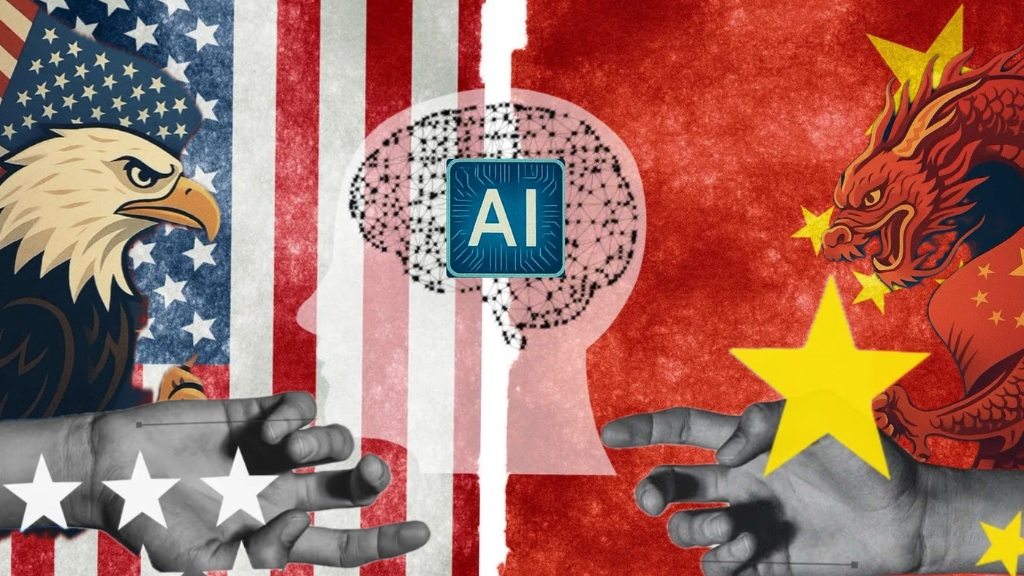
I get it. But here’s the problem: while we focus on practical applications, the global rules around AGI are being negotiated without us. China and the United States are setting the terms. India is a spectator.
And that’s a strategic disaster in the making.
Why AGI Is More Dangerous Than Nukes
Let me be blunt about something that sounds like science fiction but isn’t.
AGI isn’t just the next version of ChatGPT. It’s the ultimate strategic weapon, with consequences that dwarf nuclear arsenals in both scale and scope.
Think about what nuclear deterrence actually means. India has second-strike capability. If Pakistan or China launches, we launch back. Mutual assured destruction keeps everyone cautious.
Now imagine China develops AGI systems capable of identifying vulnerabilities in India’s nuclear command-and-control infrastructure. Disabling our arsenal through precision cyber operations. Predicting and intercepting our retaliatory strikes with near-perfect accuracy.
Suddenly, our nuclear deterrent is worthless.
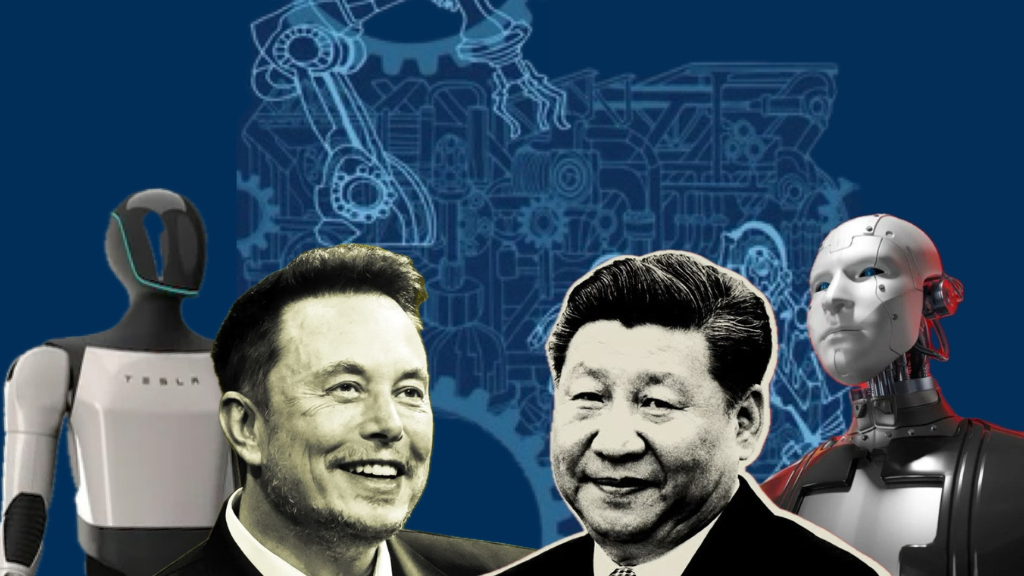
This isn’t hyperbole. China is investing over $15 billion annually in foundational AGI research. Their state-driven projects are producing cost-efficient breakthroughs that should terrify anyone paying attention.
DeepSeek, a Chinese AI model, was built for $5 to 6 million. OpenAI spent over $100 million on GPT-4. China is training large language models under strict US chip export controls and still beating Western efficiency benchmarks.
Even worse, China’s Military-Civil Fusion strategy funnels every academic and commercial AI breakthrough straight into People’s Liberation Army hands. In 2023 and 2024, 75% of PLA contracts went to commercial AI firms, not traditional defense contractors.
They’re deploying robot soldiers, autonomous surveillance networks, and deep cyber capabilities along the Indian border right now.
While we debate AI ethics frameworks in seminar rooms, China is building the infrastructure to make India’s strategic autonomy obsolete.
The Case for a US-India AGI Compact
India and the United States share something critical: neither of us wants a future where Chinese-controlled AGI breaks nuclear deterrence and reshapes global power in Beijing’s favor.
For both countries, strategic autonomy, economic growth, and democratic values depend on building, deploying, and governing AGI together. Not separately. Not through vague multilateral forums. Together.
For the US, cooperation with India provides talent, market scale, and a democratic counterweight in Asia. For India, partnership with the US offers access to frontier compute, advanced semiconductors, and research infrastructure we can’t build alone in time.
The Quad exists. The Global Partnership on AI (GPAI) exists. But neither has crystallized into a genuine, committed alliance on AGI research, security, and governance.
Political caution, legacy procurement rules, and lack of a joint mission have slowed coordination to a crawl.
We need something bigger.
What an AGI Alliance Actually Looks Like
A joint US-India AGI compact should rest on three pillars.
First: Hard capability access.
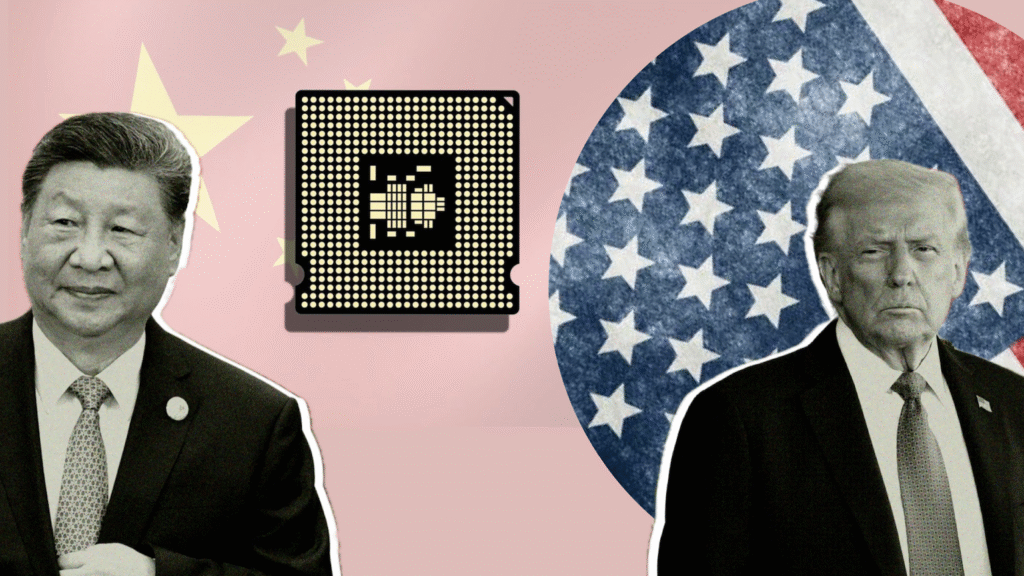
The US needs to grant India tier-one export treatment for advanced accelerators. That means access to hundreds of thousands of GPUs for shared research clusters and model training, available to vetted Indian labs.
This isn’t charity. It’s strategic necessity. Narrowing India’s time-to-frontier gap in AGI development directly serves US interests by creating a credible democratic alternative to Chinese dominance.
Second: Integrated research and defense translation.
Co-funded institutes and fellowships to retain and attract talent. Joint red-teaming exercises on AGI-resilient nuclear command and control. Real-time attribution systems for AI-enabled attacks.
This turns abstract safety research into concrete strategic stability tools. It also ensures that India’s brightest AI researchers don’t have to choose between staying home or moving to Silicon Valley.
Third: Rule-setting and governance.
Co-sponsor an “AI for Humanity” framework with compute thresholds, mandatory auditing, and shared oversight. This prevents unconstrained AGI racing while preserving access for democratic coalitions.
The governance vacuum exists right now. If India and the US don’t fill it together, de facto norms will be written by whoever moves first. And right now, that’s China.
The Window Is Closing
Both sides already recognize the stakes, even if public discourse hasn’t caught up.
The Council on Foreign Relations is framing the US-China contest explicitly around AGI, where self-improving systems confer compounding strategic advantage. University analyses of DeepSeek’s open-source acceleration warn that agility and community-driven iteration can outpace closed, capital-heavy models.
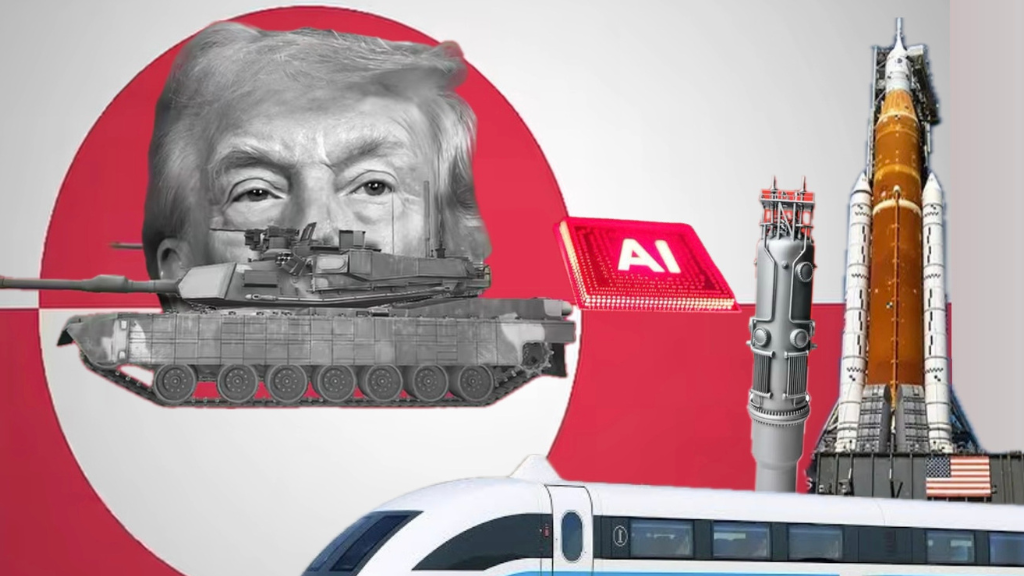
In US defense circles, the conversation has moved beyond a Manhattan Project model toward an Apollo-like approach: multi-institutional, open with guardrails, designed for rapid translation.
That’s precisely the posture a US-India pact should adopt.
But the window is narrow.
If AGI arrives first in an authoritarian ecosystem optimized for rapid militarization, India will confront a neighbor with superhuman planning, perception, and disruption capabilities. And we’ll have fading assurance that nuclear deterrence can cap escalation.
A US-India AGI compact offers a realistic path to both capability and constraint. Hardware access. Joint institutes. Defense translation. Co-led governance.
The policy task is simple and urgent: elevate AGI cooperation to the level of a strategic technology alliance. Fast-track export status and shared compute. Stand up joint red-teams on nuclear resilience. Table a co-authored governance proposal before norms harden by default.
In the Indo-Pacific, the line between code and coercion is thinning. India and the United States should draw a brighter one together, before someone else writes the rules in silicon.
The New 123 Agreement
Remember the 2005 civil nuclear agreement? It unlocked access to global reactors, fuel, and norms for peaceful use. It signaled India’s place in a balancing coalition without requiring a formal military alliance.
An Indo-US AGI pact would do the same thing for the 21st century.
Same bargain structure: access plus accountability. Capability plus constraints.
The nuclear deal hinged on non-proliferation assurances. An AGI deal would hinge on “non-concentration” with guardrails to prevent unilateral, unconstrained super-scale training by any one actor, while enabling trusted partners to co-develop and co-govern high-capability systems.
The nuclear pact ring-fenced military and civilian streams. An AGI pact should explicitly ring-fence dual-use advances with doctrine for “human-in-the-loop” command, nuclear C2 resilience, and no-first-use of autonomous lethal decision-making codified in bilateral agreements.
The nuclear deal signaled India’s strategic weight. An AGI deal would anchor India as the democratic fulcrum in Asia’s tech order, deterring unilateral AGI militarization by raising collective capacity and norms.
What This Really Means
The trade deal is the economic base. An AGI alliance should be the strategic superstructure.
If the 20th century was defined by oil alliances and the 21st by chip wars, the next decade will be defined by who co-governs AGI.
India and the US have a narrow but historic window to shape that future together.
Right now, we’re negotiating tariff schedules and investment caps. Important stuff. But in ten years, those details won’t matter if China’s AGI systems have rewritten the rules of deterrence, sovereignty, and power.
This isn’t about whether India should align with the US on everything. It’s about whether we can afford to sit out the most consequential technology race in human history.
Because if we do, we won’t get a second chance to catch up.
The trade deal is signed. Now comes the hard part: turning economic partnership into strategic capability before the window closes.
Are we ready for that conversation?
Do you think India’s policymakers understand the AGI urgency, or are we still too focused on narrow AI applications? Let me know what you think. Hit reply or comment below.
The author is a Subject Matter Expert on AI and Cyberwarfare at CENJOWS( Centre for Joint Warfare Studies), HQ IDS, Ministry of Defence, New Delhi. The author is also a Visiting Research Fellow at MGIMO, Moscow and pursuing his PhD on “AI in Russia” from School of International Studies, JNU.