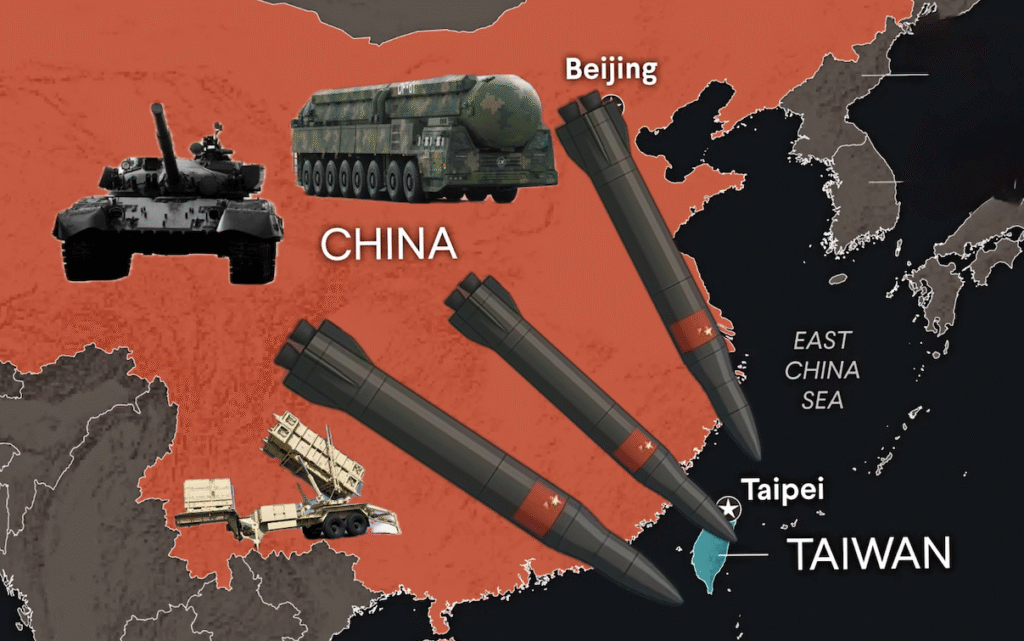
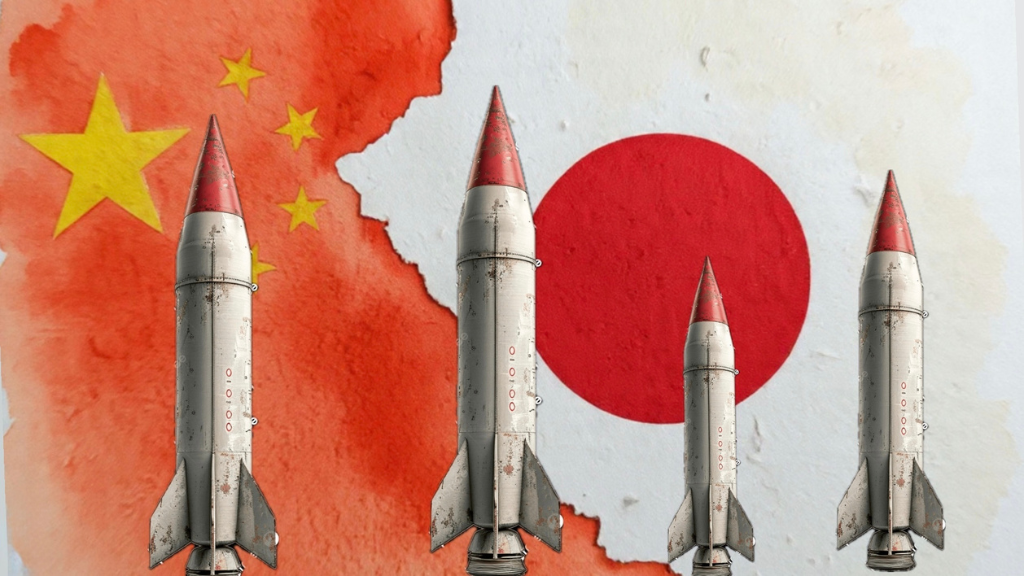
Japan’s decision to deploy new missile systems on its westernmost island is set to deepen already strained ties with China, according to regional security experts. The move places advanced air-defence weapons within close reach of Taiwan, an island Beijing considers its own territory.
Defence Minister Shinjiro Koizumi said the surface-to-air systems, designed to intercept aircraft and ballistic missiles, will be stationed on Yonaguni Island by March 2031. The island lies roughly 110 kilometres east of Taiwan.
“It depends on the progress of facility preparations, but the target is fiscal 2030,” Koizumi told reporters, offering the most concrete schedule yet.
Analysts see the announcement as more than a routine defence upgrade. Einar Tangen, a senior fellow at the Centre for International Governance Innovation, described it as a calculated shift that is likely to sharpen regional tensions.
“These steps are being taken with clear political timing,” he said, linking the decision to Prime Minister Sanae Takaichi’s upcoming visit to Washington in March 2026.
Why Yonaguni Matters
Yonaguni sits at the far southwestern edge of Japanese territory and is so close to Taiwan that its coastline can be seen on clear days. It is part of the Ryukyu island chain, which stretches from Japan’s main islands toward Taiwan and the South China Sea.
Over the past decade, Tokyo has expanded military infrastructure across this chain, adding radar stations, ammunition depots and missile batteries. Although plans to reinforce Yonaguni were announced in 2022, this is the first time the government has attached a firm deadline to the deployment.
Taiwan and a Shift in Tone
Relations between Tokyo and Beijing cooled further after Takaichi publicly suggested last year that Japan might play a role in a Taiwan conflict. The remarks broke with decades of careful ambiguity and came shortly after the anniversary of Japan’s former colonial rule over Taiwan, a historically sensitive issue for Beijing.
China reacted sharply, accusing Japan of stirring trouble in what it calls its internal affairs. Travel advisories soon followed, discouraging Chinese tourism to Japan — a sector that brings in around $11 billion annually.
Beijing also increased pressure through military and economic measures. Naval patrols appeared more frequently near Japanese waters, controls tightened on rare-earth exports, and cultural exchanges were scaled back. Even the giant pandas at Tokyo’s Ueno Zoo, long seen as a symbol of goodwill, were withdrawn.
A Longer Military Trajectory
Some analysts argue that the missile plan is part of a steady evolution rather than a sudden shift. Arnaud Bertrand, a geopolitical commentator, traces it back to the 2014 reinterpretation of Japan’s pacifist constitution under former Prime Minister Shinzo Abe, which allowed limited collective self-defence.
“Each stage was framed as defensive — coastal monitoring on Yonaguni, then missile units on Ishigaki, electronic warfare assets, and now this,” he said. What makes the current moment different, he added, is the explicit connection being drawn between Japan’s preparations and a possible Taiwan scenario.
From Beijing’s perspective, such linkage is especially provocative because Taiwan is regarded as sovereign Chinese territory.
Why Now?
China has yet to formally answer Koizumi’s latest statement, though it accused Japan last year of fuelling instability when the minister visited Yonaguni. Soon after, Chinese drones approached the area, prompting Japanese fighter jets to scramble.
Bertrand believes Tokyo feels time is running out. China’s military capabilities are expanding quickly, and Japanese planners may see this as the last chance to establish forward positions before the balance shifts further.
External pressure also plays a role. The United States has encouraged allies to shoulder more regional security responsibilities, particularly under President Donald Trump’s administration. At home, Takaichi strengthened her mandate after her party’s decisive election win earlier this year.
How China Could Respond
Beijing has already begun to lean on economic tools. It recently restricted exports to 40 Japanese companies accused of supporting Japan’s “remilitarisation.” Tokyo called the move unacceptable.
Further steps could target civilian industries. Analysts warn that expanded controls on rare-earth materials could disrupt Japan’s automobile and electronics sectors, both heavily dependent on Chinese supply chains.
China has been Japan’s largest trading partner since 2005. Trade between them reached about $322 billion in 2024, with China accounting for roughly one-fifth of Japan’s exports and imports. Japan runs a sizeable deficit, importing around $43 billion more from China each year than it exports.
“Japan cannot keep expanding its military posture against China while relying on Chinese trade for prosperity,” Bertrand said. “Eventually, it will have to choose — and Beijing appears determined to force that choice into the open.”
A Delicate Balance
For now, the missile deployment remains years away. But the political message is already clear. Japan is edging closer to a more assertive defence role, and China is watching closely. As tensions around Taiwan grow, even small islands like Yonaguni are becoming front-line symbols of a much larger strategic contest in East Asia.