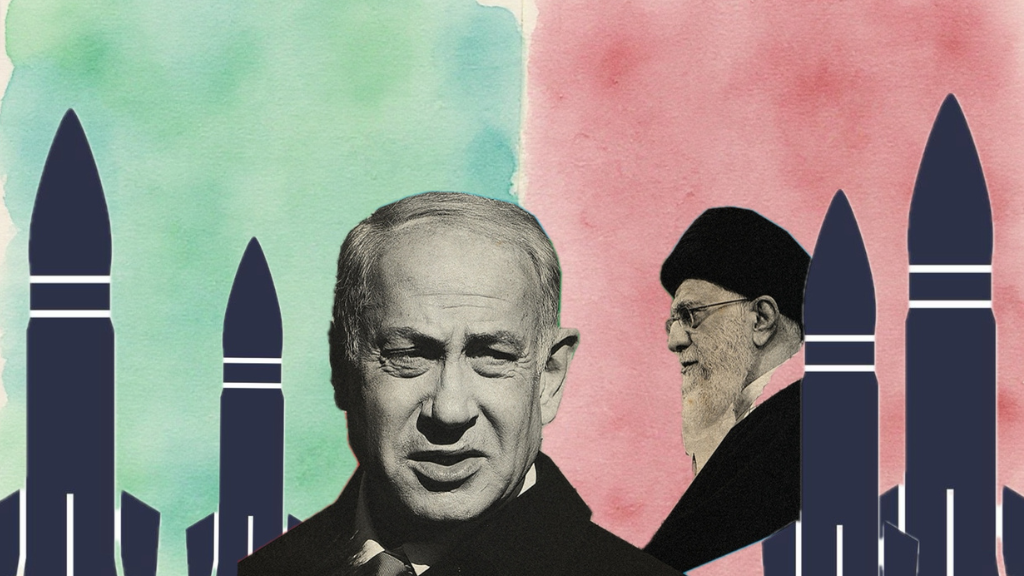
Israeli Prime Minister Benjamin Netanyahu has issued one of his strongest warnings yet to Tehran, saying Israel is ready for any outcome if it comes under attack.
Speaking at a graduation ceremony for new military cadets, Netanyahu said that Israel’s armed forces are prepared for every possible scenario. He added that if Iran’s leadership were to make what he called the “mistake” of attacking Israel, the response would be so powerful that it would be beyond anything they expect.
He did not spell out what such a response would involve. Still, Israel is widely regarded as one of the most heavily armed countries in the region, with highly advanced air, missile, cyber, and intelligence capabilities.
Although Israel has never officially acknowledged possessing nuclear weapons, it has long followed a policy of strategic ambiguity. Many international analysts estimate that it has between 80 and 90 nuclear warheads. These are believed to be deliverable through several systems, including long-range missiles, submarines, and combat aircraft.
Israel’s air force operates advanced fighter jets, including stealth aircraft capable of penetrating deep into hostile territory. Alongside its conventional weapons such as precision-guided bombs and missile defence systems this gives Israel the ability to strike with speed and accuracy if required.
Trump Sets Deadline for Iran
The warning from Jerusalem came as US President Donald Trump also raised the stakes with Tehran. Trump said Iran had around 10 days to reach what he described as a “meaningful deal” with Washington.
Speaking at the first meeting of a new advisory group he calls the “Board of Peace,” Trump argued that past negotiations with Iran had shown how difficult compromise could be. He said that failure to reach an agreement would lead to consequences, adding that the United States might be forced to “take it a step further” if diplomacy failed.
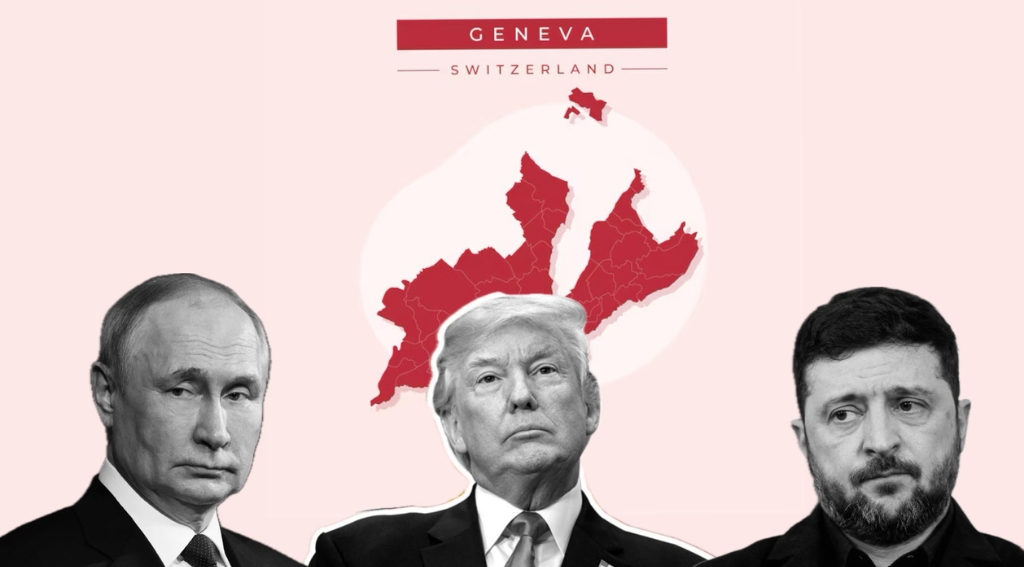
The comments followed a second round of indirect talks between US and Iranian officials, mediated by Oman and held in Geneva. Washington’s central demand is that Iran be prevented from acquiring nuclear weapons, something Tehran insists it has no intention of doing while Iran is pushing for the easing of American economic sanctions.
White House Press Secretary Karoline Leavitt added to the pressure, saying there were “many arguments” in favour of striking Iran militarily and warning that Tehran would be “wise” to accept Trump’s terms.
Nuclear Dispute at the Core
Iran’s atomic energy chief responded by insisting that no country had the right to deny Iran its ability to enrich uranium. Iranian leaders argue that their nuclear programme is for civilian energy and medical research, while the US and its allies believe it could be used to build a bomb.
Previous efforts at diplomacy collapsed last year after Israeli air strikes on Iranian targets triggered nearly two weeks of fighting. During that conflict, US forces also joined in limited attacks on Iranian nuclear facilities.
American media outlets CNN and CBS reported this week that US forces could be ready to strike Iran within days, although Trump has not yet approved any operation.
The Wall Street Journal reported that Trump had been briefed on several military options, including plans aimed at severely weakening Iran’s leadership and military command structure.
Iran’s foreign minister, Abbas Araghchi, said recent discussions had produced some shared principles with Washington. However, US Vice President JD Vance claimed Iran had yet to fully accept America’s core conditions.
Iranian President Masoud Pezeshkian struck a cautious tone, saying his country did not want war but could not simply bow to foreign demands.
International Alarm Grows
As tensions rise, several countries have begun taking precautionary measures. Poland ordered its citizens in Iran to leave immediately. Germany reduced its troop presence in northern Iraq, citing security risks linked to the regional standoff.
Russia called for restraint, warning that the situation was reaching an unprecedented level of tension and urging all sides to keep negotiations alive.
Iran has maintained that talks with the US should focus only on nuclear issues. Washington, however, has previously tried to include Iran’s ballistic missile programme and its support for armed groups across the Middle East.
Meanwhile, the US has been steadily reinforcing its military presence near Iran. Additional warships, fighter jets, and refuelling aircraft have been deployed, signalling readiness for a prolonged operation if ordered.
A second US aircraft carrier has also been sent to the region. The first, the USS Abraham Lincoln, was positioned several hundred kilometres from Iran’s coast earlier this week, according to satellite data.
Iran has responded with its own show of force. The Islamic Revolutionary Guard Corps carried out naval exercises in the Strait of Hormuz, a narrow waterway through which much of the world’s oil and gas supply passes. Iranian officials have repeatedly threatened to block the strait in the event of war.
Such a move would have major consequences for global energy markets. The International Energy Agency estimates that roughly a quarter of all seaborne oil and about 20 percent of liquefied natural gas pass through the strait.
With both sides hardening their language and military forces on alert, fears of a wider conflict continue to grow even as diplomats insist that negotiations remain the only viable path away from war.