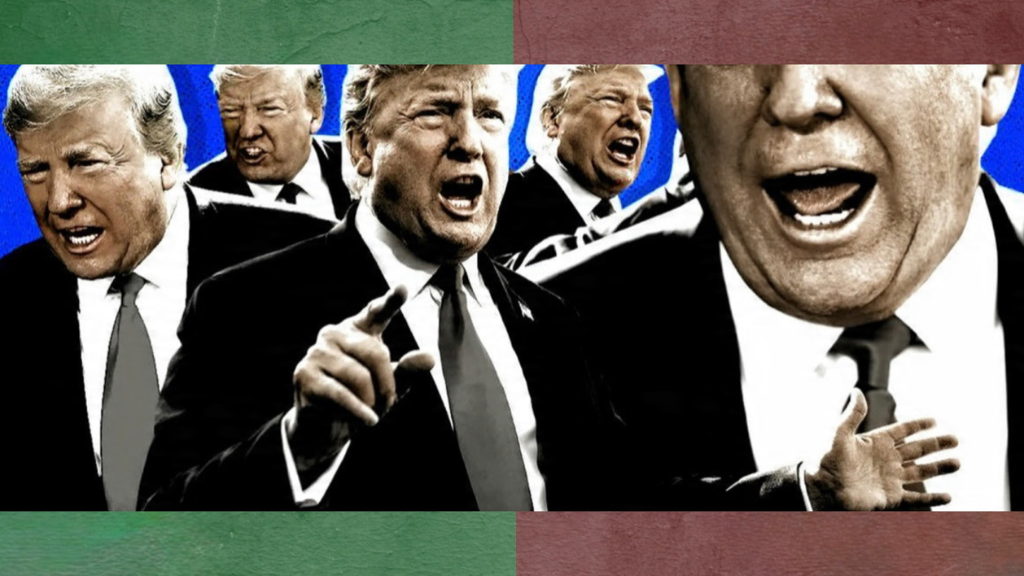
President Donald Trump has said the world will soon know whether the United States can reach a deal with Iran over its nuclear program or whether the confrontation will move in a far more dangerous direction. Speaking in Washington, Trump told an audience that the next ten days would be decisive.
“We have some work to do,” he said. “You’ll find out very soon — probably within ten days — whether we get a deal or whether we have to take things further.”
His words immediately sharpened attention on a crisis that has been quietly building for weeks. Behind closed doors, diplomats have been trying to keep talks alive. At the same time, the military has been moving ships and aircraft into position, just in case those talks fail.
Quiet Talks, Loud Signals
Trump said recent discussions with Iranian representatives had been encouraging, even if fragile. He described meetings held by U.S. envoys as “very good,” suggesting there was still a chance for diplomacy to succeed.
But he also admitted that dealing with Iran has never been easy. Previous efforts to reach agreements have often collapsed, leaving mistrust on both sides. That history hangs heavily over the current negotiations.
White House officials have echoed that mix of hope and warning. They say a diplomatic solution is still possible, but only if Iran acts quickly. Talks have reportedly taken place in Switzerland, where negotiators have tried to outline what a compromise might look like limits on nuclear activity in exchange for easing economic pressure.
A Region on Edge
While diplomats talk, the U.S. military has been quietly strengthening its presence in the Middle East. Warships and aircraft have been moved closer to the region, and activity at American bases has increased.
Officials say these steps are meant to deter Iran from taking aggressive action. Iran, however, sees them as threats.
This buildup follows last year’s U.S. strikes on several Iranian nuclear facilities, an episode that shocked the region and raised fears of a wider war. Now, with more forces in place and tensions rising again, many worry that another miscalculation could trigger something far larger.
Iran Pushes Back
Iran has not stayed silent. It has reinforced its own military positions and sent sharp warnings to Washington.
The country’s supreme leader has used public messages to remind the U.S. that American warships, though powerful, are not invulnerable. His comments were meant to project strength and to show that Iran is prepared to respond if attacked.
At the same time, Iranian officials continue to insist their nuclear program is peaceful. They deny seeking nuclear weapons and say their activities are for energy and research. Western governments remain unconvinced, pointing to Iran’s uranium enrichment and missile development as reasons for concern.
Unease in Congress
Back in Washington, Trump’s words have stirred anxiety in Congress. Lawmakers from both political parties are questioning whether the president should be able to launch military action without their approval.
Two members of the House of Representatives have said they will push for a vote under the War Powers Act, a law designed to limit presidential authority to wage war without Congress’s consent.
One of them warned that a war with Iran would be devastating. Iran is not a small or weak country, he said, but a nation of about 90 million people with serious military capabilities. Thousands of American troops are stationed across the Middle East, and they could become targets if fighting begins.
Such efforts have failed before, and there is no guarantee they will succeed now. Still, the debate shows how deeply divided Washington is over how far the U.S. should go.
A Board With Bigger Ambitions
Trump’s remarks came at the first meeting of his new Board of Peace, a group made up of representatives from around two dozen countries. It was originally set up to focus on ending the war in Gaza and helping with reconstruction.
But its role appears to be expanding. With Iran now on its agenda, some observers believe Trump wants the board to become a broader platform for handling global crises — possibly even rivaling established international institutions.
For now, its exact purpose remains unclear. What is clear is that Trump is using it as a stage to send messages not just to Iran, but to the world.
The Countdown Begins
As the ten-day clock ticks down, the atmosphere is tense. Diplomats are still talking, soldiers are still repositioning, and political leaders are weighing their options.
Trump’s message is blunt: there is still time for a deal, but not much.
Whether this moment leads to compromise or conflict may soon be known. What happens next will shape not only relations between Washington and Tehran, but also the fragile balance of power across the Middle East.
For now, the world waits, watching to see whether words can prevent weapons from taking over.