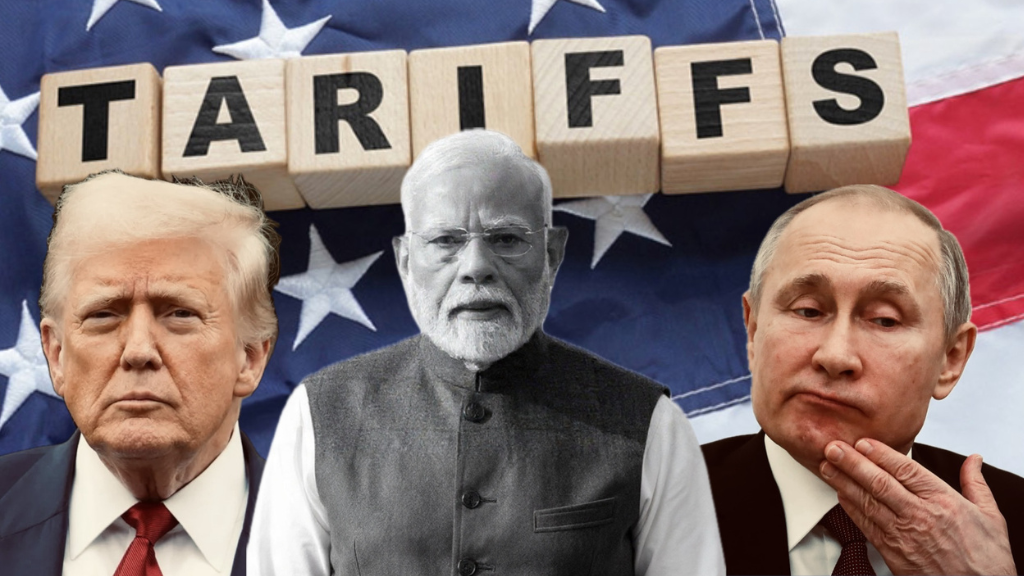
U.S. President Donald Trump has announced a fresh trade agreement with India following a phone call with Prime Minister Narendra Modi, marking what Washington is calling a reset in economic relations between the two countries. Under the new arrangement, U.S. reciprocal tariffs on Indian goods will drop from 25 percent to 18 percent with immediate effect, easing months of trade tensions.
The move signals a shift in relations between the world’s two largest democracies after a period marked by disputes over market access, tariffs, and energy ties with Russia. Officials on both sides say the agreement is intended to revive momentum in bilateral trade while expanding strategic cooperation.
Boost for Indian Exports
The tariff reduction is expected to benefit a wide range of Indian export sectors, including pharmaceuticals, textiles, auto components, engineering products, and gems and jewelry. These industries had been under pressure from higher U.S. duties, which reduced competitiveness in the American market.
Lower trade barriers could help Indian manufacturers regain lost ground, particularly at a time when New Delhi is trying to position itself as an alternative production base to China. Officials in India see the cut as an opportunity to increase export volumes and protect domestic employment in key industries.
In exchange, India is expected to ease restrictions on selected American goods. Negotiators have reportedly focused on widening access for U.S. farm products, technology equipment, energy infrastructure, and industrial machinery.
Large-Scale Import Commitments
One of the most ambitious aspects of the agreement is India’s pledge to buy more than $500 billion worth of American goods over time. These purchases are expected to cover a broad range of sectors, from energy and agricultural commodities to advanced technology and industrial inputs.
If implemented, the plan would substantially expand U.S. exports to India and address Washington’s long-standing concerns about the trade gap between the two economies. For India, the arrangement supports its growing demand for fuel, high-end technology, and raw materials needed to sustain industrial growth.
Energy Realignment and Russian Oil
The deal also carries major geopolitical implications. President Trump said India has committed to ending its purchases of Russian oil and shifting toward supplies from the United States and other partners.
Since the start of the Ukraine war, India has emerged as one of the largest buyers of discounted Russian crude, citing national energy security and price stability. That policy has drawn criticism from Western governments attempting to curb Moscow’s export revenues. A move away from Russian oil would represent a significant change in India’s energy strategy and could influence global oil trade patterns.
Greater U.S. energy exports to India could strengthen long-term ties between the two countries, though analysts note that such a transition would require adjustments in logistics, pricing, and refinery configurations.
Wider Strategic Impact
Beyond economics, the agreement has been framed as a political and strategic milestone. Both leaders highlighted their personal rapport and presented the deal as evidence of growing trust between Washington and New Delhi.
Stronger trade links are also expected to reinforce cooperation in defense, emerging technologies, and supply chain security. For the United States, India is increasingly viewed as a central partner in maintaining balance in the Indo-Pacific amid rising competition with China.
For India, closer economic engagement with the U.S. offers access to investment, innovation, and global markets, even as it continues to manage ties with other major powers.
Challenges Ahead
Despite the upbeat tone, much will depend on how quickly the commitments are translated into formal agreements and domestic policy changes. Large trade deals typically require complex negotiations, regulatory adjustments, and phased implementation.
Uncertainty also remains over how smoothly India can reduce its reliance on Russian oil and how industries in both countries will adapt to new competitive pressures.
Still, the announcement points to a renewed effort to elevate India–U.S. economic ties. If carried out as promised, the agreement could reshape trade flows between the two countries and carry broader consequences for global energy markets and geopolitical alignments.