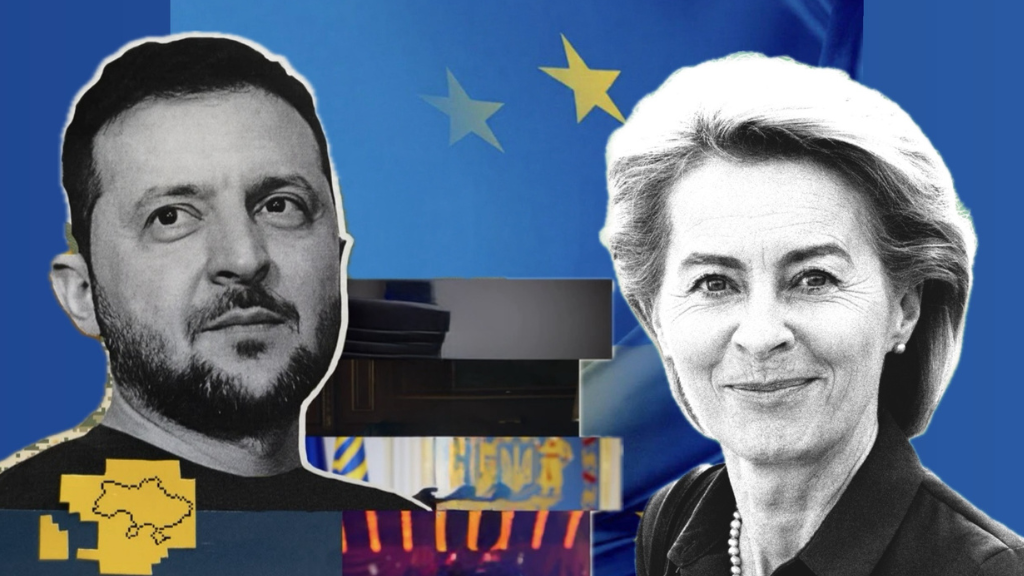
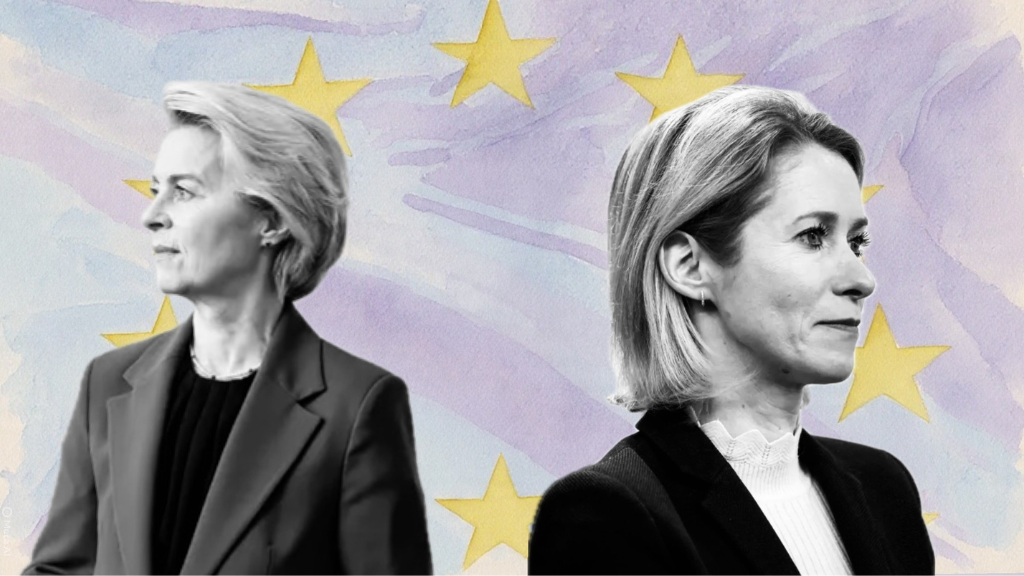
The European Union likes to present itself as a model of cooperation, a carefully balanced system where power is shared and decisions are made collectively. But in Brussels, unity is often more fragile than it appears. Recent reports of a sharp private remark by EU foreign policy chief Kaja Kallas about European Commission President Ursula von der Leyen have pulled back the curtain on a growing struggle inside the bloc’s leadership.
What looks like a personal dispute is really about something much bigger: who controls Europe’s foreign policy at a moment when the world is becoming more dangerous and divided.
Two Leaders, One Crowded Space
Kaja Kallas, the EU’s top diplomat, is meant to be Europe’s voice abroad. As a former prime minister of Estonia, she built her career warning about Russian aggression and pushing for stronger European defence. Her job is to coordinate foreign policy and represent all 27 member states on the global stage.
Ursula von der Leyen, meanwhile, runs the European Commission, the EU’s most powerful executive body. Over the past few years, her authority has expanded dramatically. From managing the pandemic response to shaping sanctions on Russia and steering energy policy, the Commission has moved from the background to the centre of EU power.
The problem is that their responsibilities increasingly overlap. And when roles overlap, rivalries grow.
The Real Fight: Control, Not Personality
This is not simply about clashing egos. At its core, the tension reflects a long-standing flaw in the EU system: no single institution fully controls foreign policy.
On paper, diplomacy belongs to the High Representative. In practice, the Commission now drives many of the EU’s most important international decisions, especially when they involve trade, energy, defence or technology. That shift has quietly changed the balance of power in Brussels.
Supporters say Europe needs strong, central leadership to respond quickly to crises. Critics warn that too much authority is being concentrated in one office, weakening the role of diplomats and national governments.
What once required consensus across institutions is now often shaped by a small circle at the top.
Leadership Style Fuels the Tension
Von der Leyen is known in Brussels for running a tightly controlled operation. Key decisions are made by a close inner group, with limited consultation beyond it. Admirers see efficiency. Others see exclusion.
For those working in diplomacy, being informed late rather than involved early, makes their job harder. It limits their ability to build support among member states and defend policies abroad.
This is the classic EU dilemma: act fast or act together. Increasingly, Brussels is choosing speed.
Why This Matters Now
The timing could hardly be worse. Europe is facing overlapping crises:
– War and instability on its eastern border
– Strategic rivalry between the United States and China
– Fragile energy supplies
– Pressure to spend more on defence
In this environment, confusion over leadership is dangerous. If partners and rivals cannot tell who speaks for Europe, Europe’s influence weakens. Diplomacy depends not just on power, but on clarity.
A divided leadership also sends the wrong signal at home. At a time when many Europeans already doubt Brussels’ institutions, visible infighting risks deepening public mistrust.
A Bigger Question About Power in the EU
The dispute also highlights a deeper issue: how democratic and balanced the EU’s system really is.
Smaller countries rely on shared institutions to ensure their voices are heard. When authority concentrates at the top, that balance shifts. A stronger Commission may move faster but it can also feel further removed from national governments and voters.
This tension has existed since the EU was created. But recent crises have pushed more power upward, faster than the system has adapted.
Conflict or Course Correction?
Brussels has always been shaped by internal battles. Past power struggles produced new rules, new treaties and new compromises. This one may do the same.
What began as a private clash between two senior figures now reflects something far more important: a struggle over how Europe is run, who sets its priorities, and how its institutions share control.
Whether this moment deepens divisions or forces a reset remains to be seen. But one thing is clear: as Europe confronts an unstable world, its greatest test may not come from outside its borders but from how it manages power within them.