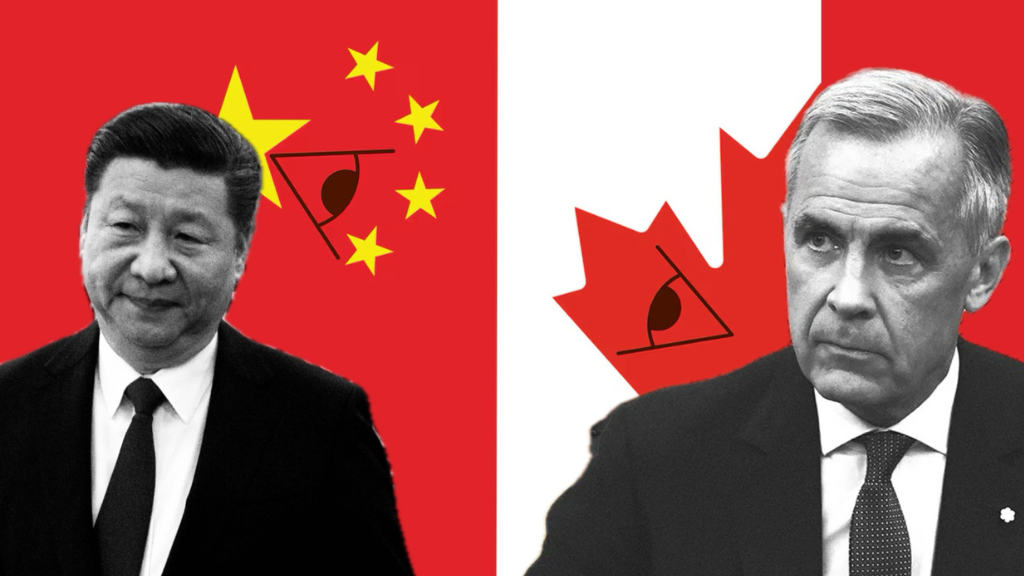
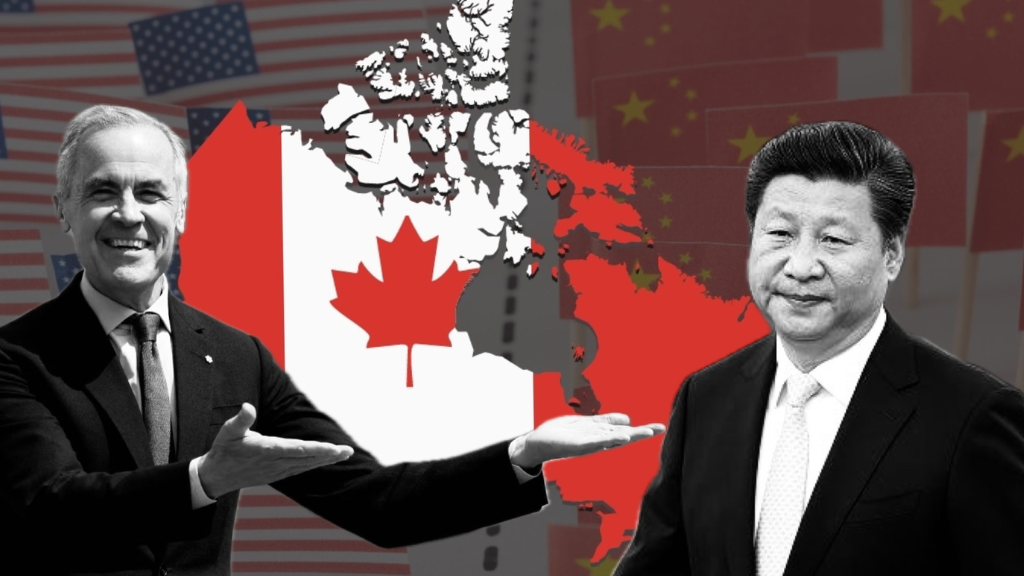
Prime Minister Mark Carney’s defence of Canada’s new trade arrangement with China was blunt and revealing: “We take the world as it is, not as we wish it to be.” In a single line, he captured a quiet but consequential shift in Canadian foreign and trade policy, one shaped less by ideological alignment and more by economic uncertainty, strategic hedging, and a deteriorating relationship with the United States.
The agreement, announced on Friday, eases Canada’s punitive tariffs on Chinese electric vehicles (EVs) while securing relief from Beijing’s retaliatory duties on key Canadian agricultural exports. On the surface, it is a transactional bargain. In practice, it signals Ottawa’s growing willingness to act independently of Washington at a time when the foundations of North American free trade no longer appear stable.
From Alignment to Autonomy
Only a year ago, Canada moved in lockstep with the US in imposing steep tariffs on Chinese EVs, citing concerns about industrial overcapacity and unfair competition. Carney himself had described China as “the biggest security threat” facing Canada. The decision to soften that stance now underscores how rapidly Ottawa’s strategic calculus has changed.
Trade experts see the move less as a pro-China pivot and more as an assertion of agency. Eric Miller, president of the Rideau Potomac Strategy Group, argues that Carney is signalling that Canada will not remain indefinitely tethered to US policy choices. With Washington increasingly unpredictable under President Donald Trump’s second term, Canada is seeking room to manoeuvre.
Carney has framed the recalibration as pragmatic rather than ideological. He has argued that Canada’s relationship with China, while complex, has become more “predictable” than its ties with the US—an extraordinary assessment for a country whose economy remains deeply integrated with its southern neighbour.
The US Factor Looms Large
The backdrop to this deal is a sharp deterioration in Canada–US trade relations. Since returning to office, Trump has imposed tariffs on Canadian metals and automotive products, fuelling uncertainty across key sectors. More destabilising still is his repeated threat to dismantle the USMCA, the successor to NAFTA, which he has dismissed as “irrelevant.” That agreement is now undergoing a mandatory review, with no guarantee of survival beyond 2026.
For Ottawa, the China deal is a hedge against a scenario in which North American free trade weakens or collapses altogether. As Miller notes, there is a real possibility that Canada could soon find itself without a “meaningful, workable trade deal” with the US. Preparing for that outcome requires diversifying partners, even politically uncomfortable ones.
Winners, Losers, and Domestic Divides
Reaction within Canada has exposed deep regional and sectoral divides. Saskatchewan Premier Scott Moe welcomed the agreement, noting that farmers in his province have been among the hardest hit by China’s 84% tariffs on canola products. Beijing’s commitment to reduce tariffs on canola seed to around 15% by March and to lift duties on canola meal, seafood, and peas at least through year-end offers tangible relief.
Ontario, by contrast, has emerged as the centre of opposition. Premier Doug Ford warned that cutting EV tariffs would flood the market with low-cost Chinese vehicles, threatening domestic manufacturing jobs. His concern is not unfounded. With tariffs reduced from 100% to 6.1% for the first 49,000 imported vehicles annually, a quota that could rise to 70,000 within five years, Chinese automakers are poised to gain a foothold.
Business analysts estimate that Chinese brands could soon account for roughly 10% of Canada’s EV market. That expansion would intensify competition not only for Canadian manufacturers but also for US-based firms such as Tesla, which are looking to grow their Canadian presence. As McGill University professor Vivek Astvansh notes, the deal sends a clear signal to Washington that Ottawa is no longer treating alignment with US trade policy as automatic.
Strategic Risks and Economic Trade-offs
The White House response has been tellingly mixed. US Trade Representative Jamieson Greer labelled the deal “problematic” and suggested Canada may regret it. Trump, however, struck a more permissive tone, arguing that any country capable of striking a deal with China should do so. His remarks echo his own openness to Chinese investment in US manufacturing, provided it generates domestic jobs.
For Canadian consumers, the immediate effect may be lower EV prices. Gal Raz, an expert on EV supply chains, notes that China produces some of the world’s most affordable and energy-efficient electric vehicles. Yet he also cautions that without parallel measures to support domestic manufacturers, Canada’s auto sector could suffer. In his view, the deal reflects how US trade pressure has “put Canada in a corner,” leaving Ottawa with limited options.
Carney has defended the decision by pointing to potential downstream benefits, including Chinese investment in Canada’s automotive industry. Details remain sparse, and Beijing has so far only acknowledged a “preliminary joint agreement” without confirming specific concessions. Still, China’s reported move to lift visa requirements for Canadian visitors adds a diplomatic sweetener to the economic package.
A Calculated Recalibration
The China agreement should not be read as a wholesale realignment away from the United States. Canada’s economic ties to the US remain too deep for that. Instead, it reflects a strategic recalibration, an attempt to reduce vulnerability to a single partner at a moment when US trade policy has become erratic and transactional.
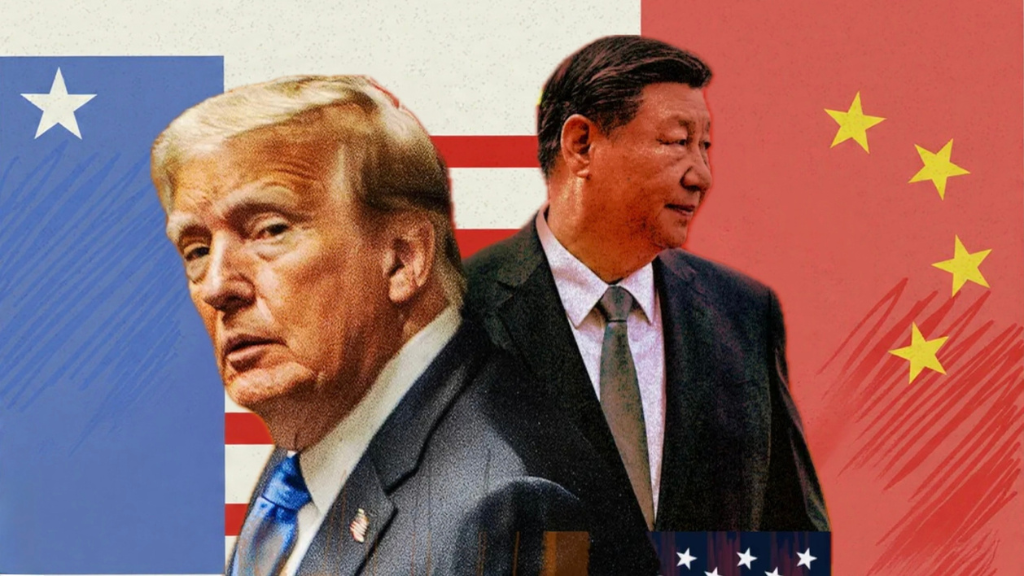
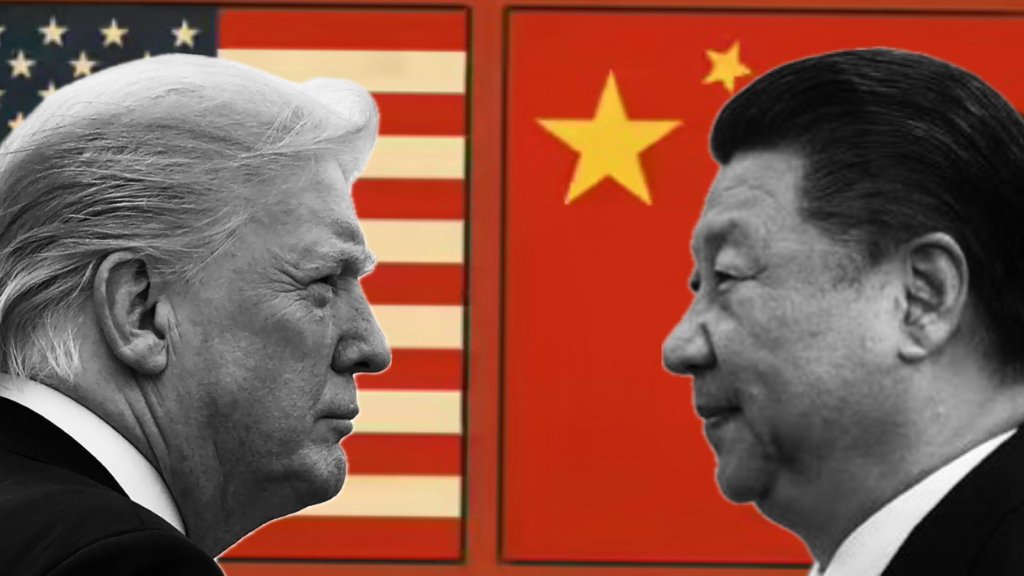
Trump’s own plans to visit Beijing in April, and his invitation to President Xi Jinping for a state visit to Washington, further complicate the picture. They suggest that even as Washington criticises Ottawa’s outreach to China, it is pursuing its own engagement with Beijing.
For Carney, the message is clear: Canada cannot afford to wait for clarity from Washington. The world, as he put it, has changed. The deal with China may be controversial, and its long-term costs remain uncertain, but it reflects a sober recognition that strategic flexibility, not rigid alignment, may now be Canada’s safest course.