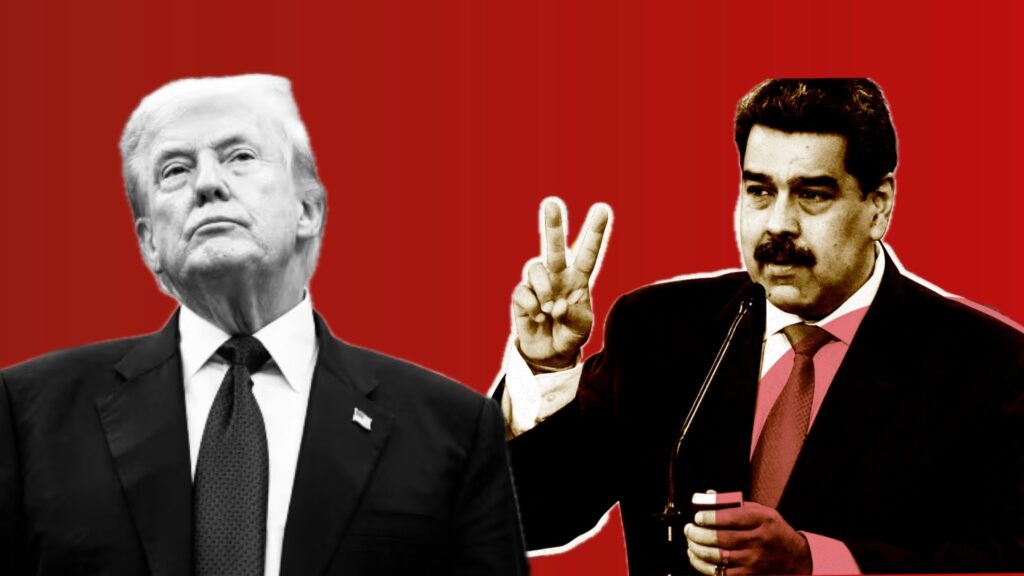
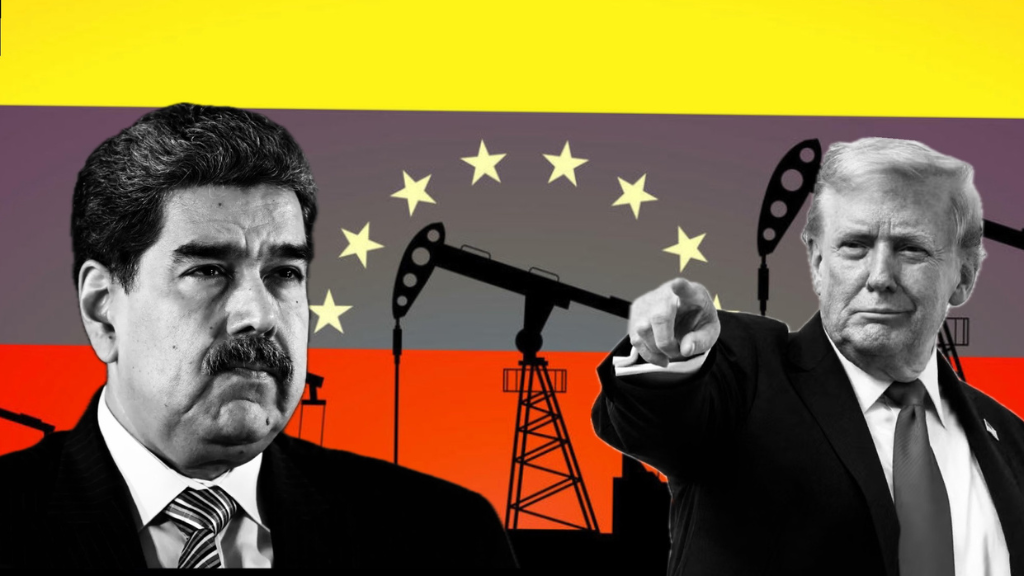
The reported capture of Venezuelan President Nicolás Maduro by US forces marks one of the most dramatic escalations in Washington’s long confrontation with Caracas. While the legal justifications offered by the United States focus on narcotics trafficking and weapons charges, the deeper story lies elsewhere; in oil, power, and the long shadow of geopolitical rivalry in the Western Hemisphere. This was not merely an arrest. It was a statement.
A Shock Operation with Global Ripples
Explosions across Caracas in the early hours of Saturday, strikes on air bases and ports, and the sudden disappearance of Venezuela’s president created confusion both inside the country and abroad. US President Donald Trump confirmed that Maduro and his wife had been flown out in a military operation conducted alongside US law enforcement. Yet key details, where Maduro is being held, how the operation unfolded, and whether there were casualties remain unclear.
Venezuela’s government has demanded proof that Maduro is alive and declared a national emergency, deploying its armed forces amid fears of further escalation. The lack of verified information has only deepened uncertainty, feeding speculation and fear across the region.
Why Venezuela Matters More Than Ever
At the heart of this crisis is energy. Venezuela holds the largest proven oil reserves in the world, estimated at 303–304 billion barrels, accounting for nearly 19 percent of global reserves. At current domestic consumption levels, the country could theoretically sustain itself on its oil for 800 to 1,300 years. No other nation comes close to that scale of long-term energy security.
Control over such reserves has always shaped Venezuela’s relations with the United States. For decades, Washington tolerated authoritarianism in Caracas so long as oil flowed freely. That equation changed when Hugo Chávez, and later Maduro, weaponised oil as a tool of political independence and aligned Venezuela with US adversaries.
Sanctions Failed, Pressure Escalated
US sanctions were meant to cripple Maduro’s regime economically and politically. Instead, they entrenched it. Venezuela’s economy collapsed, but the leadership survived, adapting through illicit trade networks and closer ties with countries like Iran, Russia, and China.
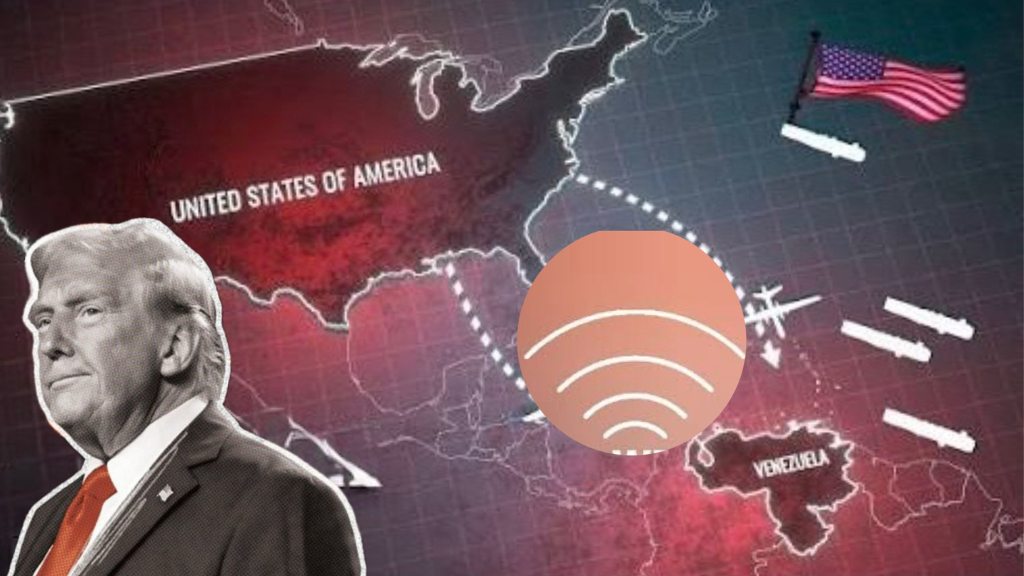
In recent months, Washington shifted gears. US naval forces expanded their presence in the Caribbean, striking vessels allegedly involved in drug trafficking. Reports indicate that around 15,000 US Navy personnel and 11 warships were deployed in and around Venezuelan waters, effectively tightening a maritime noose that also restricted oil trade.
Maduro’s capture appears to be the culmination of this pressure strategy, a move designed to remove the man without formally declaring war.
Oil, Iran, and a Pattern of Confrontation
There is another uncomfortable pattern. Iran and Venezuela together hold roughly 29 percent of the world’s oil reserves, and the United States has had direct military confrontations with both. In each case, Washington framed its actions around security threats, terrorism, drugs, regional instability, while critics argue that energy dominance remains the unspoken driver.
The overlap is hard to ignore. Countries with vast hydrocarbon wealth that resist US influence often find themselves under sanctions, covert operations, or outright military pressure.
The Legal Case and Its Limits
US prosecutors have charged Maduro and his wife with narco-terrorism, cocaine trafficking, and weapons offences. A $50 million bounty had long been offered for information leading to his arrest. Washington insists this was a law enforcement operation, not regime change.
Yet arresting a sitting head of state through military force, without international authorisation, pushes the boundaries of international law. Even US allies have reacted cautiously. While the European Union reiterated that Maduro lacks democratic legitimacy, it stressed the need to respect legal norms. Russia, Iran, Cuba, and Colombia were far blunter, condemning the operation as an act of aggression.
A Dangerous Precedent
Beyond Venezuela, the implications are sobering. If powerful states begin capturing foreign leaders under the banner of criminal justice, the distinction between law enforcement and warfare collapses. Smaller nations may see this as proof that sovereignty offers little protection when strategic interests are at stake.
For Latin America, the operation revives painful memories of Cold War interventions. For the wider world, it raises a sharper question: is this about justice or about who controls the world’s most valuable resources?
What Comes Next
Washington claims no further military action is planned. That assurance may do little to calm a country now leaderless and on edge. Venezuela’s armed forces remain intact, its allies are watching closely, and global oil markets are already reacting.
Maduro’s capture may close one chapter, but it opens a far more volatile one where energy, power, and precedent collide. The real test will not be whether the United States can justify what it has done, but whether the world is willing to accept it as the new normal.