From January 1, 2026, India will assume the presidency of BRICS at a moment when global power equations are already in flux. What was once viewed in Washington as a loose coalition of emerging economies is increasingly behaving like a coordinated bloc with economic, financial, and strategic intent. Ironically, it is American policy, particularly trade threats and sanctions that has helped tighten the alignment between India, Russia, and China, giving BRICS renewed momentum and relevance.
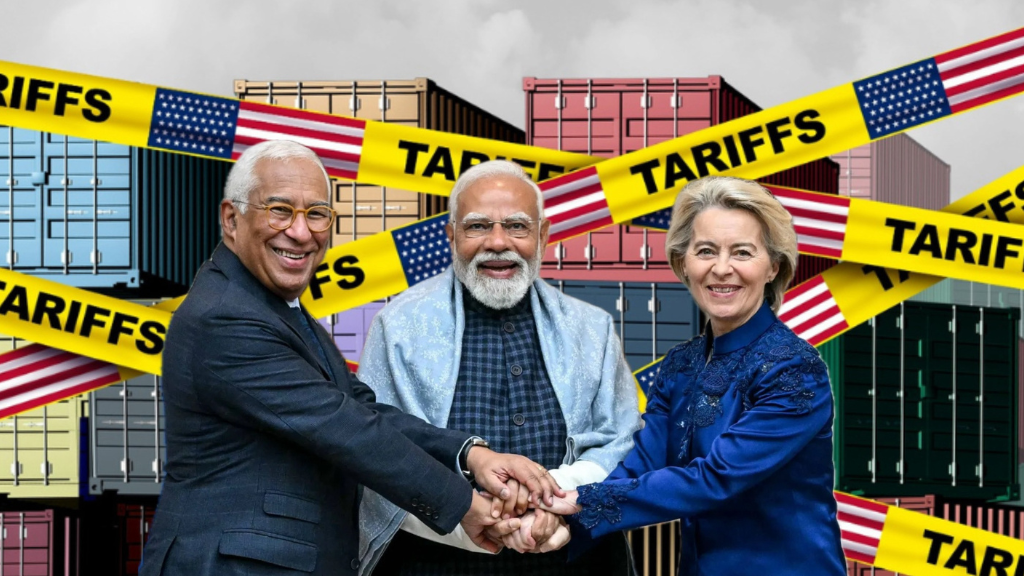
Earlier this year, U.S. President Donald Trump’s warning of 100 percent tariffs on BRICS countries was revealing. The threat was not merely rhetorical; it underscored the degree to which the bloc is now perceived as a challenge to established Western economic dominance. Instead of fragmenting BRICS, such pressure appears to have reinforced its internal cohesion.
Food, Energy, and the Global South
One of the less discussed but strategically significant areas of BRICS cooperation is agriculture. A recent report shows that member states, including India, are deepening collaboration in agricultural trade, climate-resilient farming, technology transfer, and value chain development. Food security is being treated not just as an economic issue but as a geopolitical asset—particularly for the Global South.
This coordinated approach matters. Control over food systems, combined with energy and raw materials, shapes bargaining power in international politics. Analysts argue that by 2026, this alignment could begin to constrain U.S. influence in parts of Asia, Africa, and Latin America where BRICS countries are already major partners.
Energy Power: The Oil Advantage
Energy remains central to BRICS’ leverage. According to the World Energy Statistics Review 2025, BRICS countries collectively produced about 42 percent of the world’s oil in 2024. This concentration of supply gives the bloc significant influence over global energy markets, especially at a time of persistent geopolitical volatility.
India’s energy relationship with Russia illustrates this dynamic clearly. Despite U.S. sanctions on Russian energy firms, Indian refiners have continued importing non-restricted Russian crude without disruption. The Times of India reported that even after sanctions were imposed on companies such as Lukoil and Rosneft, India’s oil imports from Russia remained stable in December.
Reuters estimates that India’s Russian crude imports are expected to exceed one million barrels per day, defying expectations of a sharp decline. The logic is straightforward: discounted oil from non-sanctioned suppliers makes economic sense, and New Delhi has shown little appetite for sacrificing energy security under external pressure.
Reliance and the Resilience of Trade Flows
Corporate decisions mirror state-level pragmatism. Bloomberg reports that Reliance Industries has resumed purchases of discounted Russian crude, sourcing it from non-sanctioned suppliers and transporting it to its Gujarat refinery. By contracting Aframax tankers from RusExport, Reliance has ensured continuity of supply to a facility with a capacity of 660,000 barrels per day.
Officials suggest this move alone could offset more than half of any potential shortfall in Russian oil imports this month. The episode highlights a broader trend: sanctions may complicate trade, but they no longer guarantee compliance—especially when alternative mechanisms exist.
Gold, GDP, and Structural Weight
BRICS’ challenge to dollar dominance is not built on rhetoric alone; it rests on tangible economic fundamentals. China and Russia together hold more than 14 percent of global central bank gold reserves. When other BRICS members are included, the bloc accounts for roughly one-fifth of the world’s gold reserves. India’s domestic gold holdings further strengthen this position, surpassing those of many advanced economies.
Economically, the numbers are equally striking. The World Bank notes that in 2024, China, India, Brazil, and Russia ranked among the world’s 11 largest economies. Collectively, BRICS accounted for around 29 percent of global GDP. With new members joining and growth rates in key economies remaining robust, the bloc’s share of global output is only set to rise.
Rupee Trade and the Quiet Push Against the Dollar
Perhaps the most consequential shift came this August, when India issued an official circular allowing BRICS nations to conduct 100 percent of their trade in Indian rupees. The Reserve Bank of India instructed banks to open dedicated vostro accounts without prior approval, enabling exporters and importers to bypass the dollar entirely in bilateral transactions.
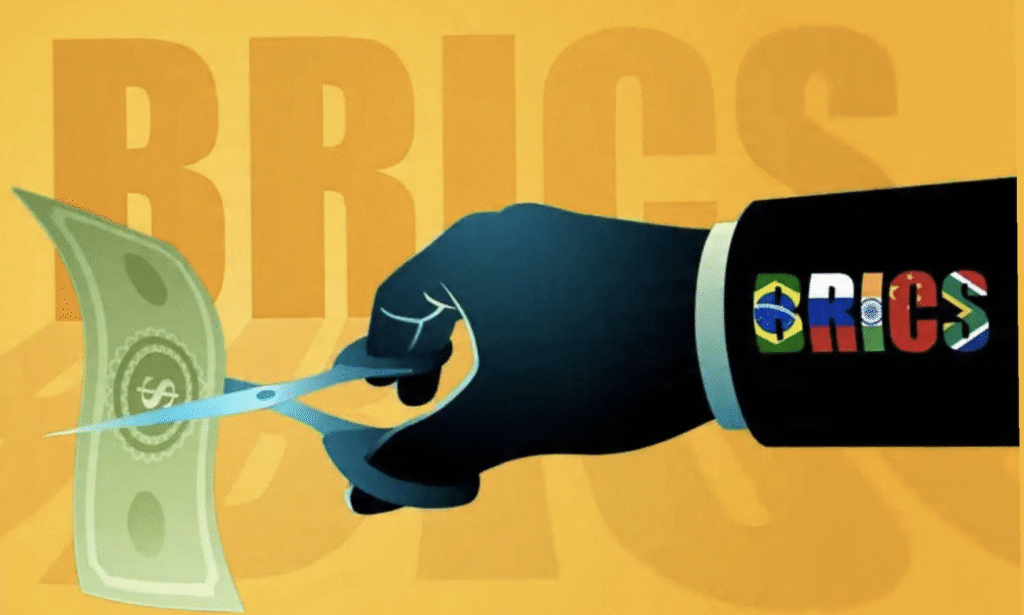
This was not a symbolic gesture. By lowering transaction costs and reducing exposure to dollar volatility and sanctions risk, rupee trade offers a practical alternative—especially for developing economies. Financial experts believe such measures could gradually accelerate the erosion of dollar dominance, even if they do not replace it outright.
Building a BRICS Payment System
Alongside national initiatives, BRICS is moving toward a collective financial infrastructure. Member states are actively exploring an independent payment system outside the dollar framework. Brazil’s Ambassador to Russia, Sergio Rodrigues dos Santos, told TASS that creating such a mechanism is both realistic and achievable, calling it a top strategic priority.
The groundwork was laid during Russia’s BRICS presidency in 2024, with Brazil carrying discussions forward this year. While the system is still under development, its intent is clear: reduce vulnerability to U.S.-controlled financial networks and expand strategic autonomy.
A Gradual, Not Sudden, Shift
None of this suggests the dollar is on the verge of collapse. Its role in global finance remains deeply entrenched. But the direction of travel is hard to ignore. Energy trade outside the dollar, growing gold reserves, local-currency settlements, and alternative payment systems together point toward a more fragmented monetary order.
India’s assumption of the BRICS presidency in 2026 could accelerate this trend. By positioning itself as a bridge between emerging economies and established markets, New Delhi is shaping a bloc that is less confrontational than autonomous and that may prove more disruptive in the long run.
In that sense, America’s dollar power is not being challenged head-on. It is being slowly diluted, transaction by transaction, policy by policy, by a BRICS coalition that has learned how to turn pressure into alignment.