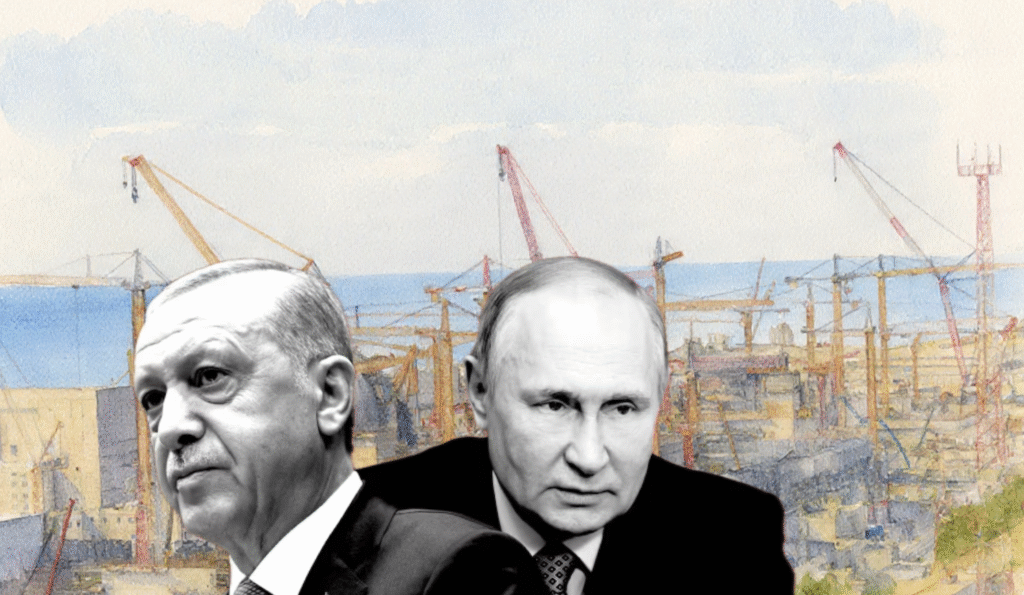
When Turkey first broke ground on the Akkuyu nuclear power plant on its Mediterranean coast, the project was framed as a leap toward energy independence. More than a decade later, that ambition has become entangled with geopolitics, sanctions, and Ankara’s carefully calibrated relationship with Moscow. Turkey’s confirmation that Russia has provided about $9 billion in new financing for Akkuyu is not just a technical detail about project funding; it is a window into how economic necessity and strategic balancing are shaping Turkey’s foreign policy.
Energy Security at the Heart of the Akkuyu Project
At its core, Akkuyu is meant to solve a practical problem. Turkey’s energy demand has risen steadily with population growth, urbanisation, and industrial expansion. The country imports most of its oil and natural gas, leaving it exposed to price swings and supply disruptions. Nuclear power, at least in theory, offers a stable, low-carbon alternative that can run regardless of weather or global fuel markets. Once fully operational, Akkuyu’s four reactors are expected to generate roughly 10 percent of Turkey’s electricity needs.
A Nuclear Plant Built on a Russian Model
Yet the project has never been a purely domestic affair. Akkuyu is being built, owned, and operated by Russia’s state nuclear company, Rosatom, under a build-own-operate model that is unusual in the nuclear world. Moscow finances the plant, runs it, and will sell electricity to Turkey under long-term contracts. This structure reduces Ankara’s upfront costs but also locks Turkey into a decades-long relationship with a single foreign supplier.
Why the $9 Billion Matters Now
The newly disclosed $9 billion infusion underscores how dependent the project has become on Russian capital. Western sanctions imposed after Russia’s invasion of Ukraine have made it harder for Rosatom to move money through international financial systems. By routing funds through Turkey and injecting fresh financing, Moscow appears to be keeping Akkuyu on track while also finding ways to maintain economic influence despite its growing isolation from the West.
Ankara’s Balancing Act Between NATO and Moscow
For Ankara, accepting this financing is a calculated choice rather than a sudden pivot. President Recep Tayyip Erdoğan has long pursued a foreign policy that avoids full alignment with any one camp. Turkey is a NATO member, but it has refused to join Western sanctions against Russia. It sells drones to Ukraine while keeping channels open to the Kremlin. Energy cooperation has been one of the anchors of this balancing act, from natural gas pipelines to now nuclear power.
Economic Pressures at Home
The timing also matters. Turkey’s economy has been under strain, with high inflation and pressure on foreign currency reserves. Securing billions of dollars in project financing from Russia eases immediate financial stress and helps ensure that a flagship infrastructure project does not stall. Domestically, Akkuyu has been marketed as a symbol of technological progress and national pride; delays or cost overruns would carry political costs.
Long-Term Dependence or Strategic Necessity?
Still, the deeper implications are harder to ignore. Once Akkuyu comes online, Turkey will rely on Russia not only for fuel supply but also for plant operation, maintenance, and waste management. In an era when energy security is increasingly tied to national security, that reliance raises questions about leverage. Critics argue that Ankara is swapping one form of dependence—imported gas—for another, more complex one tied to nuclear technology.
A Calculated Risk With Lasting Consequences
Supporters counter that Turkey has little choice. Building a nuclear sector from scratch is expensive and time-consuming, and few countries were willing to finance such a project on Turkey’s terms. From this perspective, Russian money is a pragmatic solution, not an ideological alignment. Ankara can still diversify its energy mix with renewables and alternative suppliers over time, reducing the risks associated with any single partner.
More Than a Power Plant
In the end, the $9 billion figure is less important than what it represents. Akkuyu has become a microcosm of Turkey’s broader strategy: hedging between East and West, prioritising economic stability, and accepting short-term dependencies in exchange for long-term capacity. Whether that bet pays off will depend not only on when the reactors finally start producing electricity, but also on how global politics evolve in the years the plant is expected to operate.
For now, Turkey is pressing ahead, convinced that the lights must stay on, even if the power source comes with strings attached.