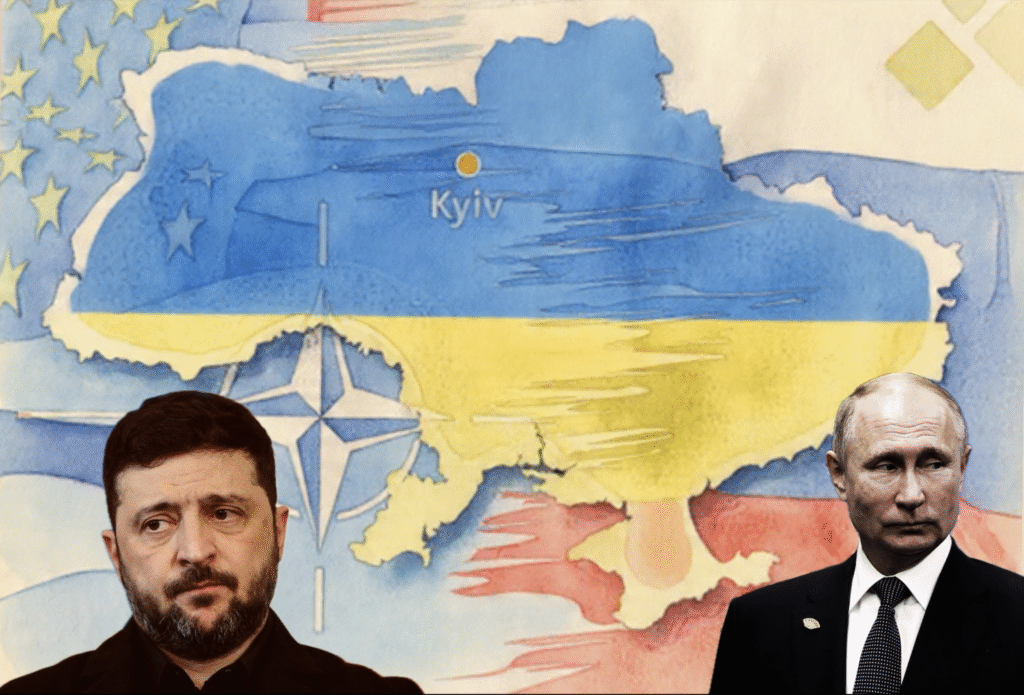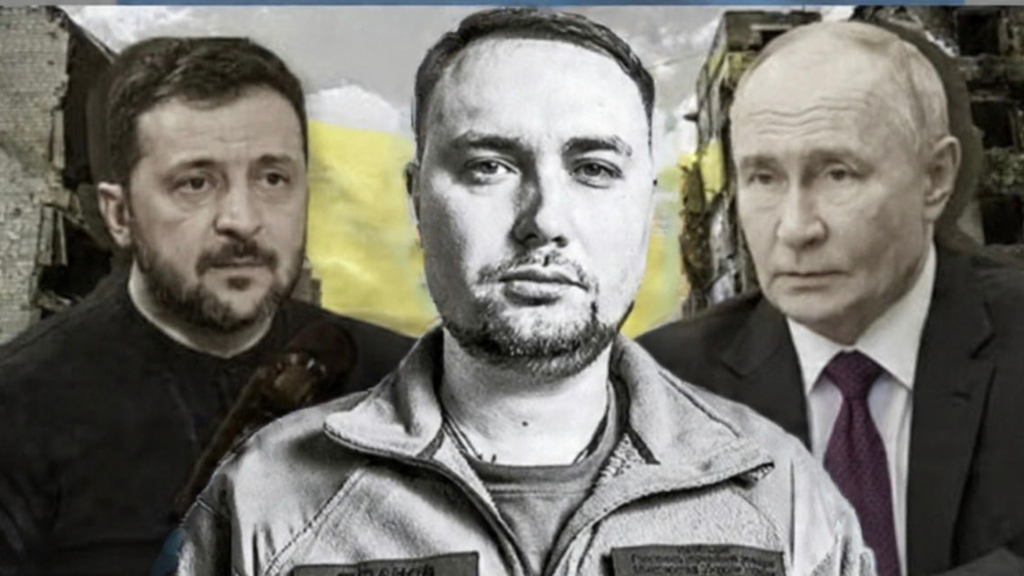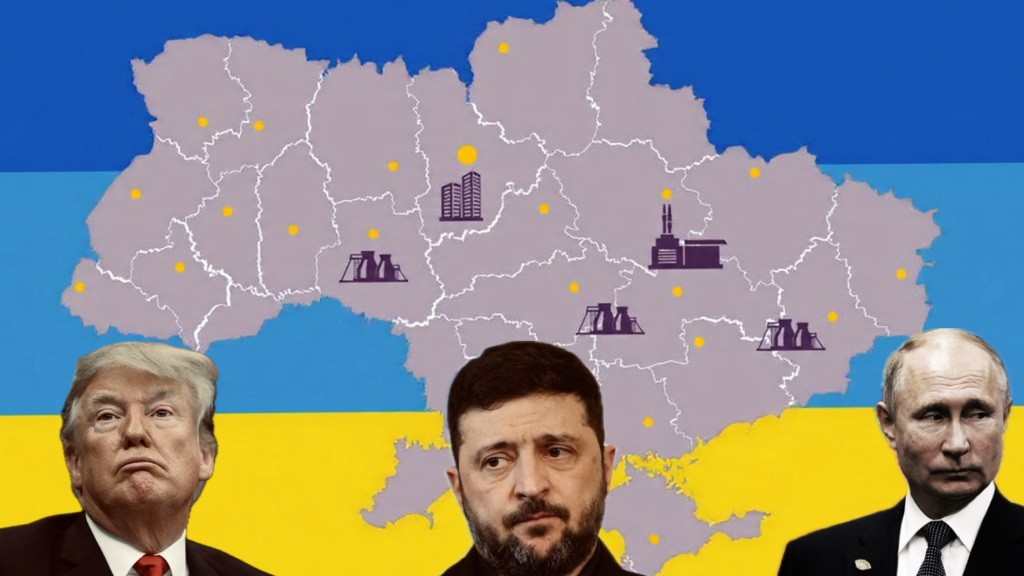
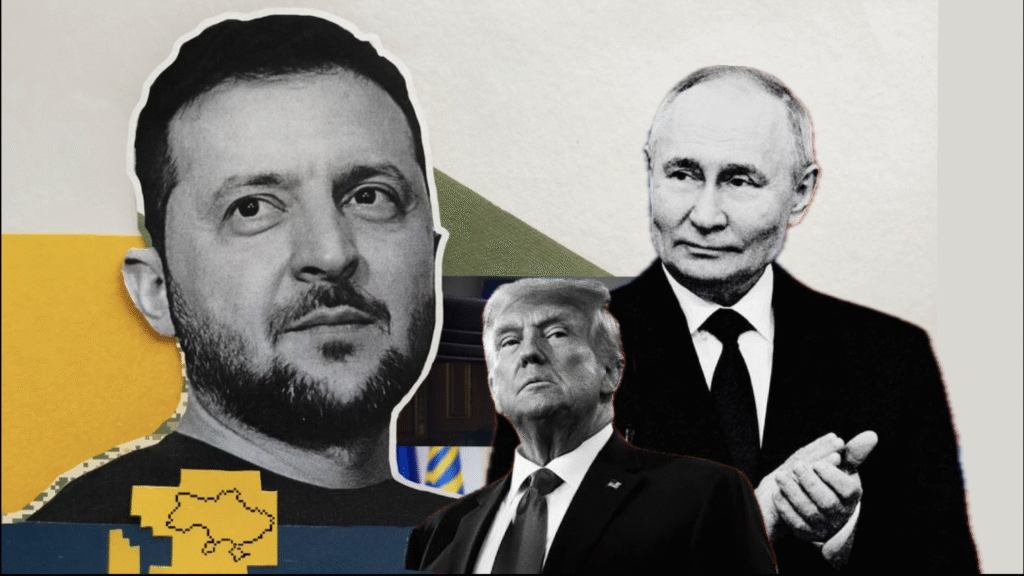
After 1,398 days of war, Kyiv and Washington are once again testing whether diplomacy can succeed where force has failed. President Volodymyr Zelensky has revealed a revised 20-point plan—pared down from an earlier 28-point framework aimed at ending Russia’s war against Ukraine. The proposal has now been transmitted to Moscow, shifting attention squarely to President Vladimir Putin and whether the Kremlin is prepared to engage.
The plan emerges against the backdrop of continued battlefield attrition, large-scale displacement, and mounting pressure on Ukraine’s allies to define a sustainable endgame. While previous peace efforts collapsed under the weight of territorial disputes and mutual distrust, this latest document seeks to anchor a ceasefire within enforceable security guarantees and postwar reconstruction commitments.
Core Political and Security Commitments
At its foundation, the proposal reasserts Ukraine’s sovereignty. Zelensky has made clear that all signatories would formally recognise Ukraine as an independent state through binding signatures, framing sovereignty as non-negotiable rather than aspirational.
The plan outlines an unconditional non-aggression agreement between Kyiv and Moscow, paired with strong security guarantees for Ukraine. These guarantees are designed to mirror NATO’s Article 5, without requiring immediate Ukrainian membership in the alliance. Under the framework, the United States, NATO, and European signatories would respond collectively to any renewed Russian invasion, including the automatic reimposition of global sanctions on Moscow.
Importantly, the guarantees are conditional. If Ukraine were to initiate unprovoked military action against Russian territory, the protections would be voided. The structure is intended to deter escalation on both sides while preserving Ukraine’s right to self-defence.
Military Balance Without Demilitarisation
Unlike earlier proposals floated by Moscow, the plan does not require Ukraine to dismantle its armed forces. Instead, it explicitly allows Ukraine to maintain an army of 800,000 personnel in peacetime. This provision reflects Kyiv’s insistence that security cannot rest on political assurances alone, particularly given Russia’s past violations of agreements.
Russia, for its part, would be required to codify a policy of non-aggression toward Ukraine and Europe across domestic law and ratification procedures, locking restraint into its legal framework rather than informal pledges.
Europe, Integration, and Economic Recovery
Beyond immediate security concerns, the document links peace to Ukraine’s long-term economic and political future. Ukraine would receive a defined pathway to European Union membership, along with short-term privileged access to EU markets.
Reconstruction features prominently. Multiple international funds would be established to address economic recovery, regional rebuilding, and humanitarian needs after years of sustained bombardment. The United States would also accelerate negotiations on a bilateral free trade agreement with Ukraine once a ceasefire is in place.
These measures are intended to ensure that peace is not merely the absence of fighting, but a platform for stability and growth.
Nuclear Safety and Shared Infrastructure
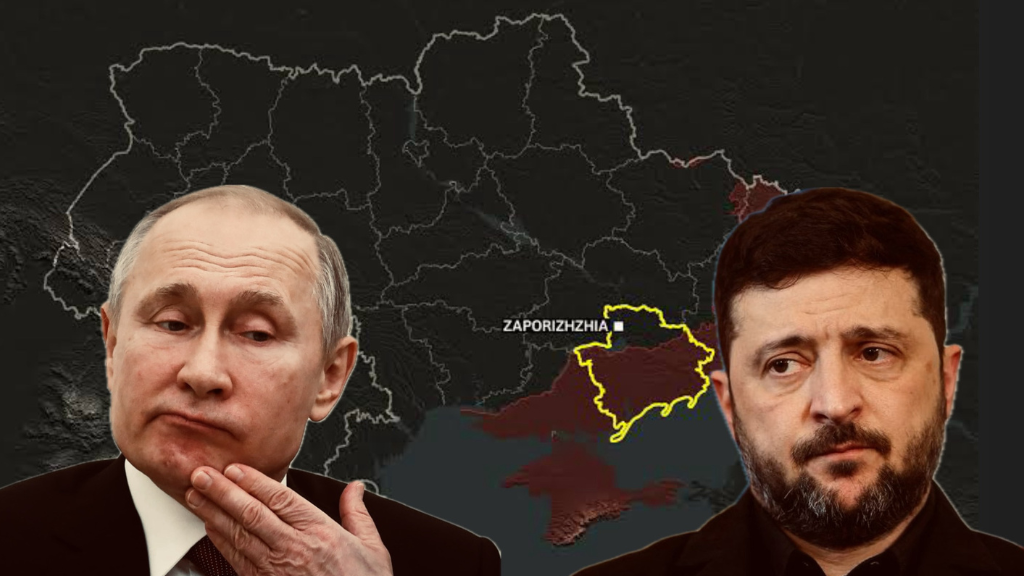
The plan includes provisions aimed at preventing broader regional risk. Ukraine reaffirms its non-nuclear status, while Kyiv, Washington, and Moscow would jointly operate the Zaporizhzhia Nuclear Power Plant—an acknowledgment of the facility’s strategic and environmental sensitivity.
Russia would also commit to allowing Ukraine uninterrupted commercial access to the Dnipro River and the Black Sea, safeguarding critical trade routes that have been repeatedly disrupted during the conflict.
Territorial Reality Without Formal Recognition
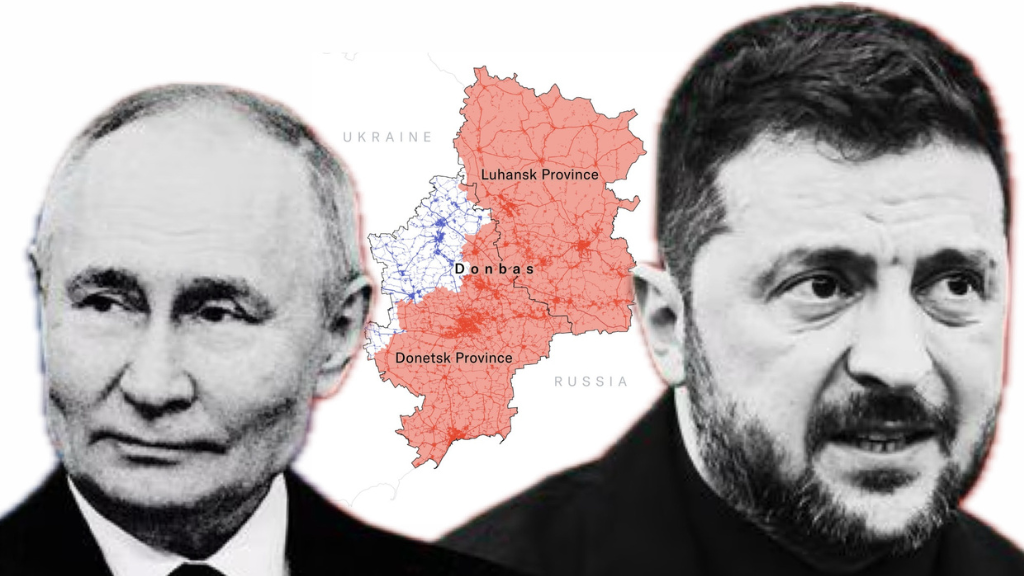
Territory remains the most fragile element of the proposal. While the plan stops short of recognising Russia’s annexation claims, it does acknowledge the existing front lines in Donetsk, Luhansk, Zaporizhzhia, and Kherson as the line of contact at the moment of agreement.
Both sides would commit not to alter future territorial arrangements by force once negotiations conclude. Zelensky has been explicit that Kyiv will not recognise annexed territories as Russian, warning that accepting such claims would set a dangerous precedent across Europe.
“There are other countries in Europe that someone in Russia may one day call their historical lands,” Zelensky has said, framing the issue as one of continental security rather than Ukrainian borders alone.
Enforcement and the Role of the United States
Implementation would be overseen by a multinational monitoring mechanism involving Ukraine, Europe, NATO, Russia, and the United States, with President Trump identified as the guarantor. Sanctions would be triggered automatically in the event of violations, an attempt to correct the enforcement failures of earlier agreements.
Once all parties sign on, a full ceasefire would take effect immediately.
Putin’s Dilemma
For Vladimir Putin, the proposal cuts directly against long-standing positions. The Russian president has repeatedly insisted that Moscow will not compromise on what it defines as Russian territory and has warned that military force will be used if diplomacy fails.
“If the opposing country and its foreign patrons refuse to engage in substantive discussions,” Putin has said, “Russia will achieve the liberation of its historical lands through military means.”
The 20-point plan does not validate Russia’s territorial claims, but it does freeze the battlefield and defer final status questions. Whether that is sufficient for the Kremlin remains uncertain.
A Narrow Opening for Diplomacy
The plan does not resolve every contradiction of the war, nor does it promise quick reconciliation. What it does offer is a structured pause, one backed by security guarantees, economic incentives, and enforcement mechanisms that were absent or weak in earlier efforts.
The question now is whether Moscow sees this framework as a path to stability or as a constraint on its ambitions. After nearly four years of war, the next move belongs to Vladimir Putin and the consequences of his decision will extend well beyond Ukraine.