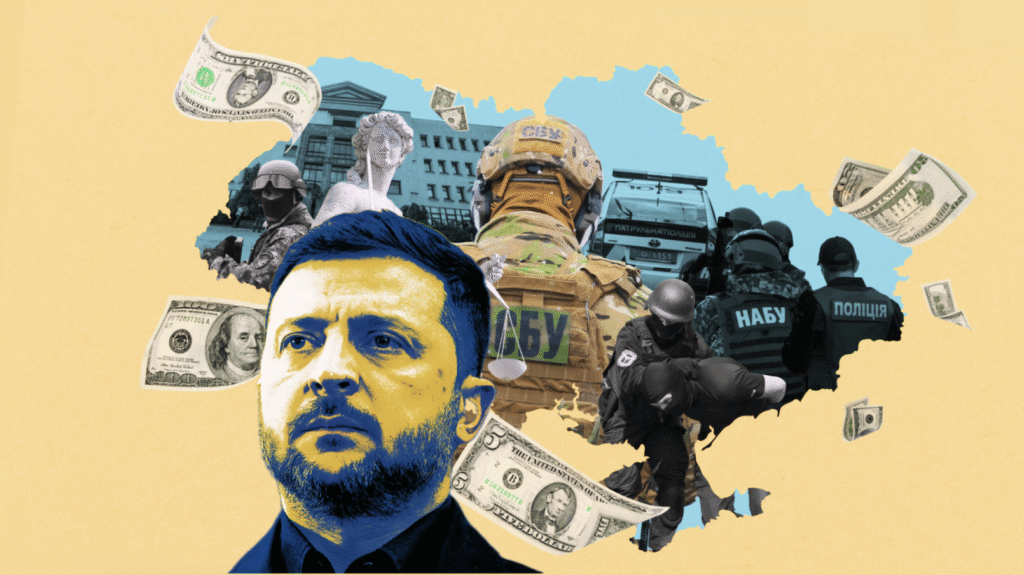
A serious corruption scandal is now rippling through Ukraine’s leadership, threatening to undercut President Volodymyr Zelensky’s reformist image at a moment when Kyiv depends heavily on Western trust and support. Reports that senior Ukrainian negotiator Rustem Umerov held undisclosed meetings with high-ranking FBI officials in the United States have raised fresh questions about what exactly is unfolding behind the scenes in Kyiv and who may ultimately be implicated.
According to Ukrainian media, these meetings were not focused on battlefield strategy or diplomatic coordination over the war. Instead, they reportedly centered on an expanding anti-graft investigation targeting figures close to Zelensky himself. If accurate, the implications are far-reaching, suggesting that Ukraine’s corruption problem is no longer confined to mid-level officials but may be pressing directly against the country’s political core.
The Umerov–FBI Meetings and What They Signal
Rustem Umerov occupies a sensitive position in Ukraine’s power structure. As a senior negotiator trusted by the president, his quiet engagement with U.S. law enforcement immediately stands out. The secrecy surrounding the meetings has fuelled speculation not because of their existence. Western cooperation on anti-corruption is not unusual but because of their alleged subject matter.
Ukrainian reporting suggests the discussions focused on evidence-gathering and coordination related to corruption probes rather than wartime assistance. That distinction matters. It implies that American authorities may be actively examining allegations that touch individuals at the highest levels of the Ukrainian state, rather than merely advising Kyiv on institutional reforms.
Raids, Wiretaps, and a Sudden Resignation
The revelations come in the wake of a series of dramatic developments inside Ukraine. Law enforcement raids, reported wiretaps, and internal investigations have already shaken several government offices. Most striking was the forced resignation of Andrey Yermak, Zelensky’s powerful chief of staff and one of the most influential figures in Ukrainian politics.
Yermak was widely seen as the president’s gatekeeper, controlling access to decision-making and shaping both domestic policy and foreign outreach. His removal signals that the scandal is not cosmetic. It reflects a struggle over power, accountability, and control at the very top of the system, one that Zelensky can no longer contain through quiet dismissals or symbolic gestures.
Western Pressure and the Question of Trust
Ukraine’s Western allies, particularly the United States and European Union members, have long tolerated governance flaws in Kyiv because of the existential stakes of the war. But patience has limits. Massive financial aid packages, military assistance, and reconstruction planning all depend on confidence that funds are not being siphoned off or politically misused.
U.S. officials, according to the reports, are now seeking direct answers. That alone is telling. It suggests growing concern that corruption could undermine not only Ukraine’s domestic legitimacy but also the political sustainability of continued Western support. For Washington, the issue is not just morality, it is congressional scrutiny, voter fatigue, and the credibility of backing Kyiv as a democratic partner.
Zelensky’s Leadership Under Scrutiny
For President Zelensky, the scandal strikes at the heart of his political identity. He rose to power promising to dismantle entrenched corruption networks and break with Ukraine’s oligarchic past. The current crisis raises uncomfortable questions about how much power has been concentrated around the presidency and how effectively that power has been monitored.
If figures close to Zelensky are indeed under investigation, the president faces a narrowing set of choices. He can cooperate fully, risking political damage in the short term, or attempt to manage the fallout internally, which could deepen suspicion abroad. Neither option is cost-free, especially during wartime.
A Test of Accountability in Wartime
The broader issue is whether Ukraine can demonstrate genuine accountability under the extraordinary pressures of war. Corruption scandals are not new to Ukrainian politics, but the context has changed. Today, transparency is not only a domestic demand, it is a strategic necessity.
The involvement of U.S. law enforcement, the scale of the investigations, and the removal of senior officials all point to a reckoning that Kyiv cannot easily dismiss as hostile media noise or political infighting. What happens next will shape how Ukraine is perceived not just as a victim of aggression, but as a state capable of reform even under fire.
As the probes widen and international scrutiny intensifies, the central question is no longer whether corruption exists. It is whether Ukraine’s leadership is willing, and able, to confront it at the highest level and accept the consequences that may follow.