From Infrastructure to Operational Nuclear Force
China’s strategic posture is entering a more dangerous and explicit phase. A draft Pentagon assessment points to two developments that, taken together, sharpen the risk of great-power conflict: the rapid deployment of intercontinental ballistic missiles and a clear internal expectation in Beijing that it can fight and win a war over Taiwan by the end of 2027. Neither signal is entirely new. What is new is the convergence of nuclear acceleration, conventional strike readiness, and the near-term timeline attached to Taiwan.
According to the report, China has likely loaded more than 100 solid-fuel DF-31 intercontinental ballistic missiles across three silo fields near its border with Mongolia. These silos, identified over the past few years through satellite imagery, are no longer theoretical infrastructure. Their operationalization marks a shift from potential capability to deployed force.
At the same time, Beijing’s nuclear warhead stockpile currently estimated in the low 600s is projected to surpass 1,000 by 2030. Even with relatively slower warhead production compared to silo construction, the trajectory is clear: China is moving rapidly toward numerical parity with the United States and Russia.
Arms Control Rejection and Strategic Opacity
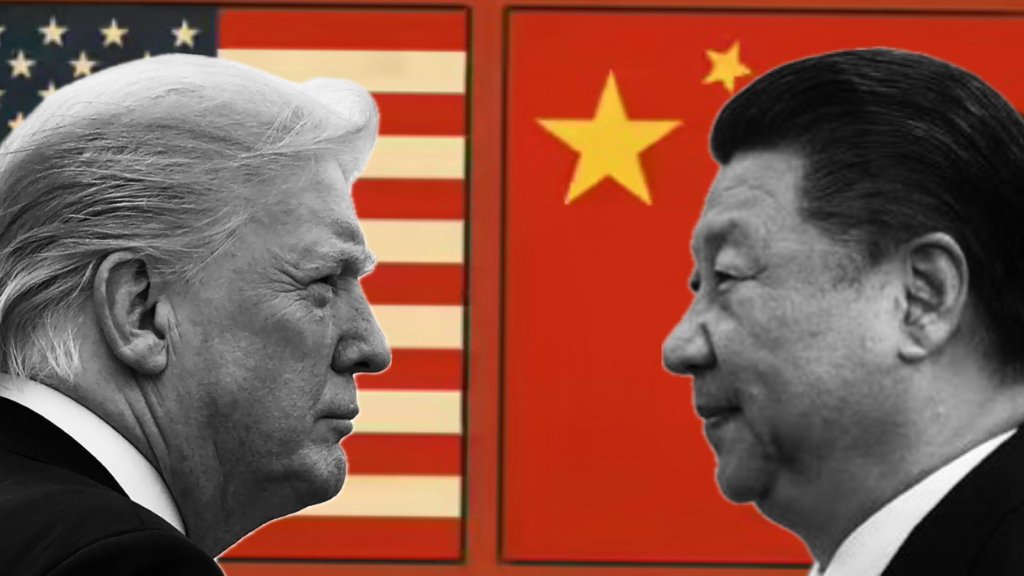
What stands out is not only the scale of the expansion but Beijing’s refusal to place it within any diplomatic framework. The Pentagon assessment notes that China shows “no appetite” for arms control discussions. This remains the case despite public references by Donald Trump to the possibility of future denuclearization talks involving China and Russia.
Beijing’s position suggests that opacity and unilateral buildup are seen as advantages, not liabilities. In effect, China is opting out of the arms-control logic that, however imperfectly, helped stabilize U.S.–Soviet nuclear competition during the Cold War.
The Taiwan Timeline and War Planning Assumptions
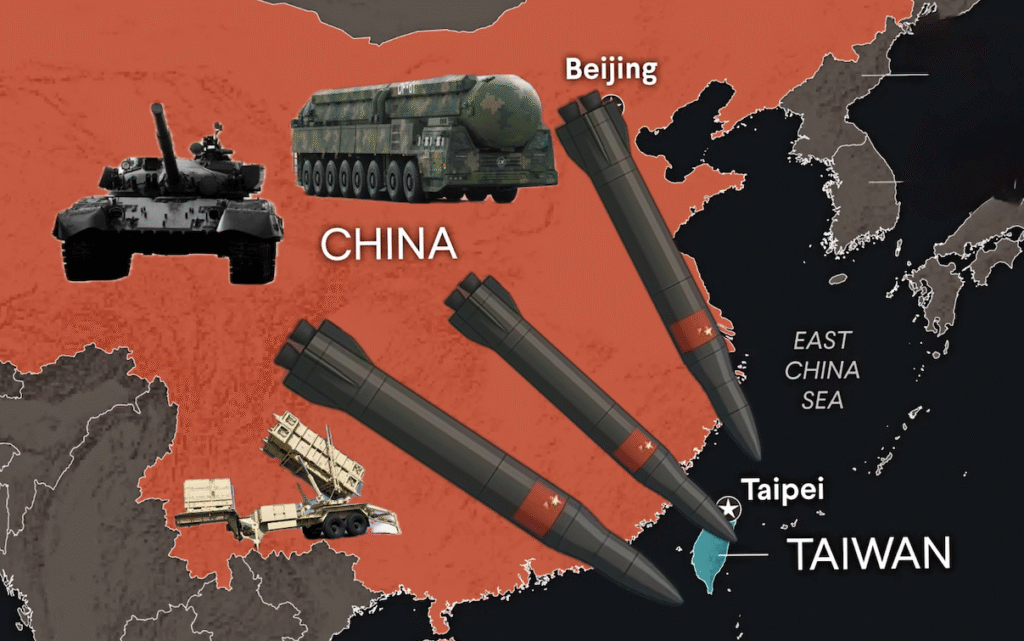
The nuclear buildup cannot be separated from China’s conventional war planning. The same report warns that Chinese military planners believe they will be capable of fighting and winning a conflict over Taiwan by the end of 2027. This is not merely a political benchmark linked to Xi Jinping’s tenure or the People’s Liberation Army’s modernization goals. It reflects concrete operational planning.
The Pentagon notes that China is refining options ranging from coercive pressure and blockade to large-scale, brute-force strikes reaching as far as 2,000 nautical miles. Such ranges place not only Taiwan but U.S. bases and allied infrastructure across the Asia-Pacific firmly within China’s strike envelope.
Nuclear Backing for Conventional Risk-Taking
This matters because nuclear and conventional capabilities reinforce one another. A larger, more survivable nuclear force strengthens China’s confidence that escalation can be managed or at least deterred while it undertakes high-risk conventional operations. In a Taiwan scenario, the implicit message is that Beijing believes it can raise the costs of U.S. intervention to unacceptable levels, both through long-range conventional strikes and the shadow of nuclear escalation.
Strategic Consequences for the United States and Its Allies
The implications are stark. First, the global nuclear arms race is accelerating without the guardrails that once limited worst-case planning. China’s expansion is now the fastest among nuclear-armed states, and its rejection of transparency makes miscalculation more likely. Second, Taiwan faces an existential threat within a defined window of less than three years.
The 2027 timeline is not a prediction of war, but it is a planning assumption that should concentrate minds in Washington, Taipei, and allied capitals. Third, the U.S. military presence in the Asia-Pacific, long the backbone of regional deterrence becomes increasingly exposed as Chinese missile forces extend their reach and density.
Also Read: NATO: China May Use Russia To Distract Europe Over Taiwan
Eroding Strategic Stability and a Narrowing Margin for Error
More broadly, strategic stability is eroding. Arms control depends on mutual recognition of vulnerability and a shared interest in predictability. China’s current approach suggests it sees neither as necessary. By building offensive capabilities while rejecting diplomatic restraint, Beijing is reshaping the strategic environment in ways that leave fewer off-ramps in a crisis.
The warning embedded in the Pentagon report is therefore not simply about numbers of missiles or warheads. It is about intent, confidence, and timing. China is signaling that it wants the capability to deter, coerce, and, if necessary, fight soon. The question for the United States and its allies is whether deterrence can be adapted quickly enough to keep the war clock from striking.