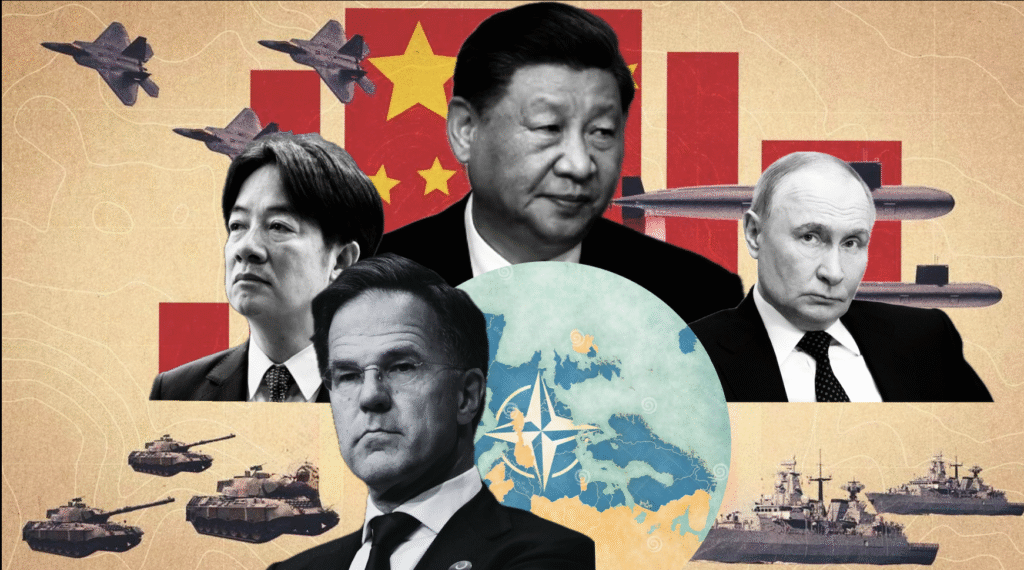
When NATO Secretary General Mark Rutte warns that Europe must “not be naive,” he is not speaking in abstractions. His latest remarks point to a scenario that Western security planners increasingly take seriously: a future crisis over Taiwan that does not remain confined to East Asia, but deliberately spills into Europe through Russian pressure.
A Two-Front Distraction Strategy
Speaking to the German newspaper Bild, Rutte laid out a stark assessment of how Beijing and Moscow could coordinate their actions. Asked about Russian President Vladimir Putin’s long-term prospects after nearly two decades in power, Rutte avoided speculation about leadership change and focused instead on strategic continuity. Regardless of who rules in Moscow, he argued, Europe should assume Russia will remain a disruptive actor.
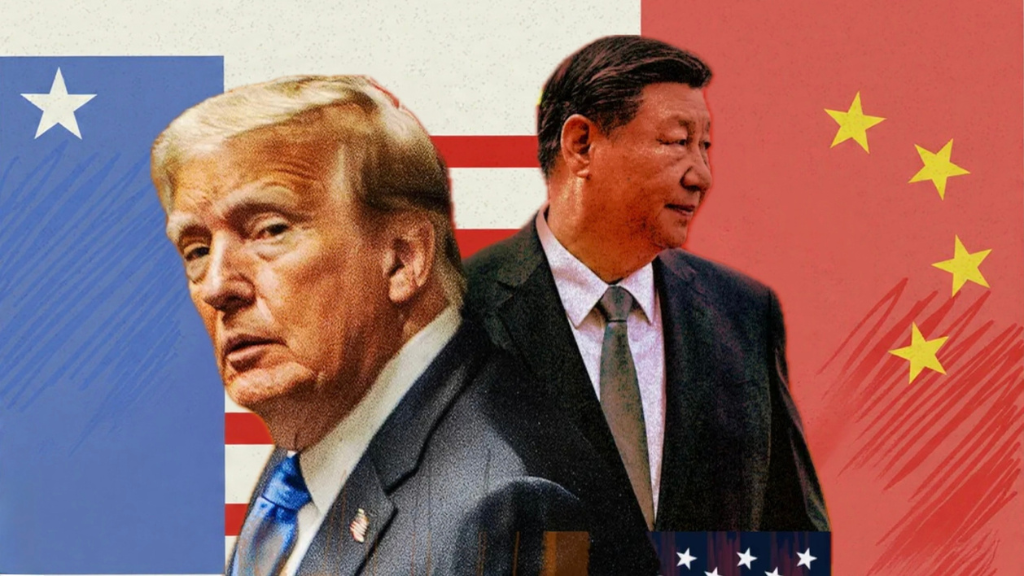
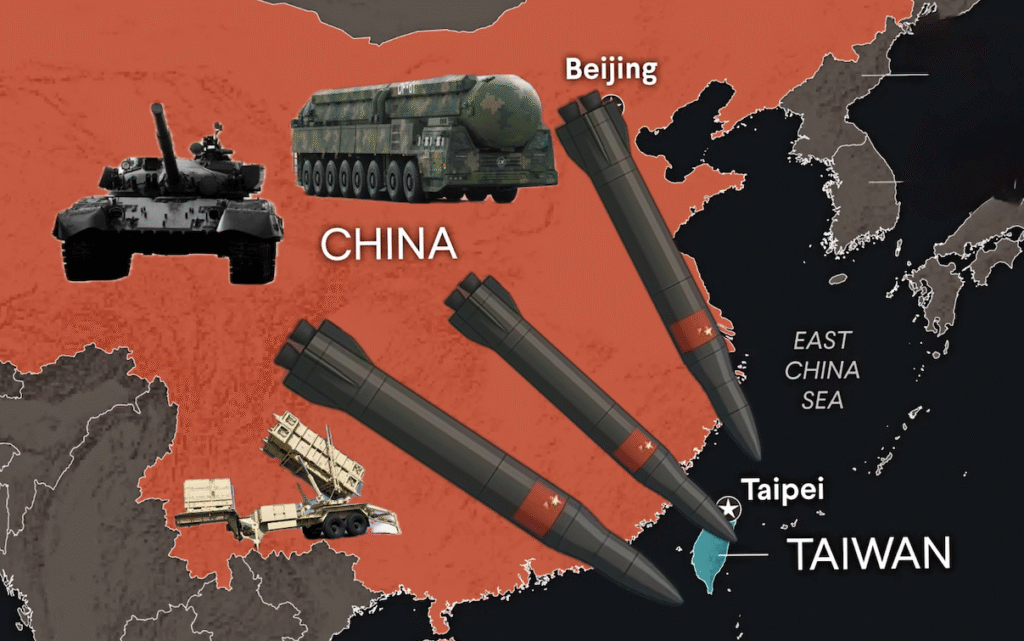
“China is looking at Taiwan,” Rutte said. “And I am convinced that if China takes military action there, it will pressure its junior partner, Russia, under Putin’s leadership, to keep us busy here in Europe.” The logic is blunt: stretch NATO’s attention and resources across two theatres at once.
China and Russia as Strategic Partners, Not Equals
This is not the first time Rutte has drawn a direct line between Beijing’s ambitions and Europe’s security. Over the past year, he has repeatedly emphasized that China is no longer a distant economic competitor but a strategic actor whose decisions could directly affect the Euro-Atlantic area.
His description of Russia as China’s “junior partner” is revealing. It reflects a growing belief within NATO that Moscow, weakened by sanctions and prolonged war, increasingly operates within a framework shaped by Beijing’s broader geopolitical objectives.
NATO’s Shifting View of China
In a speech in December 2024, Rutte urged NATO members to be “clear-eyed about China’s ambitions,” warning that Beijing is rapidly expanding its military power, including its nuclear arsenal, without transparency or arms-control constraints.
He also raised concerns about China’s behavior beyond the military sphere, pointing to pressure on Taiwan and efforts to gain access to critical Western infrastructure; moves NATO fears could be used to disrupt European societies in a crisis.
Europe’s Preparedness Gap
For Europe, the implications are uncomfortable. NATO has spent the past three years reinforcing deterrence against Russia following the invasion of Ukraine. Rutte’s comments suggest that this focus cannot come at the expense of broader readiness.
“That’s why we have to be prepared,” he said, calling for higher defense spending, stronger military capabilities, and more effective recruitment. The emphasis is less on immediate escalation than on long-term resilience: the ability to absorb shocks in multiple regions at once.
Taiwan as a Global Security Trigger
China’s stance on Taiwan remains the central variable in this scenario. Beijing regards the democratically governed island as its own territory and has not ruled out the use of force. Taiwan’s government rejects those claims, insisting that only its people can decide their future.
Chinese President Xi Jinping has been explicit that no one can stop China’s “reunification” with Taiwan, a message widely interpreted as a warning to both Taipei and its international backers.
Why NATO Is Paying Attention
Taiwan is not a NATO treaty responsibility, but Rutte’s remarks highlight how interconnected global security has become. A conflict in the Taiwan Strait would ripple through supply chains, financial markets, and strategic calculations worldwide, creating incentives for adversaries to exploit Europe’s vulnerabilities.
From NATO’s perspective, the danger lies not only in direct involvement but in distraction being forced to manage instability on multiple fronts at once.
A Call Against Complacency
What stands out in Rutte’s warning is its tone. It is not a prediction of imminent war, but a rejection of complacency. The assumption that crises will remain geographically contained, he suggests, no longer holds.
Whether NATO can turn this strategic awareness into sustained political will remains an open question. Defense spending, force readiness, and public support still vary widely across the alliance. But Rutte’s message is unmistakable: in NATO’s strategic thinking, Taiwan is no longer just an Asian flashpoint, it is part of a wider test of Europe’s preparedness in an increasingly interconnected world.