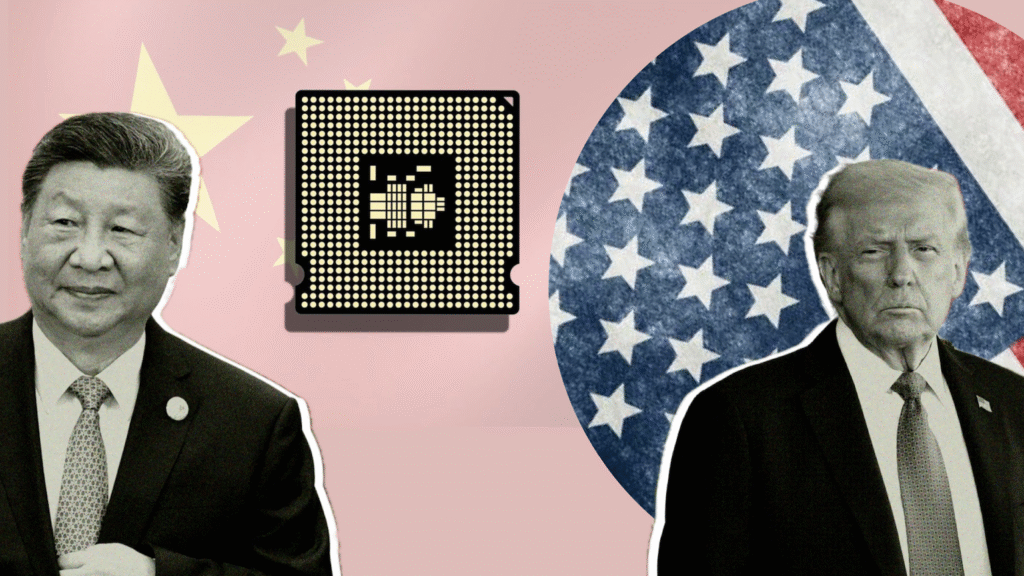
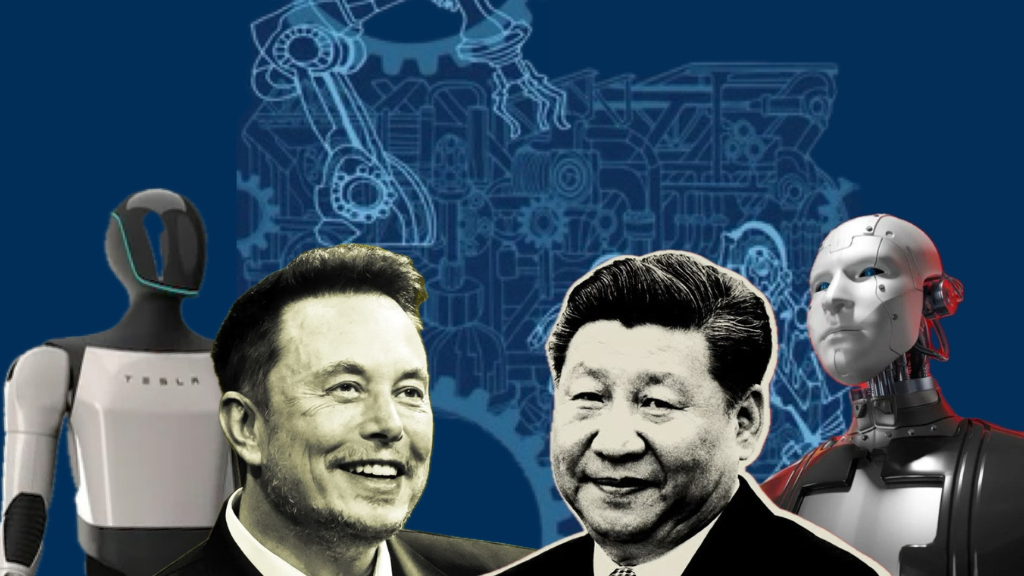
When I first encountered the headlines proclaiming that Chinese startups were “beating Tesla by two years” in humanoid robotics, I assumed we were witnessing another dramatic chapter in the US-China technology competition. But after examining the actual evidence, I’ve come to realize that the real story is more complex and more important than the breathless coverage suggests.
What’s Actually Happening
Let me cut through the hype and explain what’s genuinely occurring in the humanoid robotics sector. Chinese companies like EngineAI, Xpeng, and Agibot have announced humanoid robots priced around $150,000, with production targets of 2,000 to 3,000 units for 2025 through 2026. Meanwhile, Tesla has built over 1,000 Optimus robots but paused production to redesign components after encountering hardware challenges including overheating motors, short battery life, and hands with limited load capacity.
What strikes me most is how similar both sides actually are. Neither Chinese nor American robots have achieved what I would call “mass production.” We’re talking about hundreds to low thousands of units, not the hundreds of thousands that define true manufacturing scale. More importantly, neither side has demonstrated economic viability.
Tesla’s own robots currently operate at less than half the efficiency of human workers in its battery workshops. When I calculate the economics, a $150,000 robot delivering perhaps 25% of human productivity at an annual operating cost of $57,000, I find these machines cost eight to twenty three times more per unit of work than human labor in Chinese factories.
The Root Cause: Why This Competition Exists
After studying this landscape, I’ve identified three fundamental drivers that explain why both nations are pouring billions into technology that isn’t yet commercially viable.
First, there’s the demographic imperative. China’s working age population contracted by 5.57 million people in 2024, while manufacturing wages grew 6 to 8% annually. For Chinese policymakers, automation isn’t optional. It’s essential for maintaining manufacturing competitiveness as the labor pool shrinks. The government has committed $20 billion to robotics development because population aging threatens the economic model that powered China’s rise.
Second, I see a strategic technology race dynamic at play. Both nations view robotics as a dual use technology with military applications beyond commercial markets. Humanoid robots capable of autonomous operation in physical environments represent what Beijing calls the pathway to “true AI dominance.”
These are systems that can patrol borders, conduct reconnaissance, navigate contaminated zones, and perform tasks in environments too dangerous for humans. The US Commerce Department has responded by imposing export controls on advanced robotics, AI chips, and related technologies to prevent dual use capabilities from supporting Chinese military applications.
Third, and perhaps most interesting to me, is the investment bubble psychology. UC Berkeley roboticist Ken Goldberg has warned that “robots are not gaining real world skills as quickly as AI chatbots,” yet humanoid startups like Figure have reached $39 billion valuations based largely on controlled demonstrations. Rodney Brooks, founder of iRobot and a respected voice in robotics, has cautioned about a “humanoid robot investment bubble,” noting that without significantly better dexterity, these machines are “essentially useless”. What I observe is that both Chinese and American investors are betting on future breakthroughs rather than current capabilities. They are essentially funding expensive research demonstrations while calling them commercial products.
Impact Analysis: What This Means for Different Stakeholders
Let me walk through how this competition affects various groups, because the implications extend far beyond the robotics industry itself.
For American and European workers, I want to be direct: the immediate threat from humanoid robots is overstated. At current performance levels and costs, these machines cannot economically replace human workers in most jobs. The robots I’ve researched operate 2 to 4 hours on a charge versus 8 hour human shifts, struggle with unstructured environments, and lack the dexterity for complex manipulation tasks. The real automation challenge comes from specialized industrial robots, not humanoids, which already dominate manufacturing and are continuously improving.
However, I would be dishonest if I didn’t acknowledge the long term uncertainty. If breakthroughs occur in batteries, actuators, or artificial intelligence that dramatically improve robot capabilities while costs drop below $50,000 per unit, economic viability could shift rapidly. The trajectory is genuinely unpredictable because physical robotics doesn’t follow the predictable scaling laws that governed digital technologies.
For developing nations and the Global South, I observe a more immediate strategic dilemma. Chinese factory robot exports grew 60% year on year in the first half of 2025, with Vietnam, Mexico, and Thailand as top destinations. Southeast Asian manufacturers are already integrating Chinese robotics into their operations, creating dependencies that could constrain future choices.
If you’re a policymaker in Vietnam or Indonesia, you face an uncomfortable choice: adopt affordable Chinese robotics technology and risk precluding access to Western markets through export controls, or choose Western systems at higher costs with limited supply.
India presents a particularly instructive case that I’ve studied closely. The Draft National Strategy on Robotics sets ambitious goals to make India a global robotics hub by 2030, but I find the execution challenges daunting. India currently lacks the integrated supply chain from semiconductor fabrication through rare earth processing to component manufacturing that China has spent fifteen years building.
Attempting to replicate China’s vertically integrated model without China’s manufacturing ecosystem, capital deployment capacity, and execution track record seems unlikely to succeed.
What concerns me most is the risk of malinvestment. India could follow the hype cycle into humanoid robotics while neglecting more commercially viable robotics applications in agriculture, logistics, and specialized industrial automation where India could actually create competitive advantage.
For businesses considering robotics adoption, I recommend focusing on specialized automation with proven return on investment rather than waiting for humanoid robots. Collaborative robots, autonomous mobile robots, and task specific systems already deliver measurable productivity improvements at costs of $5 to $8 per hour of effective work, far below the $10 plus per hour that current humanoids require.
For the technology sector and investors, I see warning signs of overvaluation. When startups targeting educational institutions, hotels, and nursing homes for pilot deployments achieve hundred million-to-billion-dollar valuations, I question whether expectations are grounded in commercial reality. The pattern resembles earlier hype cycles around autonomous vehicles, virtual reality, and blockchain. These are technologies with genuine potential that nonetheless experienced speculative bubbles before finding sustainable business models.
The Technological Decoupling That Worries Me Most
Beyond the immediate robotics competition, I’m watching a more troubling long term trend: the fragmentation of global technology ecosystems. The US has imposed export controls covering advanced robotics, AI chips, semiconductors, and manufacturing equipment, with over 1,000 Chinese firms now restricted. China has responded with export controls on rare earths and strategic materials essential for robotics manufacturing.
This mutual escalation is creating diverging technical standards, incompatible supply chains, and bifurcated markets where Chinese and Western robotics ecosystems operate independently. For someone who values open innovation and international scientific cooperation, this fragmentation represents a significant loss. Breakthrough technologies historically emerged from global collaboration and knowledge sharing. Splitting the world into competing technological blocs will slow innovation for everyone.
My Conclusion: Separating Signal From Noise
After analyzing the evidence, I’ve reached several conclusions that differ from the dominant narratives I encounter in technology media.
First, the claim that China is “beating” the United States in humanoid robotics by two years conflates announcement timing with actual capability. Both ecosystems are at similar pilot production stages with similar technical challenges. Neither has achieved commercial viability.
Second, the fundamental question isn’t which nation leads in humanoid robotics, but whether humanoid robotics will become economically viable at all. At current performance and costs, these machines represent expensive demonstrations of future potential, not practical labor substitution tools. Task specific robots already outperform humanoids for most industrial applications.
Third, I believe both nations are making strategic bets on breakthrough technologies that may or may not materialize. China’s approach distributes these bets across multiple state backed companies; America’s approach concentrates on fewer high profile ventures. Neither approach guarantees success because the underlying technical and economic barriers remain formidable.
What I recommend for readers in the US and Europe is maintaining perspective. The humanoid robotics sector warrants attention as a potential transformative technology, but the timeline and ultimate market size remain deeply uncertain. The immediate economic threat is overstated; the long term geopolitical implications of technological decoupling are understated.
Most importantly, I urge policymakers to avoid reactive investment driven by fear of “missing out” on China‘s progress. Strategic technology development requires focusing on areas of genuine comparative advantage, building foundational capabilities, and maintaining flexibility to pivot as technologies evolve. The nations that will thrive in the robotics era are those that make disciplined investments based on commercial fundamentals, not those that chase headlines about who’s “winning” a race whose finish line hasn’t been defined.
The author is a Subject Matter Expert on AI and Cyberwarfare at CENJOWS( Centre for Joint Warfare Studies), HQ IDS, Ministry of Defence, New Delhi. The author is also a Visiting Research Fellow at MGIMO, Moscow and pursuing his PhD on “AI in Russia” from School of International Studies, JNU.