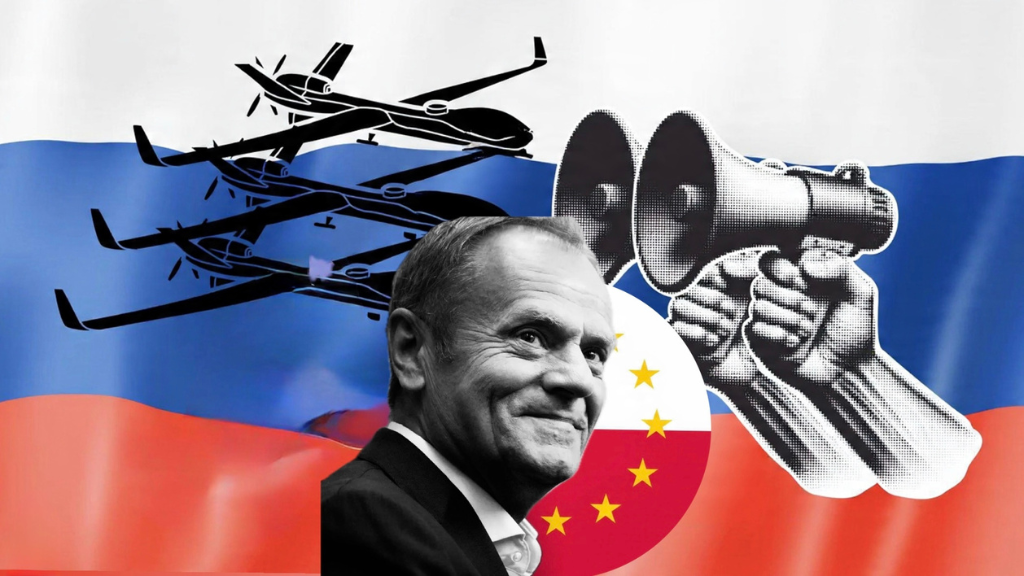
As the war in neighboring Ukraine enters yet another year, Poland is no longer treating the conflict as a distant crisis. Drone incursions, airspace violations, and hybrid operations linked to Russian activity have moved the threat closer to Polish soil. What once felt like a worst-case scenario has, for many Poles, become a realistic concern. This shift in perception is pushing both the government and ordinary citizens toward a level of war preparedness not seen since the Cold War. Rising defense budgets, intensified training, and fortified borders are now central pillars of Poland’s response.
Why Polish Society Feels the War Creeping Closer?
Public opinion data reveal a society increasingly convinced that the conflict could spill over. A 2024 survey found that roughly 83 percent of Poles consider the war in Ukraine a direct threat to their own security. Yet only a small share—around 8 percent—believes Poland is truly prepared to face Russia militarily, and just 9 percent think the armed forces are adequately equipped for such a confrontation. That stark gap between fear and confidence has fed a wave of public anxiety and intensified demands for rapid military strengthening.
These fears are rooted in real events, not abstract alarmism. Violations of Polish airspace, sabotage operations attributed to Russian networks, and hybrid pressure along the Belarusian border have highlighted just how exposed Poland remains. Each incident has further shaken public trust in the country’s ability to withstand escalating threats.
A State Responding With Speed and Scale
Warsaw’s response has been sweeping. Over the last few years, Poland’s defense spending has soared, rising from roughly 2.2 percent of GDP before 2022 to nearly 4.7 percent in 2025—one of the highest levels among NATO members. This investment is flowing into new equipment, expanded divisions, upgraded training systems, and a strengthened reserve force.
A central plank of this effort is the East Shield initiative, a long-term project to harden Poland’s eastern and northern borders. The plan includes reinforced physical barriers, advanced surveillance, anti-drone defenses, and a modernized border-security regime. These measures are particularly focused on the frontier with Belarus and Russia’s Kaliningrad enclave—two zones that Warsaw now regards as strategic flashpoints.
Military modernization has become just as important as border protection. New weapons systems, expanded reserve formations, and a deeper integration of professional troops with civilian support structures are reshaping the armed forces. The overarching aim is deterrence: to make any attack on Poland costly enough to dissuade even a powerful adversary. As one senior officer put it, the country is now operating in a condition “not at war, but not at peace either.”
Civilians Step Into a New Role
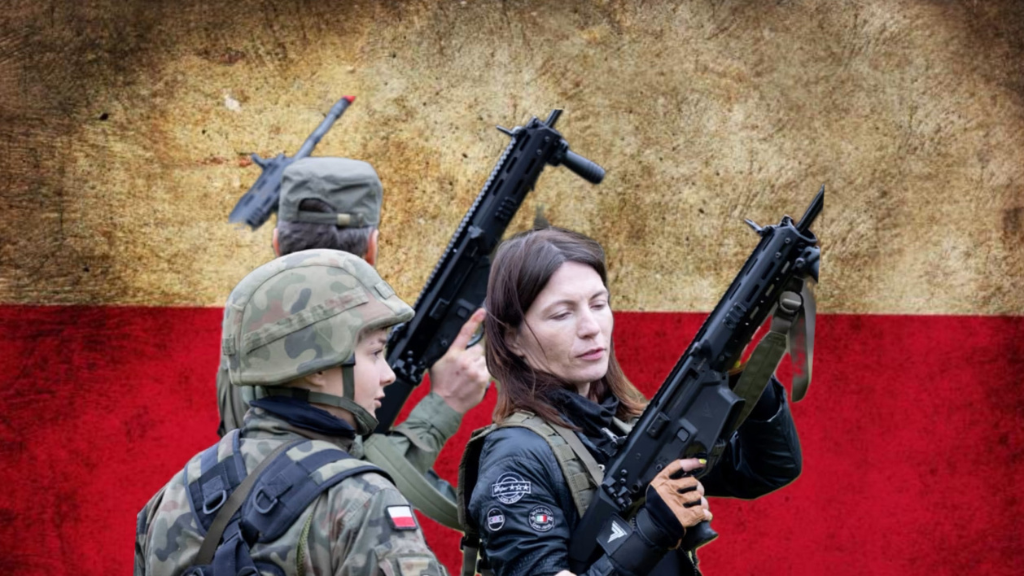
Polish authorities have recognized that modern warfare extends far beyond the battlefield. Hybrid threats—cyberattacks, infrastructure sabotage, drone strikes, and disinformation—blur the line between soldier and civilian. In late 2025, the government launched a voluntary civil-defense program designed to strengthen the population’s resilience. Participants learn crisis-response skills, shelter protocols, basic survival, and the fundamentals of reserve readiness.
The response has been unexpectedly strong. In the first seven months alone, more than 20,000 people registered for voluntary military training, and officials expect that number to reach 40,000 by year’s end. This surge more than doubles Poland’s volunteer training participation compared with 2022. The government stresses that the program is voluntary, echoing reserve-based systems rather than any return to conscription.
Even so, public attitudes remain mixed. Many Poles support the idea of strengthening national defense, but others doubt whether Poland could meaningfully resist a large-scale attack or question whether they personally would take an active role. The debate reflects a society caught between anxiety, responsibility, and uncertainty.
A Changing Security Landscape for Europe
Poland’s mobilization fits into a much broader European recalibration. The war in Ukraine has exposed how easily conflict can spill beyond borders, and how modern aggression blends traditional warfare with drones, sabotage, and cyber operations. The East Shield project and the wider defense reforms mirror lessons drawn directly from Ukraine’s experience, where rapid deployment, a functional reserve system, and a mix of conventional and asymmetric tactics have become the keys to survival.
The strategy also carries a message for NATO: Eastern Europe cannot rely solely on external deterrence. Poland’s leaders increasingly argue that each frontline state must build its own credible defensive capacity, both to protect itself and to reinforce the alliance as a whole. In this sense, Poland’s choices are shaping not just its own future, but the configuration of European security for years to come.
Persistent Risks and Structural Limits
Despite the momentum, Poland faces significant constraints. Demographic trends particularly a shrinking and aging population pose long-term challenges for building a large reserve force. Public readiness remains uneven, with some Poles enthusiastic about civil-defense training while many others remain hesitant. And the ultimate effectiveness of deterrence depends on whether hostile powers believe Poland and NATO would respond decisively to any attack. No amount of domestic preparation can fully eliminate strategic uncertainty.
Poland Learning to Live With Risk
What is happening in Poland is less a moment of panic than a recalibration of reality. The government’s expansive defense reforms, civilian preparedness programs, and border fortifications show a country that no longer regards war as a distant possibility. Yet Poland’s strategy is not built on fatalism. Instead, it reflects a measured attempt to strengthen deterrence, prepare society, and modernize its defenses without resorting to sweeping conscription or militarization.
Whether these steps will be enough depends on factors beyond Poland’s control—from Russia’s intentions to the cohesion of NATO and the broader geopolitical climate. For now, Poland is signaling not just concern, but readiness: a determination to defend its sovereignty with the combined will of its military, its government, and a growing number of its citizens.